In December 2019, A Cloud Guru bought Linux Academy. Along with another school’s courses and customers came an annual AWS bill of $2.7 million. For a company accustomed to inexpensive infrastructure, this was an educational experience of its own. Teaching people to use the cloud, it turned out, could make you a rather substantial customer of it.
- Cloud certification training became a subscription business for individuals and teams.
- Linux Academy added depth and hands-on learning, with real infrastructure costs.
- The original ACG platform retired in November 2025. Its content now lives in Pluralsight.
A bedroom, a rejection, a better lesson
The company’s origin story begins with Ryan Kroonenburg preparing for an Amazon interview in 2015. He did not get the job. Training available to him cost more than $2,000 and involved the sort of classroom delivery unlikely to improve anyone’s affection for classrooms. His response was wonderfully literal: make a course he would have wanted to take.
For six weeks, Ryan recorded at night in a small London flat, with foam taped to the bedroom walls. His brother Sam built a learning platform using Amazon’s serverless technology during a family holiday in Tasmania. The company’s account puts that build at 28 days. There was also an original third co-founder, Ant Stanley, who left in 2016 and later described an amicable split.

The point was to make technical education approachable. In 2017, Ryan explained the infrastructure choice with a question: “Why pay for virtual machines by the hour or by the minute?” A lean delivery system suited a small company selling recorded instruction. At that stage, reducing the machinery behind the lesson made business sense.
The student who brought the office
The first buyers were individuals. Then some returned with a request Sam later recalled: “I learned cloud with you, but I want my whole team at work to learn cloud with you.” That sentence changed the sales problem. A colleague could recommend a course; a company buying training needed a repeatable program.
ACG for Business launched in May 2018, offering learning management and structured paths for teams. Dow Jones, Qualcomm and Capital One DevExchange were among its named customers. The business moved from selling separate courses toward individual memberships and enterprise subscriptions, where managers could organise training and follow progress.
Money followed the change in ambition: a $7 million Series A from Elephant in 2017, then $33 million in growth equity in April 2019, led by Summit Partners with AirTree and Elephant participating. Further investment accompanied the Linux Academy acquisition, with no amount disclosed. The first two announced rounds totalled $40 million; that is a floor, rather than a complete funding bill.
Expansion followed existing demand. Sam said 60-70% of the market was in the US. Austin offered a central time zone for the sales operation, while engineering, product and content largely stayed in Australia and Britain. The useful decision was to place functions where they could do their jobs, rather than reproduce the entire company in every country.
A certificate needs somewhere to practise
The product addressed a recognisable gap: knowing a cloud service’s name does not make someone ready to configure it. Courses organised AWS, Azure and Google Cloud knowledge into paths. Quizzes and practice exams checked understanding. Labs gave learners tasks; Cloud Playground gave them room to experiment.
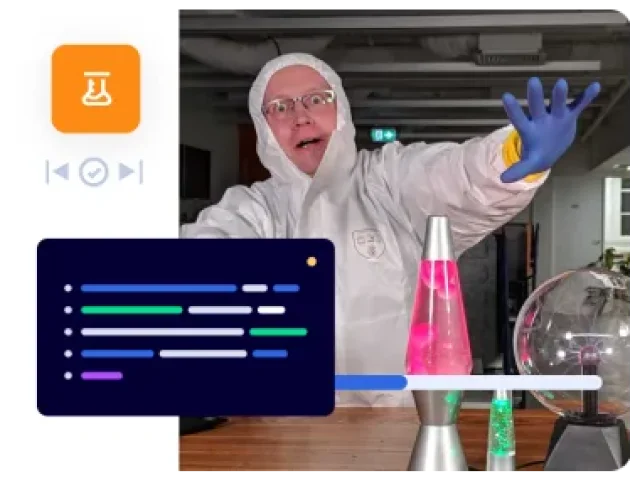
Buying Linux Academy combined two teaching temperaments. ACG was associated with shorter routes to certification; Linux Academy with longer technical dives. The combined team described a model of primary certification courses, typically six to eighteen hours, with supporting deep dives. A learner could revise efficiently or stay for the machinery underneath.
The student gets permission to experiment. The school gets the meter.
The economics of hands-on learning
That combination helps explain its market position. Individual instructors can sell focused exam courses; cloud vendors provide their own learning resources. ACG’s proposition bundled instruction across providers with practical environments and team administration. Its expertise was in teaching cloud work, rather than supplying the cloud itself. The distinction matters when choosing what to buy.
The school gets a bill of its own
An engineering account by Forrest Brazeal describes what the acquisition exposed: spending lacked clear unit costs, ownership and useful measures. Learner-created resources and the platform shared an AWS organisation. The invoice revealed the total without adequately explaining it.
Annual AWS bill inherited from Linux Academy
The fixes were practical: separate learner resources from platform infrastructure, tag costs, monitor spending and measure cost per active user. Reservations and AWS Savings Plans covered more compute usage. The team projected roughly 30% lower EC2 costs over the following year; the account gives an expectation, not an audited result.
The name on the classroom door changed
Pluralsight completed its acquisition in July 2021. Integration eventually went beyond ownership: ACG plans stopped being sold, and on November 4, 2025, the original platform began its final shutdown. Migrated accounts now belong on Pluralsight, where republished courses and cloud learning experiences are available. Old course sessions cannot simply be resumed on ACG.
- 2015Recorded cloud instruction
- 2019Linux Academy acquisition
- 2025Standalone platform retires
Copy the sequence, keep the homework
For a learner, the sensible sequence is a focused course, a practical exercise, then an attempt without the instructions. Pick the relevant certification path through Pluralsight and check the plan’s lab access before subscribing. An exam badge is useful evidence of study; it does not demonstrate that you can diagnose an unfamiliar production incident.
For a founder, the lesson is equally specific: solve a frustration people already pay to remove, follow buyers into their workplace, and measure delivery costs as the product changes. That approach depends on demand for the skills being taught. It travels poorly where language, cloud-provider preferences or buying habits differ. And anyone building training around fast-changing software inherits a permanent chore: keeping the lesson current.