Before Yujia Zhai was arranging introductions between Bitcoin companies and Wall Street, he was helping a newly public company learn how to answer its shareholders. At STR, following its November 2009 initial public offering, the assignment included the machinery of investor relations: reporting, earnings communications, annual meetings, and a dependable way to handle questions. A business that had spent decades in private hands suddenly had a public audience. Someone had to make the conversation work.
It is a useful place to begin with Zhai, now the founder and CEO of OG Advisory Group. Bitcoin supplies the more colorful vocabulary in his career. The earlier work supplies its grammar. Long before a conversation might turn to mining or artificial intelligence, there were practical questions about what investors needed to know, who should tell them, and how a company could keep doing it every quarter.
A public company learns to speak
The routine details matter. An earnings call is a scheduled encounter with people who can disagree with you and sell your shares immediately afterward. An annual meeting arrives whether the year was pleasant or otherwise. Investor relations gives those encounters a structure. Charm is welcome. A working process has rather better attendance.
Zhai's subsequent career crossed accounting, corporate finance, equity research and advisory work. He is a CPA, and his experience includes Big Four audit and finance roles within a Fortune 500 company. Those jobs put him on different sides of the same problem: how a business produces numbers, how outsiders interpret them, and how management explains what comes next.
By September 2023, he was a managing director at The Blueshirt Group, discussing Bitcoin companies with Blockware interviewer Mitch Askew. The companies associated with his work included Iris Energy, Swan Bitcoin and Blockware Solutions. He had brought a conventional capital-markets background into an industry whose enthusiasts were already having their own vigorous conversations about money.
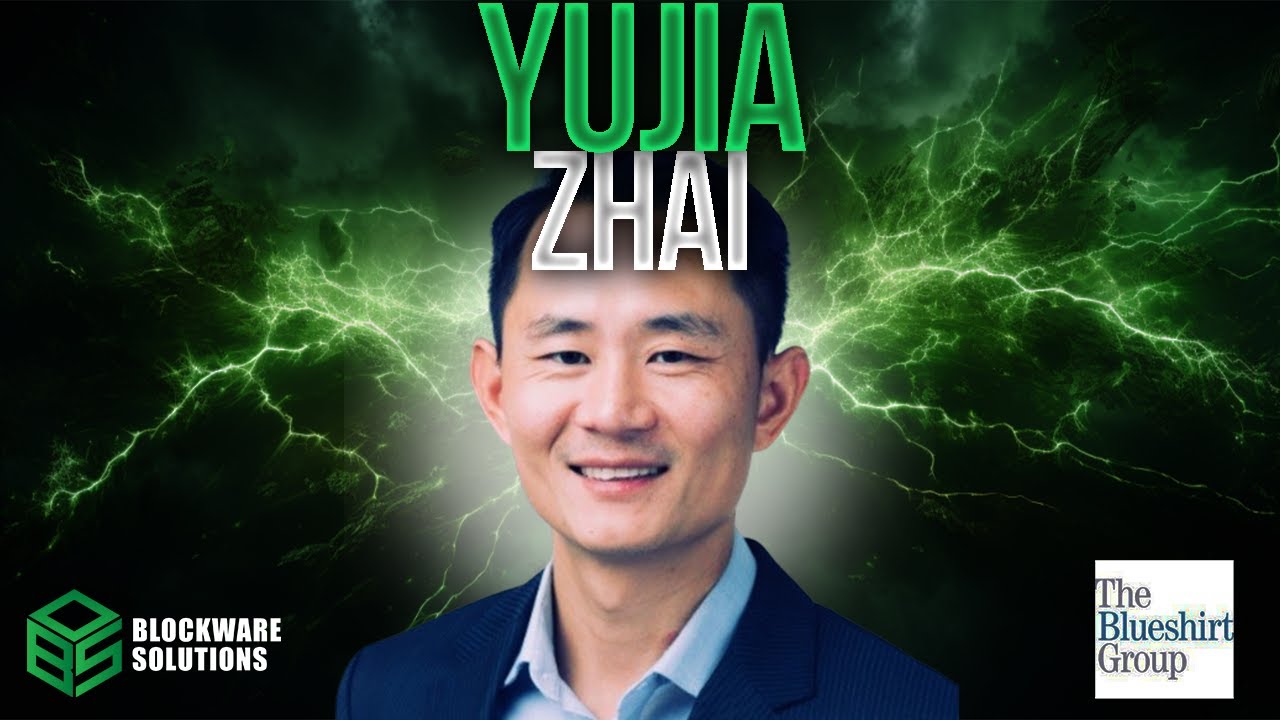
The interview's title, “Orange Pilling Wall Street,” caught the cultural distance in four words. On one side were familiar institutions and the language of equity markets. On the other was Bitcoin's own vocabulary and community. Zhai's work occupied the space where a company needed both audiences to understand it.
The guest list becomes the business
By January 2024, Orange Group was hosting its first VIP Bitcoin industry networking event in New York. Zhai brought together analysts and equity-sales representatives from firms including H.C. Wainwright, Cantor, Needham and Rosenblatt, alongside people from public and private Bitcoin businesses. Iris Energy, Bitdeer, CleanSpark, Sato, Argo Blockchain, Swan and Blockware were among the companies represented.
The guest list tells a more specific story than a broad promise about making connections. Research analysts, sales teams, company executives and private businesses have different jobs. Putting them together creates a chance for questions to travel directly between people who otherwise might encounter one another through a report, a ticker symbol or an introduction several inboxes deep.
Orange Group also participated in the 26th Annual Needham Growth Conference. Later that year, Zhai described helping IREN, Bitdeer and Swan obtain invitations to the 36th Annual ROTH Growth Conference in Dana Point, California. The clients connected with more than 20 institutional investors and joined discussions of Bitcoin mining and AI alongside other companies in the sector.
IREN, Bitdeer and Swan Bitcoin joined the ROTH Growth Conference with Orange Group's help. Zhai reported connections with more than 20 institutional investors.
These are examples of access, rather than a claim about what happened to anyone's share price afterward. Their significance is concrete enough: companies received opportunities to explain their businesses to investors. For an adviser selling judgment and relationships, an invitation can be part of the product.
The shareholder without a business card
Yet an institutional conference was only part of Zhai's approach. He also focused on retail investors, the individual shareholders who follow companies through social platforms and communities as well as formal announcements. In a conversation with Jessica Starman for Communicating Capital, he described the need to adjust a company's message to the audience actually paying attention.
“You really have to kind of cater your messaging and your story to them.”
Yujia Zhai, on communicating with Bitcoin investors
His point was about the audience's understanding of Bitcoin and its interest in publicly traded companies as a way to gain exposure to it. A corporate presentation could be technically accurate and still fail to address the questions that brought those shareholders into the room. The audience helps determine where the explanation must begin.
That emphasis acquired an organizational shape when Orange Group added a senior role devoted to retail investor strategy, social media and events. The appointment brought experience in consumer brands and Bitcoin investor communities into a firm working with public-company management teams. The mix was deliberate: understanding a community's conversations belongs alongside understanding a company's financial reporting.
It also introduces a different kind of professional courtesy. Someone asking a difficult question online may have done substantial homework. A large institution has a recognizable letterhead; a knowledgeable individual investor may have a memorable username. Zhai's stated strategy gives both a place in the communications effort.
The December 2024 Communicating Capital episode presented him as both an equity-research veteran and a Bitcoin believer. That combination is central to his working identity. He understands the enthusiasm that draws people toward the sector and has spent his career around the processes through which businesses meet public-market scrutiny.
A Bitcoin practice gets a wider map
By February 2026, OG was making its geographic ambitions explicit. Lincoln Tan joined as managing director to lead expansion in Asia. His background included investor relations and marketing at IREN, where the company had expanded beyond Bitcoin mining into AI data centers and cloud services, and earlier work at Macquarie Capital.
The appointment brought together regional experience and knowledge of businesses changing their own descriptions. A company known for Bitcoin mining might also need investors to understand its AI infrastructure activities. An Asia-based leadership team might need to explain that business to public-market investors elsewhere. The work involves both the business model and the route by which its explanation reaches an audience.
Zhai emphasized Tan's “regional fluency and institutional perspective.” That choice of words fits the practice he was building. Sector knowledge alone does not introduce a company to an investor. A contact list alone does not explain a changing business. The firm was adding people whose experience could support both tasks.
Another addition, Timothy Leung, brought experience in Bitcoin venture capital and capital formation across infrastructure, real estate and data centers. Zhai's recruitment message sought colleagues who valued curiosity, ownership and execution. It described work directly with chief executives and leadership teams on earnings strategy, investor messaging, shareholder engagement and longer-term positioning.
Today, OG describes its scope as digital assets, fintech, AI infrastructure and robotics. Its listed services run from investor relations and capital-markets advice to strategic communications, roadshows and investor access. The firm's map includes New York, San Francisco, Las Vegas, Sydney and Hong Kong or Asia. The expansion gives Zhai a wider set of markets across which to apply his original craft.
For Zhai, building that practice also means choosing which capabilities belong together. A research background, a retail community background and regional capital-markets experience answer different questions. His recent hires show those specialties sitting within the same advisory team, rather than appearing only as names on the outside of an introduction.
Keeping track of the conversation
The firm has also developed OG Market Desk, a sentiment terminal for Bitcoin-related equities and AI infrastructure securities. Daniel Marques described it as a way to gather information that investors otherwise assemble across news, social feeds, charts and earnings releases. Zhai shared the launch with his own network.
Its proposed uses include following sector rotation, relative strength, news sentiment and upcoming catalysts. The tool extends a communications practice into a way of watching the market's response. It does not establish what a company is worth. It offers a view of what investors are noticing and how the conversation is changing.
Alongside running OG, Zhai is listed as an adviser to Sazmining. That role keeps his professional footprint within the Bitcoin ecosystem as well as the public companies around it. His career has moved through reporting, analysis, meetings, messaging and now tools for observing market attention. Each involves making a complicated business legible to someone outside it.
The continuity is the interesting part. The newly public company after its IPO and the Bitcoin company explaining itself to an unfamiliar investor face a related assignment. They need to answer questions clearly, repeatedly, and in terms their audience understands. Zhai has built a career around that conversation. The technology changes. There is still someone on the other side of the table who wants a useful answer.