At 12:46 a.m., Beijing time, the paperwork stopped making sense. A warehouse in Mexico said the cargo had already been collected. YQN’s local team checked the bill of lading. The vehicle and consignee did not match. For a Chinese electronics seller trying to rescue its inventory, that discrepancy could have made a bad week considerably worse.
In YQN’s account, the team corrected the pickup details, transferred the remaining stock and restored order flow. The advertised 17-hour recovery started at prepayment, after earlier discussions and approval. The revealing detail is that someone checked the documents before the cargo changed hands.
- YQN combines freight booking with the work after arrival: customs, storage and delivery.
- Its customer cases make a practical argument for comparing the entire delivered cost.
- Local teams and connected inventory systems matter when a shipment goes sideways.
The seller had approached YQN after its previous warehouse suffered an operational failure. Before agreeing to the transfer, the client visited YQN’s Shenzhen office to inspect its procedures. The rescue depended on trust established on the ground, followed by inventory checks and system integration.
01 / The cheap ship, the expensive address
Consider an appliance exporter in southern China. In a case published in January 2023, YQN describes a seller whose first venture into large products had run into late bookings, demurrage charges and slow-moving stock. The failures accumulated between the steps: goods needed a warehouse before one was ready; inventory sat while charges grew.
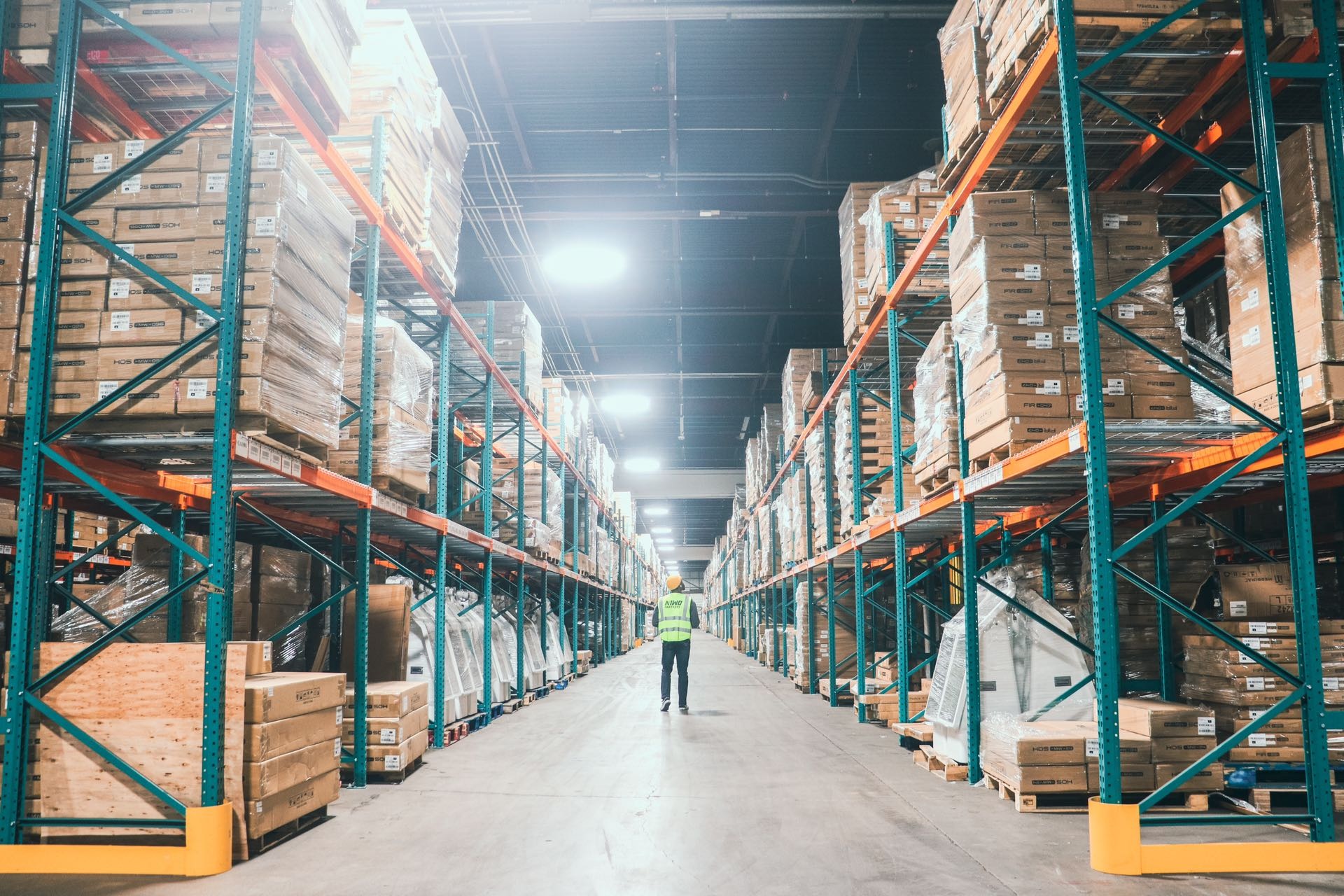
The seller’s stock was concentrated in Los Angeles, although buyers also lived in Texas, Florida and Georgia. YQN recommended moving some inventory to Atlanta and New Jersey. A slightly higher ocean bill could make sense if it reduced the distance traveled afterward. The company also arranged reserved warehouse capacity with predictable rates.
The lesson is useful even without hiring YQN. Put the buyer’s address into the calculation before choosing the arrival port. Price storage duration, unloading and inland delivery alongside the sea crossing. A cheap ride across the Pacific can still leave a refrigerator a very expensive drive from its owner.
02 / A booking is the beginning
YQN is a digital freight forwarder. Its online platform lets businesses search rates, submit bookings, manage orders and track cargo. Behind that interface sits a broad service menu: full-container and shared-container ocean freight, air and rail transport, trucking, customs clearance, insurance arrangements and overseas fulfillment. Manufacturers and online sellers can buy help across several stages of the journey.
Its commercial center of gravity is China-origin freight, including routes to Latin America and Southeast Asia. The company’s published network includes more than 300 shipping and airline relationships and over 3,500 supplier resources. Those are company-reported figures. Their significance is the range of capacity and local services available when a shipment needs another option.
Export handling
Carrier charges
Final delivery
One quote is a starting point. The full journey sets the cost.
In July 2024, YQN reported serving more than 35,000 business clients, including automotive, manufacturing and renewable-energy businesses. Their cargo differs, but each needs the booking information to survive the journey through other companies’ systems. A tracking screen is useful only when the underlying records keep up.
The business model follows the cargo. YQN procures services from suppliers and sells coordinated logistics to business customers. Warehouse handling and fulfillment extend the relationship beyond a port-to-port booking. Public tracking and scheduling tools give prospective customers a way to try the digital side before committing a shipment.
That puts it alongside digital forwarders such as Flexport, established forwarding firms and combinations of direct carrier bookings with regional warehouses. The buying question is specific: which provider can execute this route, handle this cargo and take responsibility at each transfer? A long menu alone cannot answer it.
03 / The money behind the handoffs
The platform launched in 2015. Building its reach took capital. In May 2021, YQN announced a $100 million Series D financing. Another $50 million followed in June, led by CITIC Capital with Xianghe Capital among the participants, bringing the round to $150 million. Contemporary reporting described cash reserves and hiring as priorities.
By November 2023, founder Shihao Zhou, also known as Cash Zhou, was describing a more cautious expansion. The pandemic shipping boom had receded. His response emphasized following changing manufacturing networks and developing existing overseas operations. YQN had also acquired California’s COPE to strengthen cross-border e-commerce logistics.
“We don’t pursue growth by piling on people.”
Cash Zhou · November 2023
That remark sets a useful test for a technology-led forwarder: can its systems help people coordinate more work as the network spreads? More offices create more places where information can arrive late. A shared operating system has to earn its place in that daily exchange.

04 / Some cargo refuses to fit the box
The physical expertise is easier to see with something enormous. In July 2025, YQN described moving 800 cubic metres of workboat hulls from Shanghai to Canada. The heaviest unit weighed 45 tons. The hulls were irregular, non-stackable and too large for containers.
The assignment required barge transport, advance export documentation and coordination with breakbulk carriers and loading crews. It illustrates the limits of treating forwarding as a search engine. Finding space matters; so does knowing how a peculiar object gets onto the vessel without damage. Customers buying project logistics need both kinds of competence.
05 / Closer to the checkout
YQN’s recent announcements move further into fulfillment. In August 2026, it said its European warehouse had become Temu-certified. In September, it announced eBay Authorized Fulfillment Warehouse recognition for its U.S. facilities. Both developments address sellers who need inventory, order processing, local delivery and returns connected to international transport.
For Temu’s semi-managed sellers, the company describes support for local inventory, picking, dispatch and returns. That brings the logistics provider into the daily rhythm of the storefront: orders arriving, stock being counted, parcels leaving. An overseas warehouse becomes part of how the seller keeps its promises.
The fit depends on the shipment. Bulky products and repeat inventory flows can justify coordinated storage and delivery; a one-off parcel may need something simpler. Ask for a route-specific quote, clear responsibility for exceptions and storage terms that match actual sales. Software can expose a delay. The recovery still depends on available capacity, accurate records and a team able to act.