A fantasy-sports player wants a morning update. His team, his players, yesterday’s action. It sounds like a small request, the sort of thing software ought to do before breakfast. For Yonatan Schreiber, working on such a project before Blings, it became a problem with the video itself. League data could change. Footage could be selected. Getting a different finished film to every viewer, at scale, was another matter. Breakfast was making unreasonable demands on the production department.
That difficulty sits near the beginning of Blings, the company Schreiber leads with co-founder Yosef Peterseil. Their work asks a deceptively ordinary question: what if an online video could behave more like the rest of the internet? A page can respond to information and to the person using it. A recorded sequence arrives with rather more of its mind made up.
Schreiber’s career gives that question an interesting history. Before executive titles and customer campaigns, there were religious texts, cognitive science and software development. His route into technology moved through several ways of thinking about how people understand things. Eventually, he found himself arguing with the assumptions built into a familiar object: the play button.
A reader learns to question the frame
Schreiber grew up in Jerusalem. He describes yeshiva study as a sustained exercise in examining logical inconsistencies and testing possible explanations. Later came a master’s in cognitive science at the Hebrew University of Jerusalem. After graduating, he taught himself basic coding during night shifts.
The sequence resists a neat recruitment brochure. A person can become useful at software by routes that a software job description would struggle to anticipate. In Schreiber’s case, prolonged study preceded the practical work of learning to make a computer obey. Reading carefully and debugging a program have at least one demand in common: the troublesome detail tends to survive being ignored.
His public professional record includes management roles at WSC, which works in sports-video highlights, and the CTO position at broadcasting startup Broadsay. Those jobs put him close to the junction of moving pictures and software. A good image can tell the viewer what happened. A good system has to decide which image belongs to which viewer, how quickly it can arrive and what happens when the underlying information changes.
Colleagues describe the practical side of that education. Daniel Shichman credits his ability to learn and his contribution to the company’s growth. Roy Matalon recalls quicker, more reliable development processes at Broadsay. These are the less photogenic accomplishments of a technical career. Somebody must make the next release work. Applause, where available, is optional.
The film that waits for its audience
The fantasy-sports assignment brought the limits into focus. Schreiber wanted to combine league information and game footage in daily reports for individual players. Personal relevance multiplied the work. Once each viewer needs a different version, the question changes from whether a video can be made to whether all the required versions can be made economically.
Blings’ answer is to assemble the experience on the viewer’s device. Its MP5 technology carries design, animation, logic and references to data. The values are applied when the viewer opens the experience. One template can therefore serve different people without each person receiving a separately prepared recording.
- 01DesignOne template
- 02ConnectMapped data
- 03OpenBuild on-device
- 04ChooseLet the viewer act
A film with room for a late arrival: its audience.
Consider a loyalty balance. A number placed in a finished recording stays the number it was when the recording was made. An experience that reads current information can show a different balance on a later opening. The visual presentation and the data no longer have to age at the same speed.
MP5 is Blings’ name for its technology. The numerical flourish should not be taken as proof that the world has retired MP4. The practical distinction is the workflow: code and data generate a responsive experience, while a conventional recording preserves a completed sequence. Schreiber has chosen the space where a message needs both movement and the ability to change.
First, let go of the idea you love
There was a less technical obstacle. Schreiber and Peterseil initially pursued another video idea for a different audience. They liked it enough to keep trying despite repeated doubts about its financial feasibility. Eventually, they abandoned it. The version of Blings that followed came after that decision.
It is an awkward episode for the usual celebration of founder conviction. Conviction can keep a company alive through discouragement; it can also keep a bad assumption in comfortable employment. Knowing which kind you possess is difficult while you are possessing it. Schreiber’s account leaves that uncertainty intact. An alternative history cannot be run like a software test.
“That, and some luck.”
Yonatan Schreiber, on building an enduring company
He pairs attention to market feedback with looking for an unexpected solution. The small concession to luck matters. It leaves room for circumstances, timing and other people, rather than assigning every result to the founder’s superior judgment. A company that promises flexible video also needed permission to revise its own plot.
A certificate, a cheque, and the next release
By spring 2020, Blings was presenting at Berkeley SkyDeck’s Demo Day. The description already contained the central proposition: connect to a customer’s data and generate personalized video on demand. The format was then called MPflyer. The language has changed since; the underlying direction is recognizable.
In November 2021, Blings announced a $4 million seed round led by Hanaco Ventures, with Vertex Ventures and the Berkeley University Investment Fund participating. Mercedes-Benz, Singapore Airlines and McDonald’s were among its named partners. Money supplied a chance to expand the team and continue building. It also gave the proposed new format something useful beyond a clever explanation: people willing to finance its next stage.
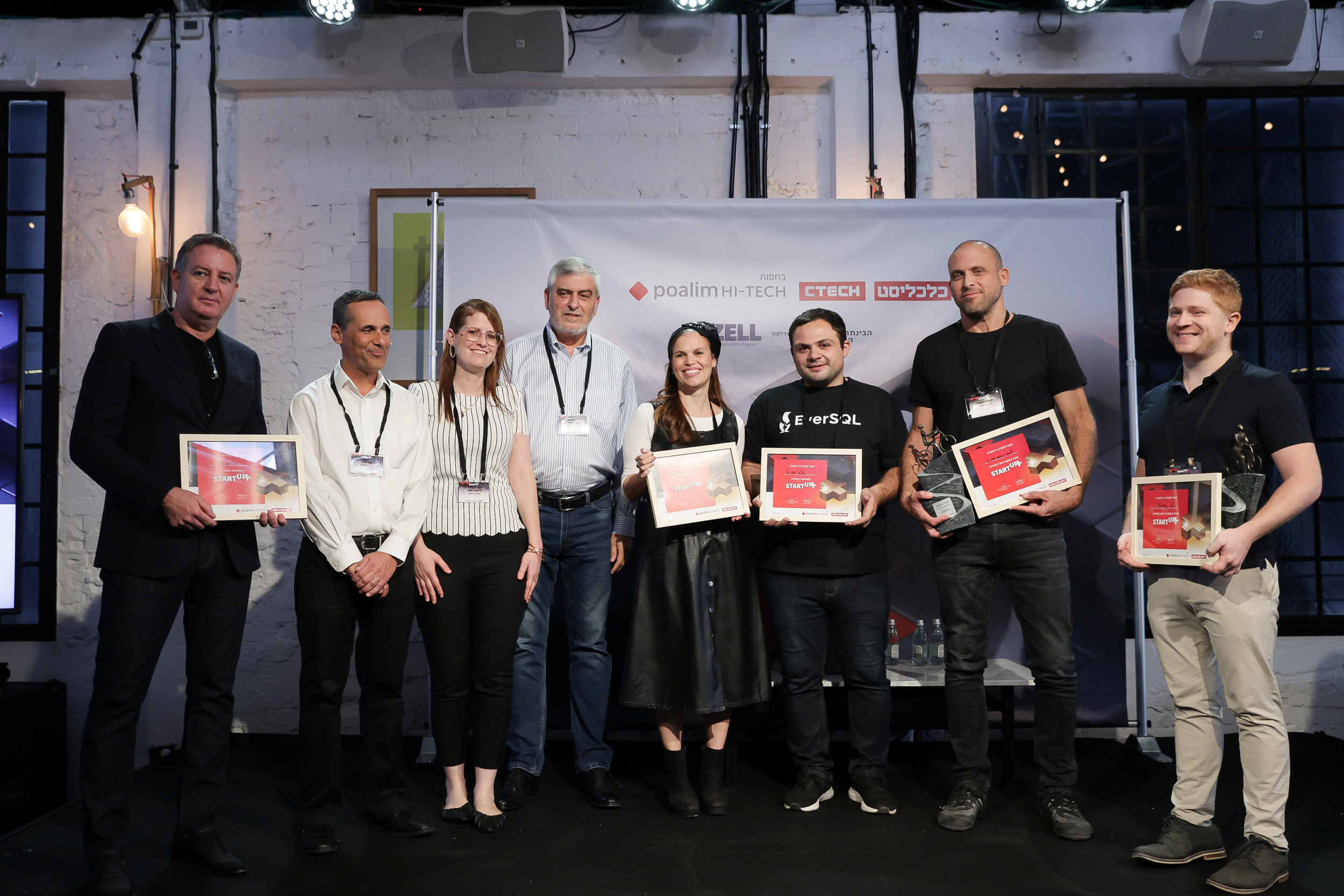
That same week, Blings won Calcalist and Poalim Hi-Tech’s StartUp+ competition. Schreiber was publicly making his case against video treated as an unchangeable file. The competition supplied a public milestone for an argument that could otherwise disappear into technical vocabulary.
His name also appears as inventor on a US patent application titled System and method for dynamic, data-driven videos, published in March 2025. Its description concerns real-time video presentation. A patent document is a different kind of career portrait: fewer adjectives, more machinery. Here, the executive’s name sits beside the technical problem he has spent years pursuing.
The customer gets a part in the scene
The commercial test is what someone does with the result. In a December 2025 account of Blings’ work, Schreiber described a McDonald’s campaign using past customer behavior and reported four times the sales conversion of a control video. That is his account of a campaign comparison, rather than a measure of the chain’s overall sales.
The company also worked with Live Nation’s VIP team on personalized invitations explaining seating and event benefits. These examples are useful because they give personalization a purpose. A relevant invitation answers a question the recipient actually has. Merely decorating a message with a name risks producing the digital equivalent of a waiter reading your name tag very enthusiastically.
Blings lets viewers follow pathways, select options and use clickable elements within the experience. In that arrangement, an audience member has some work to do besides waiting for the credits. The interesting creative question becomes how to make that participation worthwhile. A button is easy to insert. Giving someone a reason to press it is a more demanding occupation.
spring Demo Day
and StartUp+ win
names Schreiber as inventor
The price of being personal
By August 2026, Schreiber’s company byline was appearing on articles about the cost of personalized video and the limits of text-token personalization in Salesforce Marketing Cloud. The subjects are revealingly practical. A founder can begin with a question about the nature of video and spend years discussing the price of producing it. The invoice has a way of joining the philosophical debate.
The pricing argument connects architecture to distribution. If producing each additional variation carries an additional rendering charge, a campaign’s audience becomes a production-cost question. Generating the experience on the recipient’s device changes that calculation. The commercial claim still has to be tested in a customer’s circumstances, but the connection between technical design and business model is clear.
Blings’ stated direction is to put Smart Video alongside HTML as a layer of digital communication, while extending creation tools to more teams. That ambition depends on something less glamorous than a new format: people being able to make useful things with it repeatedly. The audience must find a reason to engage. The person commissioning the campaign must find a reason to commission another.
A conversation worth leaving open
Schreiber and Peterseil bring different working histories to that task. Peterseil describes their friendship as reaching back to childhood, and their partnership as combining commercial experience with Schreiber’s expertise in video rendering. There is a pleasing economy to the arrangement: one can question how the thing works while the other questions how anybody will buy it.
Their partnership also includes regular conversations over drinks. Beyond the company, Schreiber has expressed a wish to encourage dialogue across divided communities. Both details fit a career occupied with communication, though a better video format can only do so much for the quality of a conversation.
What makes his story interesting is the recurring willingness to reopen something: a career path, a technical assumption, an early business idea. A finished recording is useful precisely because it is settled. Schreiber has built his company around the moments when settled is too early. Somewhere, a viewer is about to arrive with new information. He would like the picture to be ready to listen.