A paywall can divide an audience in peculiar ways. In 2005, ynet found itself charging Hebrew readers outside Israel while offering its new English-language edition free. Imagine two neighbors opening related coverage: one pays because he reads Hebrew; the other reads English and walks straight in. For a publisher trying to reach people beyond Israel, that was an awkward welcome mat.
The company removed the overseas barrier. Fourteen years later, it returned to paid journalism with a different proposition: keep the running news service accessible and charge for selected premium work. That distinction makes ynet an interesting company to study. It has spent much of its life deciding which parts of a news habit should earn advertising money and which should earn a reader’s credit-card number.
The newspaper’s impatient offspring
ynet launched on June 6, 2000, inside the Yedioth Ahronoth publishing group. Its inheritance was substantial: a newspaper business, editorial experience and a recognizable place in Israeli public life. Yet the website needed to operate at a pace that a daily print edition could not match. A developing story does not politely wait for tomorrow’s delivery.
The route to that separate identity was less tidy than a corporate anniversary might suggest. In a 2010 retrospective, co-founder Ilan Yitzhaki recalled that the original plan relied on material from the newspaper. Shortly before launch, the publisher decided that the site would not receive that content. The team had to rethink its operation and produce news independently.
A later academic study in First Monday, based on interviews with the people involved, describes the parent company’s anxiety about free online news competing with its paid paper. It also identifies the early interactive team, including Yitzhaki, Motti Swartz and founding editor Zeev Hasper. The organizational separation gave the website room to develop its own routines.
There is a practical lesson here for established companies building a new product. Sharing a name or an owner does not settle who does the work. If the new service promises continuous updates, somebody must have the authority and staffing to deliver them. A digital edition inherits very little speed from a printing press.
What the daily visit buys
Open ynet and the scope becomes obvious. This is a general-interest publication: politics and security sit alongside sport, money, culture, health, food and technology. The underlying service is orientation. Readers can check the running story, read an explanation, watch a clip or move on to something less urgent without changing publications.
The audience has commercial scale. The company’s LinkedIn description reports more than five million readers a month, an undated figure that should be understood as its own claim. It lists a workforce range of 201-500. Those numbers describe a substantial publishing operation, although neither tells an advertiser how a particular campaign will perform.
For Hebrew-speaking readers, the alternatives include Walla, N12, Haaretz and Kan. International readers can also turn to The Times of Israel or The Jerusalem Post. ynet’s particular combination is broad consumer coverage attached to a newspaper group, delivered through a publication built for the web. It competes for the routine check-in as well as the big read.
That breadth is useful in an ordinary, unglamorous way. A reader who arrives for a political development can also find a recipe or a car review. For the publisher, every useful department creates another possible reason to return. The strategic bet is that a familiar destination can serve several interests without asking the reader to assemble a new media diet each morning.

The charge that sent readers away
The first subscription boundary was geographical. Reporting from January 2003 put the overseas offer at $3.50-$4.50 a month for specified news services and encyclopedia access. Readers in Israel were supported by advertising; overseas subscribers received an advertising-free experience and additional material aimed at them.
By March 2005, editor Yon Feder reported roughly 10,000 paying subscribers each month. He also acknowledged that many former overseas visitors had stayed away while payment was required. The business had attracted customers while losing part of its wider audience.
Feder’s stated reason for reopening access was the arrival of the free English edition, Ynetnews. Charging Hebrew readers abroad while admitting their English-reading neighbors free no longer made sense to him. The company removed the restriction and arranged refunds for longer-term subscriptions.
The revealing cost was therefore not simply the monthly fee. It was the relationship with readers who stopped visiting. This is the kind of tradeoff a subscription dashboard can obscure: the customers who remain are countable; the people who quietly find another habit are easier to overlook.
Fifteen shekels, ninety agorot, and a different promise
When ynet+ launched on February 18, 2019, the offer drew its line around content. The introductory arrangement was one free month followed by NIS 15.90 monthly. That is the historical launch price, not a quotation for a subscription today.
The paid selection included exclusive interviews, extended analysis and special projects, alongside selected work from the group’s newspaper supplements and magazines. The announcement explicitly told readers that everyday news coverage would remain open. Someone checking a developing story could continue doing so without becoming a subscriber.
The current service FAQ explains the rationale in production terms: subscriptions help finance work and resources invested in premium material. For a prospective subscriber, the useful question is concrete. Are these the interviews, writers and longer pieces you will actually read? Access to more content has little value if it merely enlarges the pile you postpone.
As a business design, the distinction is easy to understand. A free service establishes usefulness and frequency; a paid service must offer an additional reason to commit. Copying that arrangement requires enough distinctive work to sustain the promise. A publisher whose premium articles are readily interchangeable with free coverage elsewhere has a harder sale, however elegant its checkout page.
The business after the headline
Readers are only one set of customers. ynet’s advertising operation offers routes for direct advertising, commercial content and programmatic buying. Its English-language operation also invites marketing collaborations and inquiries about reprints and syndication. These are different transactions: buying audience exposure, commissioning a commercial presentation or licensing existing journalism.
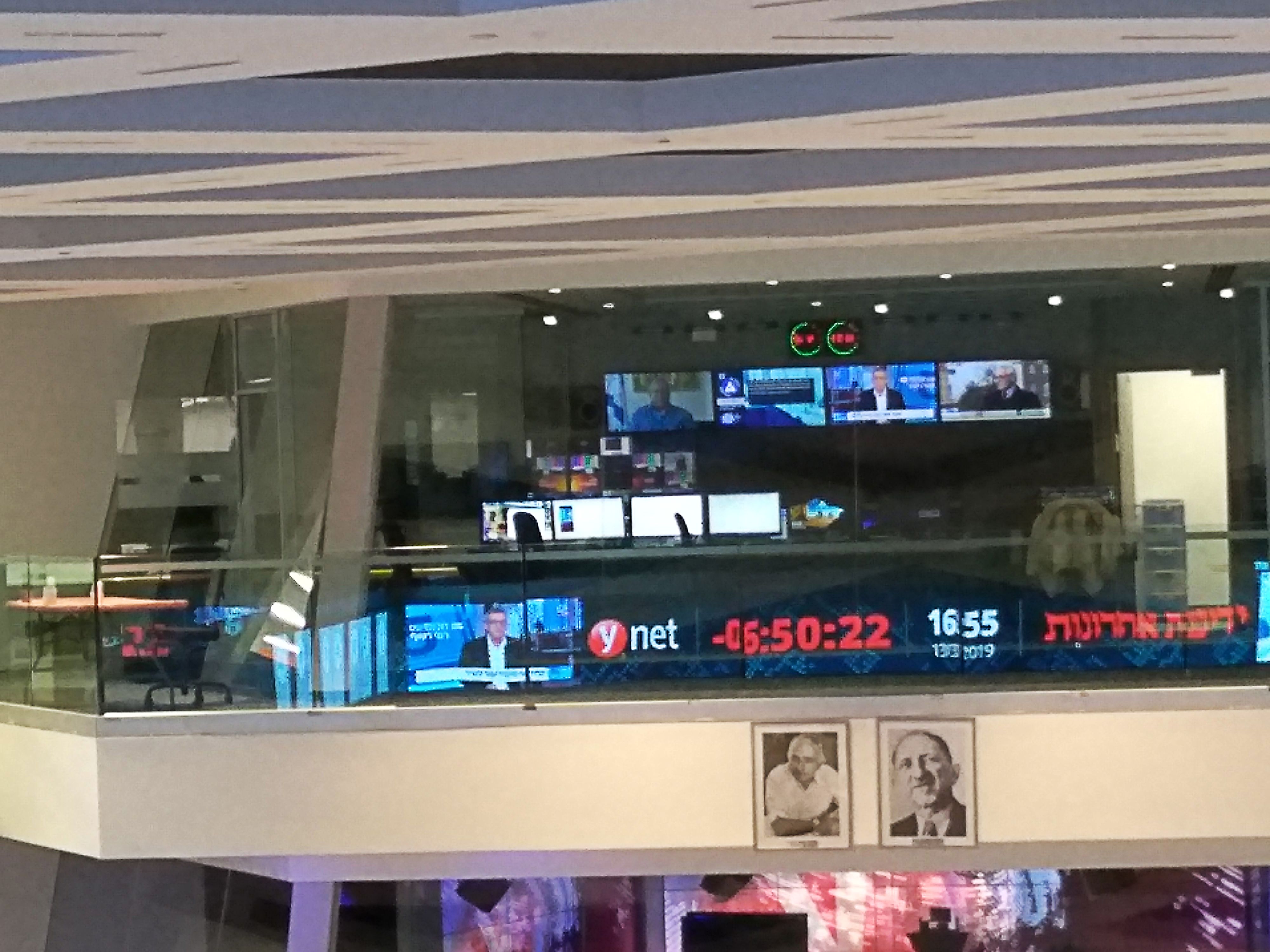
The company’s development into video makes those relationships more varied. Its 2019/2020 brand profile describes a newsroom with two television studios, live coverage and produced programming. The official YouTube channel carries interviews, special broadcasts and reporting across subjects. A news website can consequently act as a viewing destination as well as a reading destination.
From an advertiser’s perspective, the attraction is the opportunity to appear where a relevant audience already spends time. From a reader’s perspective, commercial messages occupy some of the same space as journalism. The two interests can coexist, but they are not identical. Clear labeling and restraint matter because the reader experiences the entire page, not separate editorial and sales spreadsheets.
There is also a practical distinction between ynet and a software company serving publishers. ynet produces and distributes the material; technology vendors help it arrange, measure and monetize that material. Its expertise includes commissioning, editing, reporting and presenting news. Installing the same tools would not give another business the same publication.
A second click is a product decision
One documented technology partner is Taboola. An earlier case study describes ynet using Feed for recommendations and Newsroom for real-time traffic analysis and headline testing. It says previous technology arrangements had been difficult to reconcile with the publisher’s plans. This was work on the reading experience and the economics surrounding it.
A separate Homepage For You case study reports an increase of up to 46% in click-through rate on Taboola-powered homepage positions, a 6% increase in overall organic homepage click-through and a 2.4% decrease in bounce rate. These are vendor-reported results for that implementation. The 46% figure does not describe growth in total audience or revenue.
Taboola case study. Different measurement scopes; neither figure measures total company growth.
“the right balance between journalistic curation and content personalization”
Dror Amir, identified as ynet CPO in the Taboola case study
The transferable idea is to test a specific decision: which relevant article should appear in a particular position? Editorial teams still need to decide which stories deserve prominence. A click measures a response to an invitation; it does not, by itself, measure accuracy, public value or whether the reader was glad to accept.
That qualification matters for smaller publishers. Personalization needs a worthwhile selection of stories and enough observed behavior to evaluate changes. A thin article inventory or a tiny audience may make the same experiment less useful. Start with a clear editorial choice and a measurable reader problem, rather than assuming a recommendation engine will manufacture demand.
The audience beyond the Hebrew homepage
The English operation now presents itself as ynet Global. Its pages extend beyond immediate news into business, Jewish life, food, podcasts and immigration-related coverage. In July 2026, it invited startups to apply for Going Global, a feature involving innovation experts and the editorial team. The invitation illustrates how a publication can build a more specific community within a broad news service.
Inside the wider group, Elad Tena began as editor-in-chief of Yedioth Ahronoth and ynet in August 2025. The shared role is a useful reminder of the company’s continuing connection to print, even after a history that began with a separate digital newsroom.
ynet’s next visit can be a quick headline check, a video interview or a paid feature. Its business depends on making each of those choices worthwhile. The lesson of the vanished overseas paywall still applies: before deciding what to charge, understand the reason somebody came through the door.
Read, watch, follow
Visit the publication and explore its reporting, premium stories and video interviews.