Recruitment is a business of improbable adjacencies. A software engineer in Granada may suit a project in London. A client asking for one contractor may, several good hires later, ask for a whole team. A language learned in Lyon becomes useful on a call with São Paulo. Yann Roche has made a career in those spaces between place, skill and need. He founded IFIT Solutions in 2012, grew it across Europe and the Americas, and then found himself with a more complicated assignment: turning the accumulated judgment of an international recruitment company into the foundation for an artificial-intelligence business.
The public version of Roche is mostly work. His career begins in communications, moves into sales and technology staffing, and keeps widening geographically. He worked at Eurostaff Group and rose from consultant to practice director at K2 Partnering Solutions. Later assignments connected him to Telefónica Digital in Latin America and to Imperial Tobacco's Fontem Ventures. The locations attached to his career read like the departure board at a busy terminal: Lyon, Paris, London, Amsterdam, São Paulo and the wider Latin American market.
Four languages appear on his professional profile - French, English, Spanish and Portuguese. That detail is more than decoration in international recruiting. A CV travels easily; context does not. Titles change meaning between countries. Salary expectations, notice periods and contracting norms behave badly at borders. Roche's operating education was learning to translate all of it quickly enough for a client with a vacancy and a clock.
A company built like a network
IFIT Solutions began as a specialist recruitment consultancy in technology, finance and human resources. Its model was not mysterious. Find scarce people, understand regional markets and earn enough trust to be invited back. The execution was difficult precisely because the description was simple. IFIT established operations across the UK, Spain, the United States, Mexico and Costa Rica. Its recruiters supplied permanent hires, contractors and project teams to companies whose talent needs rarely respected national boundaries.
The numbers show a compact business finding momentum. Revenue rose from €1.462 million in 2019 to €2.173 million in 2020, then €3.179 million in 2021 and €4.454 million in 2022. EBITDA margins stayed near 13 or 14 percent. In 2023, amid global technology layoffs, revenue eased to €4.043 million while the published EBITDA margin held at 14 percent. A service company keeping its margin through a bad hiring cycle is not a magic trick. It is usually the result of repeat clients, careful cost control and a willingness to do unglamorous work well.
IFIT Solutions revenue, € millions
Published company figures. The 2023 dip followed a global technology hiring slowdown.
The company described its growth method as “land and expand.” Win a client, deliver, then grow the account until the relationship becomes durable. Some major IFIT relationships ran for eight to ten years. In an industry that can resemble a telephone exchange with invoices, longevity is the revealing metric. The recruiter becomes useful not only because of a database, but because the client stops having to explain the entire business every time the phone rings.
The deal that enlarged the job
On July 31, 2023, Spanish-listed Substrate AI acquired 100 percent of YAMRO Holding, the English company containing IFIT's businesses. The price was $4,602,573, paid entirely in Substrate shares. Roche became a shareholder and stayed at the controls. Rather than folding IFIT quietly into a larger chart, the buyer asked its founder to lead the combined human-resources operation under Fleebe AI.
The logic paired two assets that needed each other. IFIT brought revenue, recruiters, long client relationships and routes into several countries. Fleebe Corporate brought software for talent acquisition and talent management, built with AI capabilities from Substrate's technology group. One side knew how the work happened; the other hoped to make more of that work visible, repeatable and scalable.
“Many times we look for talent outside our companies and we have it inside.”Yann Roche at Mobile World Congress 2024, translated from Spanish
That line contains the most interesting part of Roche's new brief. Recruitment usually begins with an absence: somebody left, a project arrived, a capability is missing. Talent management begins with a different question. What if the right person is already on payroll but hidden by department lines, incomplete skills records or a manager's limited field of view? Fleebe's software was designed to help companies source and screen external candidates, while also assembling a view of internal skills, development plans and possible team moves.
Roche did not arrive at that question from a laboratory. He arrived through a decade of client calls and candidate searches. The difference matters. AI in recruitment can make people nervous for sound reasons: hiring decisions carry bias, consequence and human ambiguity. Roche's public language has emphasized decision support, ethical use and responsible AI. The useful role for software is to widen what a company can see and organize what it already knows, while judgment remains accountable.
From a booth in Barcelona to a wider map
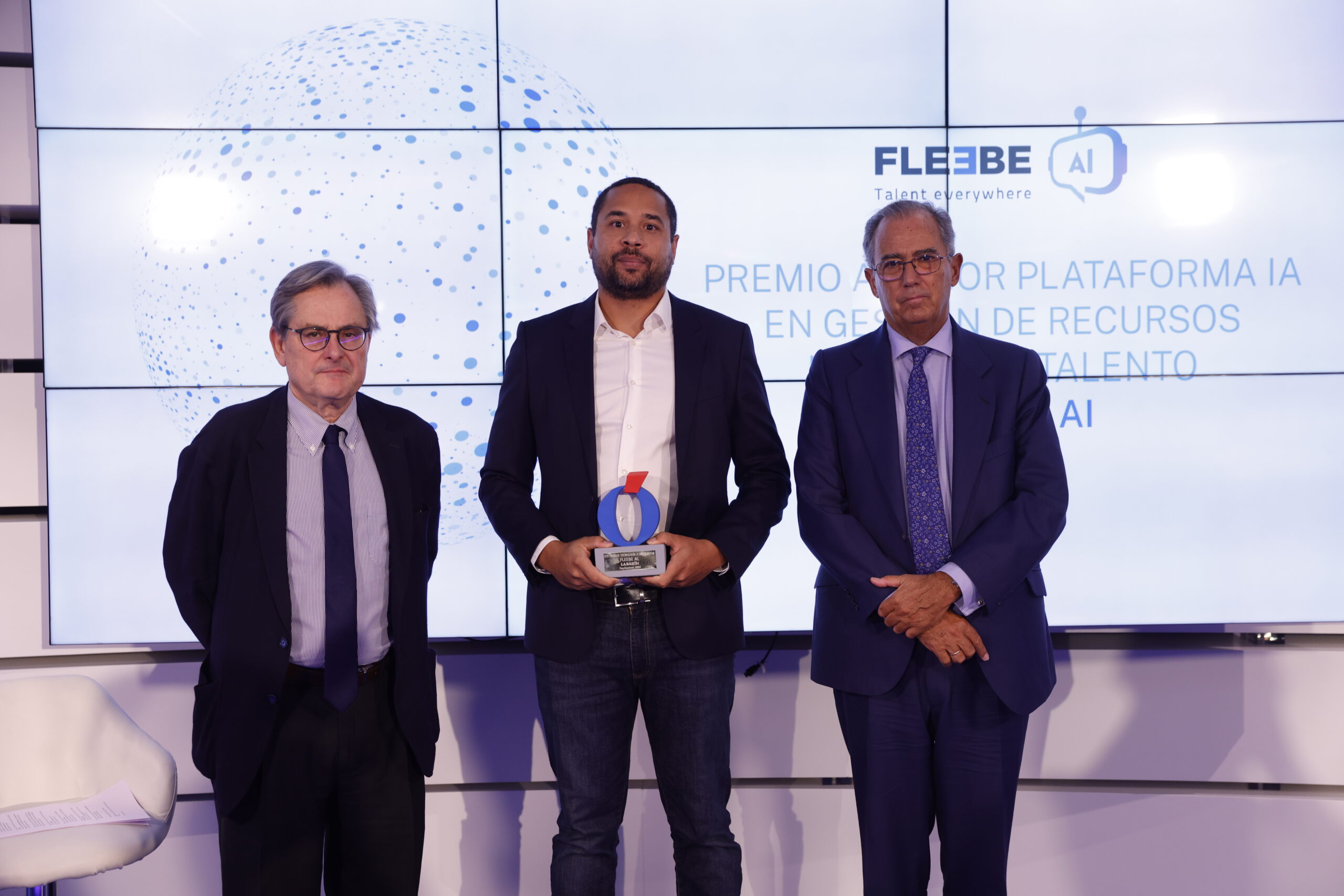
Fleebe Corporate was presented at Mobile World Congress Barcelona in February 2024. The setting was apt: a gathering famous for phones offered Roche a stage to discuss the less visible network inside companies. He described the presentation as a point of pride and said the aim was to help organizations grow while caring for talent. In September, Fleebe AI's platform received a La Razón Innovation and Technology award for human-resources and talent management. Roche used the moment to credit the team and repeat the commitment to ethical, responsible AI.
The operating business beneath the product continued to matter. IFIT had offices in London, Granada, Costa Rica and Mexico, with client access across the US and Spain. The agency's IT contracting work remained its largest line and supplied recurring revenue. Software startups often spend heavily to discover a market. Fleebe began with a market that had been calling IFIT for years.
By 2025, Fleebe's map was expanding through acquisition. Substrate AI bought US-based Secure HR, owner of the Lanteria HR software used by hundreds of companies. Roche said the addition would strengthen Fleebe's software division, add experienced people and help it grow in the difficult US market. Weeks later, the group announced the $1.8 million acquisition of Swiss consultancy Developing Talent. Roche's stated attraction was straightforward: new markets, new clients and a broader service portfolio.
The pattern resembles IFIT's old land-and-expand method at a larger scale. Start with a working relationship. Add adjacent services. Make the account more valuable because fewer problems must be handed to strangers. The phrase “360-degree HR” can sound like something invented by a circle on a presentation slide. In practice, it means combining recruitment, talent software, training and administration so that an international client does not have to stitch together every piece.
The operator's second act
Founders are often narrated as inventors, but Roche's public career suggests another archetype: the connector. His work links languages, labor markets, contractors, project teams, recruiters, software and a listed parent company. Even the acquisition kept the connection intact. He sold the holding, received shares and took on a wider operating role. The exit became an entrance with more meetings.
A former colleague, Santiago Massetta, left a brief recommendation that supplies a rare personal glimpse. He called Roche open, easy to deal with and someone he would work with again. It is modest testimony, which is precisely why it fits. Recruitment runs on judgment, but it also runs on whether people answer your call twice.
The aspiration now is larger than filling vacancies. Fleebe's stated products cover attraction, hiring, internal mobility, skills visibility and development. Roche has spoken about helping workers and companies grow together. The hard part will be preserving the human context that made IFIT useful while asking software to operate across more customers, more markets and more consequential decisions.
That context includes the small frictions software diagrams tend to omit. A candidate can be technically qualified and culturally wrong for a project. A manager can request an external hire before noticing an employee ready for promotion. A global client can ask for one process while five national labor markets answer differently. IFIT grew by navigating those exceptions. Fleebe's opportunity is to make the patterns legible without pretending the exceptions have disappeared. Roche's advantage, if it holds, is that he has watched both sides of the desk argue with the neat version of reality.
There is a neat irony in the project. For years, Roche's company searched across borders for people who were difficult to find. Now he leads a platform partly built to reveal people who were there all along. One business moved talent around the map. The next is trying to draw the map more accurately.