The Scene, 2026
A patient's whole story, finally in one place
Somewhere in the United States, a woman with a rare cancer has records in eleven different systems. An oncologist's notes here. A pathology PDF there. A scan in a hospital portal she forgot the password to. Lab values trapped in a fax. For most of medicine's digital era, that scattering was simply the cost of being sick in a country with thousands of care sites that don't talk to each other.
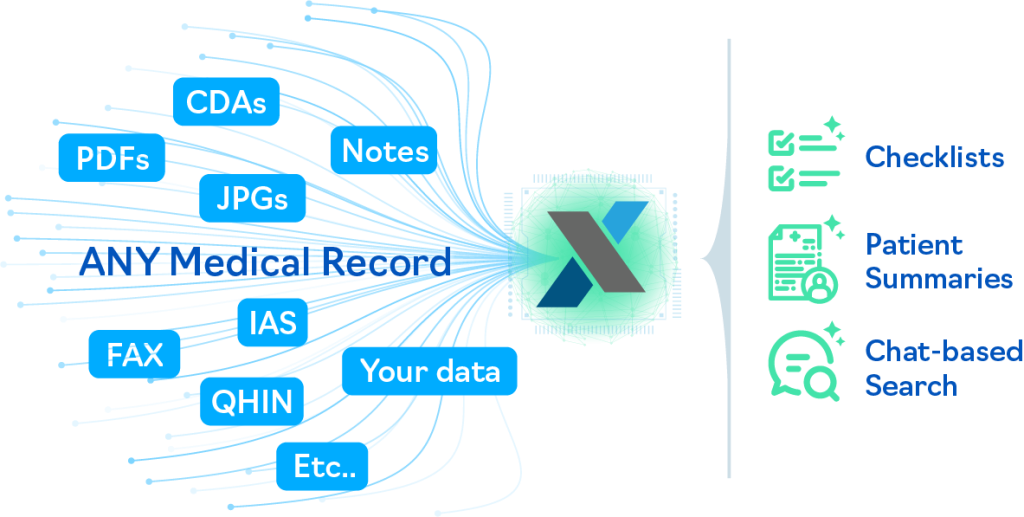
xCures was built to undo it. The company runs an AI platform that automatically retrieves those records from any care site in the US, then normalizes and structures them into one searchable, source-traceable database. On top of that, its AI writes natural-language patient summaries and configurable clinical checklists - each insight linked back to the original document, so a human can always check the machine's work.
Most health-tech promises to "connect" your data. xCures does the unglamorous part - going and getting it.YesPress — the editorial read
The Problem They Saw
Medical-record chaos is a research problem too
Here is the inconvenient truth the founders kept bumping into: the experience of nearly every cancer patient is recorded somewhere, and almost none of it is usable for research. Clinical trials enroll a sliver of patients under tightly controlled conditions. Everyone else - the overwhelming majority - generates "real-world" data that's real, plentiful, and effectively unreadable by a machine.
xCures' answer is a tidy bit of ambition: collect, organize, and standardize comprehensive data from patients across the country, then let the system learn from all of them. The company calls the destination a "virtual trial" - research that continuously learns from the clinical experiences of all patients, on all treatments, all the time.
The cure for messy data isn't more data. It's structure - and somebody willing to do the structuring.The central tension
The chaos
Records sit in dozens of incompatible systems, formats, and portals - PDFs, faxes, free-text notes.
The fix
Auto-retrieve, normalize, and structure into a searchable, HIPAA- and Part 11-aware database.
The Founders' Bet
AI people who wandered into oncology
xCures was founded in 2018 by Marty Tenenbaum (Co-Founder & Chairman) and Jeff Shrager (Co-Founder & Director of Research) - both with deep roots in artificial-intelligence research long before "AI in healthcare" became a pitch-deck cliche. Their bet was that the bottleneck in precision oncology wasn't the science of treatment. It was the plumbing underneath: data that couldn't move, couldn't be read, couldn't be trusted.
Running the company is CEO Mika Newton, who brought roughly two decades of life-sciences commercial leadership - including roles at Doctor Evidence and Evidera - and a focus on evidence-based medicine. The combination is telling: research idealists up top, a commercial operator turning the idealism into something a biopharma buyer will pay for.
It takes a certain stubbornness to build the boring layer everyone needs and nobody wants to build.On the founders
The Product
What you can actually do with it
Strip away the acronyms and xCures does four useful things. It goes and gets a patient's records from anywhere. It structures them into data a machine and a clinician can both read. It summarizes the patient's journey in plain language. And it validates every AI output against the source document, so trust isn't a leap of faith.
xCures Platform
Real-time retrieval, normalization, and structuring of records from any US care site into one searchable database.
AI Clinical Checklists 2.0
Partners rapidly design and deploy source-verifiable clinical checklists with full traceability.
Patient Summaries
Natural-language "Cancer Journey" summaries, each line linked back to its source document.
xDECIDE
Clinical decision support that helps oncologists surface personalized treatment options.
Every machine-made claim links to the page it came from. The AI shows its homework.On source traceability
A short history of going and getting the data
Milestones • 2018 → 2026
2018xCures founded by AI researchers Marty Tenenbaum and Jeff Shrager.
2021$12.69M Series A led by Boehringer Ingelheim Venture Fund; 1,000+ patients served.
2023Clinical data extraction offered as a service on AWS Marketplace; PanCAN partnership.
2024USPTO patent for virtual-trial AI; activates as a QHIN participant; platform expands to all therapeutic areas.
2025HITRUST e1 certification; TEFCA Individual Access Services; Clinical Checklists 2.0 launch.
2026careMESH and Colorectal Cancer Alliance partnerships deepen EHR-workflow interoperability.
The Proof
The receipts: money, patents, partners
Skepticism is healthy, so here are the verifiable bits. xCures raised a $12.69 million Series A in 2021, led by the Boehringer Ingelheim Venture Fund with Vanedge Capital, Harmonix Fund, and Metaplanet. It holds a USPTO patent for its virtual-trial technology. And it has stacked the certifications that gatekeep serious healthcare data work - QHIN participation, HITRUST e1, TEFCA.
$12.69MSeries A
2018Founded
1,000+Patients served
~51Team size
Certifications & credentials that take years to earn
Relative effort to clear, illustrative scale
Heights are illustrative, not audited - but each bar is a real door that stays locked to most health-data startups. xCures walked through all four.
On partnerships, the list reads like a tour of cancer research: Massive Bio, the Pancreatic Cancer Action Network, the Kidney Cancer Association, Aetion, NeoGenomics, careMESH, and rare-disease alliances for DIPG/DMG and fibrolamellar carcinoma. The platform was even featured as a commitment to the White House Cancer Moonshot, tied to a natural-history study of diffuse midline glioma.
A startup is only as credible as the institutions willing to share their patients' data with it.On partnerships
The Mission
Better decisions, regardless of the condition
xCures started in oncology because cancer is where the data is most fragmented and the stakes are highest. But in 2024 the platform expanded to support all therapeutic areas, offered as SaaS. The mission scaled with it: facilitate better healthcare decisions through data-driven insight and personalized care, no matter the disease.
It's a B2B business - biopharma companies, payors, clinicians, and advocacy foundations are the buyers - but the through-line is patient-centric. The person whose records were scattered across eleven systems is the one who benefits when they finally come together.
The endgame isn't a database. It's a patient who never has to explain her own history from memory again.Why it matters
Why It Matters Tomorrow
Back to that woman with eleven systems
Return to the opening scene. The woman with the rare cancer and records in eleven places. In the old world, her oncologist reconstructs her history by hand, misses a lab value, and her experience contributes nothing to the next patient's care. In the world xCures is building, her records arrive structured and summarized, the AI's reading is checked against the source, and her journey quietly joins a continuously learning system that helps the patient after her.
That's the wager: that the most valuable thing in precision medicine isn't a new molecule but the boring, relentless work of making existing data legible. xCures bet on the plumbing. Tomorrow's medicine runs on whether they're right.
They didn't set out to cure cancer. They set out to make the data that might.The closing line