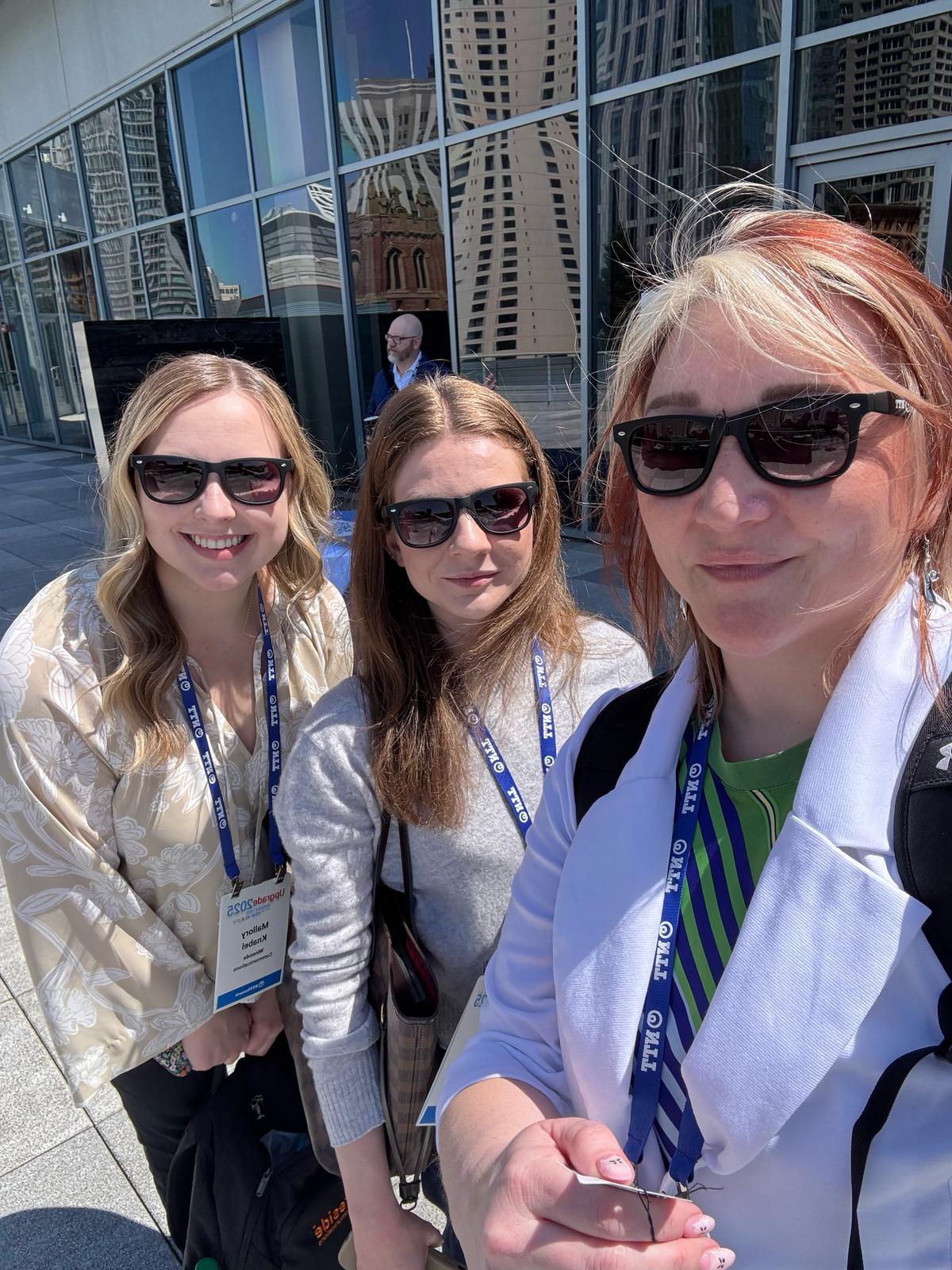
At a technology conference in San Francisco, a robotic dog waved. This was not the main event. The main event concerned photonic devices, modern cryptography, artificial intelligence and an optical network architecture whose acronym - IOWN - sounds like a declaration made by a very confident machine. Yet when Lauren Fischer of Wireside Communications later described NTT Research’s Upgrade 2025 summit, she remembered the wave. The gesture was silly, she wrote, and that was precisely why it worked. A difficult technology had offered a tiny sign of life.
That moment contains Wireside’s business in miniature. The independent agency works in the stubborn end of public relations: networking, security, silicon, software, mobile systems and health IT. These are fields in which the product is often invisible, the vocabulary arrives before the meaning, and the customer may need three diagrams before lunch. Wireside’s job is not merely to make the explanation shorter. It is to find the point at which the machinery touches a person.
The originA firm gets a second beginning
Joya Subudhi founded the practice in 2004. In 2020, she formed a strategic partnership with RJ Bardsley, an agency veteran based in San Francisco. An NC TECH profile calls that moment a revitalization. The word fits because this was less a conventional founding than a second beginning: Subudhi’s established shop acquired a partner, a broader geographic reach and a clearer claim on the complicated parts of the technology market.
The company now describes teams in the United States and Europe, with Richmond as its listed headquarters and public activity in Boston and San Francisco. Its client list has included NTT and NTT Research, Infineon, GitLab, Auth0, Spirent, MediaTek and the Internet Society. More recent work spans cybersecurity specialist Sygnia, chip interconnect company Enfabrica, healthcare technology company CitiusTech and a cluster of AI-infrastructure businesses. The common denominator is not the product. It is the difficulty of explaining why the product matters before the listener’s attention expires.
“People want to be treated as if they are the most important person in the room.”Stephen Russell, on Wireside’s NTT Upgrade work
The productThe itinerary is the argument
Consider Upgrade 2024, NTT’s annual research and innovation summit. More than 30 reporters, influencers and analysts attended in person. Wireside did not treat them as one block of “media.” It arranged personalized itineraries, private gatherings, conference sessions, interviews, travel logistics and tailored demo tours. Some guests were encountering Upgrade for the first time; others had years of history with NTT. The schedule recognized the difference.
This is the unusual thing about the Wireside method: the itinerary is not administration around the communications strategy. It is the communications strategy. A reporter gets time with the scientist whose work fits her beat. An analyst encounters a demonstration at the moment its business consequence is clear. A spokesperson has been coached before the microphone appears. The press release becomes the least interesting object in the room.
The offerSix services, one recurring problem
Wireside sells six broad kinds of work: positioning and narrative development; communications strategy and planning; focused campaigns and events; paid media strategy and buying; training and coaching; and internal communications. The commercial model mixes retainers with defined projects. A company can keep a senior strategist on call, commission a fixed-time messaging review, train up to five spokespeople, or assemble a specialist team around a launch. Rates are negotiated rather than published.
The agency calls its campaign approach “no-fat”: experienced communicators assigned to a specific target instead of a large administrative pyramid. That language draws the competitive line. A global network can offer offices everywhere and armies of specialists. Wireside offers a smaller independent team with domain fluency and direct senior attention. The bet works when a technical company needs translators who already know the difference between a chip, a switch and a security operation. It is less compelling when the brief is pure consumer spectacle or when sheer media-buying scale is the main requirement.
Begin with the business, patient or consumer consequence - not the feature list.
Match each reporter, analyst or customer with the person and proof most relevant to them.
Treat the event as a beginning. Follow the conversation after the badges come off.
This is the part another company can copy without hiring an agency. Stop sending every audience the same package. Write down what each important person already knows, what would surprise them and which expert can prove it. Build a sequence of encounters instead of a blast. Then follow up with the next useful idea, not a request for coverage. The method costs attention and preparation more than software.
Proof of workPersistence becomes positioning
In 2025, cybersecurity company Sygnia made Wireside its global agency of record across the United States and Europe. Noa Benari, Sygnia’s marketing vice president, said the distinction was not only skill or strategy but “hustle” - a team that did not give up and that recognized the company’s evolution into a global cybersecurity player. That is a useful client testimonial because it describes a behavior, not a compliment.
The work earned a Gold Bulldog award for best B2B campaign. Wireside also took bronze awards for NTT Upgrade 2024 and Enfabrica, while Bell Ringer recognition covered work for Infineon, CitiusTech, Socotra, Sygnia, NTT and Enfabrica. In 2026, Ragan placed the agency on its Top Places to Work in Communications list, and Provoke Media named Subudhi and Bardsley together to its Innovator 25 Americas roster.
The Provoke recognition centered on what Wireside calls the Community Effect: stories travel farther when reporters, analysts, creators, employees and clients feel connected to something larger than a claim. In practice, that has meant bringing media into cultural and technical experiences at Infineon’s OktoberTech, NTT’s Upgrade events, the Osaka World Expo and NTT’s R&D Forum. It sounds like a lofty philosophy. Its mechanics remain pleasingly ordinary: invite carefully, prepare deeply, introduce people thoughtfully.
The next wireInvisible infrastructure seeks a voice
In September 2026, Wireside announced six new accounts: Aria Networks, Ferveret, Salience Labs, NTT Transatel, Workspot and Xscape Photonics. Their products include AI-native networking, data-center cooling, optical switching, cellular IoT, cloud PCs and photonic connections inside data centers. This is the infrastructure beneath the AI boom - consequential, expensive and largely unseen.
That makes it ideal Wireside territory. The agency is not trying to turn engineers into mascots or every technical specification into a tearjerker. Its better instinct is to preserve the specificity while changing the point of entry. Start with a room, a person, a threat, a patient, a race, a robot that waves. Then lead the audience back toward the machinery.
Public relations is frequently described as amplification, as if the only problem were volume. Wireside’s work suggests another metaphor. The problem is impedance: an idea moving between worlds, losing energy each time it crosses. The job is to make the connection clean. On one side is the machine. On the other is somebody deciding whether to care.