Company Dossier / Healthcare Mobility
Wingz
The rideshare that stopped chasing everyone, and started driving the people who actually need a ride.
The rideshare that stopped chasing everyone, and started driving the people who actually need a ride.
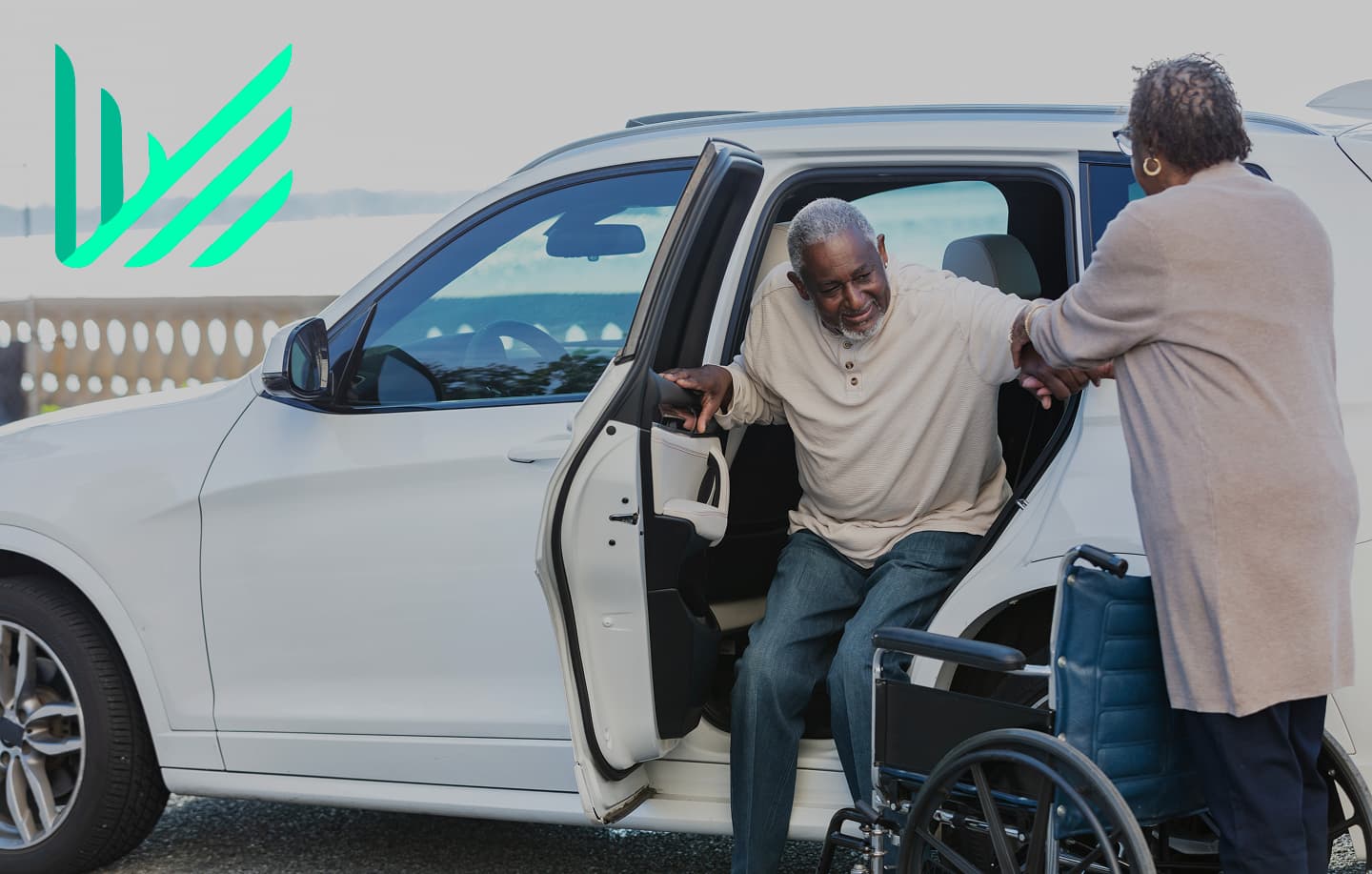
An 84-year-old leaves a clinic in suburban Atlanta. The same driver who dropped her off three hours ago is waiting at the curb, engine running, name already on the schedule. He knows she uses a cane on her left side. He knows the appointment runs long. He does not charge her more because it is 4 p.m. and traffic is bad. This is not a miracle of customer service. It is Tuesday, and it is the entire reason Wingz exists.
That ride is invisible to most people, which is exactly the point. The rideshare apps you know were built to move anyone, anywhere, cheaply, at the tap of a thumb. Wingz was built to move a specific person - frail, often poor, frequently scared - to the one place they cannot skip. It is a narrower business. It is also a harder one.
Roughly speaking, medicine spends enormous energy on what happens inside the clinic and almost none on whether you can get there. Missed appointments cost the U.S. health system billions, and a striking share of them come down to something stupid: no ride. The patient is elderly, or can't drive, or can't afford a cab, or needs an arm to lean on getting out of the car.
The standard rideshare answer - "just open the app" - fails this person on contact. They may not own a smartphone. They may need a driver who is trained in HIPAA, not just trained to find the airport. They may need the same trip every week for a year. Surge pricing on the way to chemo is not a glitch in that model; it's the model working as designed.
Here is the part that should annoy you slightly. In 2011, four founders - Geoff Mathieux, Jeremie Romand, Fred Gomez and Christof Baumbach - launched a peer-to-peer ride company called Tickengo. In 2013 it became, on paper, the first company in the world to win a ride-sharing license, ahead of both Uber and Lyft. Former San Francisco mayor Willie Brown advised them. They were early to one of the largest land grabs in transportation history.
And then they did the un-Silicon-Valley thing. Rebranded as Wingz in 2014, and instead of racing two far better-funded giants to the bottom on price, they pointed the whole machine at healthcare. Fewer rides. Higher standards. A 5% driver acceptance rate. It is the strategic equivalent of being handed a megaphone and choosing to whisper to the people who most needed to hear you.
A credentialed driver who shows up every week beats a cheaper stranger who might.
Strip away the brochure language and Wingz is a credentialing engine bolted to a scheduling engine. The drivers are the product. Everything else - the app, the broker contracts, the software - exists to put a vetted human at the right curb at the right minute.
Curb-to-curb, door-to-door, or hand-to-hand - where the driver physically hands the rider off to a caregiver at both ends.
Background checks, drug screening, HIPAA and CTAA passenger-assistance training. Most applicants don't make it.
Recurring trips that pair the same rider with the same driver - predictable care, predictable income.
Purpose-built NEMT dispatching and compliance software, licensed to brokers and transportation partners.
Four founders start a peer-to-peer ride platform in San Francisco - among the first of its kind in the world.
Reported as the first company anywhere to receive a ride-sharing license - before Uber and Lyft.
Tickengo becomes Wingz and earns permission to operate at San Francisco International Airport.
A $2.7M equity round followed by an $11M Series B, with backers including Expedia, Altimeter Capital and Marc Benioff.
New CEO leans the company fully into specialized non-emergency medical transportation.
Active in Georgia, Arkansas, Tennessee, Virginia and Florida, having delivered over one million NEMT rides.
A specialist doesn't win on volume. It wins on the gap between what it lets in and what it keeps out. Two numbers tell the whole story.
Bars scaled for legibility, not to a single axis. Acceptance/rejection per company materials; ride and state counts approximate.
Wingz states its mission plainly: enable access to care for vulnerable populations while empowering drivers to earn with flexibility and purpose. Its vision is bigger than cars - to become the most trusted marketplace for accessing healthcare, "starting with transportation." The internal compass is an acronym, CARES: Compassion, Adaptability, Reliability, Empowerment, Safety. Acronyms are usually where sincerity goes to die. This one at least describes the job.
America is aging. The population that can't drive itself to care is growing faster than the systems built to move it. Health plans are increasingly judged - and paid - on outcomes, and outcomes don't happen if the patient never arrives. That makes "who's taking grandma to the doctor?" a logistics problem worth solving, with real money behind it: NEMT brokers, Medicaid and Medicare payors, and employers all need a partner who treats the ride as part of the treatment.
Wingz competes against the healthcare arms of Uber and Lyft, against ModivCare and Veyo and a long tail of local providers. It is smaller than the giants and less entrenched than the incumbents. Its edge is the thing that's hard to copy and harder to fake: a driver who knows your name, your route, and which side you favor when you stand. The skeptic's question is whether a high-touch model can scale. The believer's answer is that the part nobody else wants to do is exactly the part that's defensible.
Back in suburban Atlanta, the engine is still running at the curb. The appointment was kept. Nobody live-tweeted it. That, quietly, is the win.
The rideshare era promised to move everyone. Wingz noticed that "everyone" quietly excluded the people who needed moving most, and built a company in the gap. It is not the loudest story in transportation. It is one of the few where showing up on time is, literally, a matter of health.