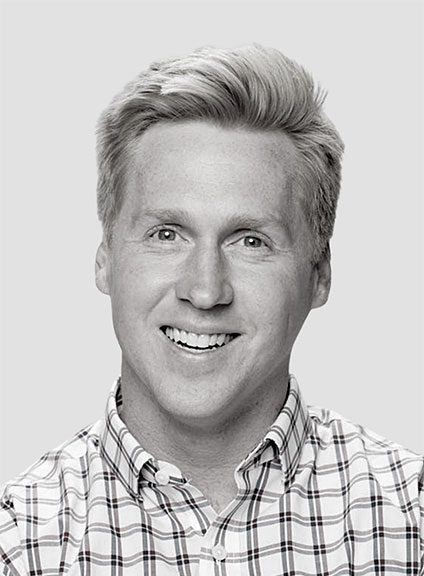
Will Foiles spends his days worrying about a gas most people never think about. Natural gas is mostly methane, and when it escapes a wellhead or a pipeline joint it does nothing useful and a great deal of harm. It is responsible for somewhere between a quarter and a third of the warming humans have caused. It is also invisible. That combination - enormous and unseen - is the entire premise of the company he runs.
Project Canary, the Denver firm Foiles co-founded in 2018 with Chris Romer, takes its name from the bird that miners once carried underground as a living alarm. The new canary does not sing and does not die. It sits on a gas site as a high-fidelity sensor, reads the air continuously, and feeds the numbers into a platform that turns "we think we're clean" into "here is the measurement."
The pragmatist's bet
What makes Foiles unusual in climate is the place he started. Before sensors and ESG and methane, there was finance. He worked as an investment banking associate at Goldman Sachs, the kind of role people build whole careers around. He has the credential to match - a CFA charter, the marathon certification of the finance world - sitting on top of four academic degrees.
The degrees themselves read like someone who could not decide between making money and saving the planet, then decided to do both at once: a BBA in real estate from the University of Georgia, an MS in finance from Villanova, then an MBA from Stanford's Graduate School of Business stacked alongside a master's in environment and resources from Stanford's school of earth and energy sciences. Finance in one hand, earth science in the other.
That pairing is the whole company in miniature. Project Canary does not argue that fossil fuel should vanish tomorrow. It argues something quieter and harder to dismiss: that as long as gas is being produced, the cleanest molecules should be measurable, provable, and rewarded. Foiles calls it a pragmatic approach. Measure what is actually leaking, then go fix it.
From hardware to the cloud
Project Canary began closer to the metal - building the sensors themselves, the physical instruments bolted to gas infrastructure. Over time the center of gravity moved. The company became less a hardware shop and more a data platform: ingesting readings from its own devices plus satellites, flyovers, optical gas imaging, and operators' own records, then running proprietary models to tell a customer where their emissions actually are and what to do about them.
It is a meaningful shift, and you can see it even in how Foiles has been described - COO in some materials, CEO in others, as the role and the company grew up together. He oversees the unglamorous machinery of a scaling company: supply chain, field monitoring systems, new product development, partnerships, financial modeling, and the long-horizon data projects that a measurement company lives or dies by.
The market is finally catching up to the premise. Regulators are writing methane into rules. Buyers are starting to pay a premium for responsibly sourced gas. The technology to measure at scale has arrived. Foiles describes it as a convergence - regulation, business incentive, and capability all arriving in the same window. Project Canary's job is to be the referee standing in the middle of it.
Why it sticks
The appeal of Foiles as a figure is that he is not selling outrage. He is selling instruments and the honest numbers they produce. In a field crowded with pledges and net-zero press releases, his pitch is almost rude in its simplicity: do not take anyone's word for it, including his own. Take the measurement. For a former banker who learned early that the number on the page is the only thing that survives the meeting, it is a fitting second act.