At Oregon State Treasury, the worry was an extract that failed to refresh. The dashboard could still open. Its charts could still look entirely respectable. But the figures might belong to yesterday, and some groups using the agency’s analytics needed them for court filings. A broken screen announces itself. An old number can arrive wearing a very good suit.
- Wiiisdom checks the reports people read, beyond the data feeding them.
- Its products govern Tableau, Power BI and SAP BusinessObjects.
- Automated tests can drive certification, deployment gates and alerts.
- The practical lesson: decide what correct means before automating the check.
The Treasury adopted Wiiisdom to check freshness, schedule daily tests and make validation status visible. The distinction matters: a developer may understand a test result; a dashboard reader needs a signal they can recognize. The company’s interview with Chief Administrative Officer Byron Williams describes a move toward catching problems proactively. Trust became something users could inspect, rather than something they had to borrow from the person who built the report.
A report can fail quietly
Wiiisdom sells analytics governance software. It works around existing BI platforms, checking their content and managing its passage through development, testing and production. Its chosen territory is the space between a well-managed dataset and a number someone actually acts upon. Filters, calculations and transformations happen there. Each can introduce a mistake without making the underlying database any less tidy.
The company reports more than 600 enterprise customers. Its public roster includes financial institutions, pharmaceutical businesses and government agencies. This is a market where a report may influence a filing, a budget or an operational decision. The buyer is often a BI team trying to maintain quality while more departments publish more content. The beneficiary is anyone asked to believe the resulting chart.
Red Hat offers an early example. In Wiiisdom’s January 2022 account, its Tableau environment had more than 15,000 users and 5,000 workbooks. Test cases lived in Word or Excel; manual checks could take up to a day per dashboard. The account describes execution falling to minutes once cases were configured in Wiiisdom. These are reported customer results, not a universal speed guarantee.
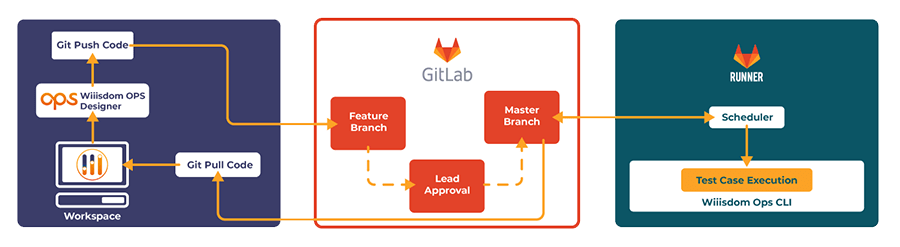
MACIF’s July 2026 story shows the same pressure in a different setting. The French insurer wanted to expand self-service analytics while migrating Tableau Server to Cloud. Weekly regression checks by hand were straining resources. It adopted automated performance, load and regression testing. The important change was who discovered trouble first: the team could detect more of it before a user opened a dashboard.
The badge that can change its mind
Certification is one of Wiiisdom’s distinctive ideas. A label applied once can survive long after the conditions that justified it. Wiiisdom ties the signal to automated validation: content can be certified when checks pass and decertified when they fail. The badge becomes a statement about tested conditions, rather than a souvenir of somebody’s approval.
“At the end of the day, it’s all about delivering consistent quality data and consistent quality dashboards to our customers.”Byron Williams, Oregon State Treasury
For Tableau, the offering includes tests, certification, version control and promotion between environments. The Power BI product checks reports and semantic models and adds capacity monitoring. These are complements to the platforms people already use. Native governance features, manual checking and custom scripts remain alternatives; Wiiisdom’s proposition is to connect validation with ongoing operational control.
- 01DefineBusiness rules
- 02ValidateRepeatable checks
- 03SignalCurrent test status
- 04RepeatChanges + schedules
A business built around other people’s BI
Its older product family, 360Suite, reveals the company’s administrative roots. SAP BusinessObjects teams can use modules for metadata analysis, regression testing, backup, report scheduling and version management. A migration needs evidence that content still works. A mistaken deletion needs recovery. Such jobs rarely receive the applause reserved for a new dashboard, but they keep the dashboard business functioning.
The original company, GB&SMITH, was founded in 2007 by Business Objects specialists Sébastien Goiffon and Alexandre Biegala. Its own history dates the Kinesis-ci acquisition to 2020, bringing Tableau testing into the portfolio. The Wiiisdom rebrand followed in 2021. Supporting customers with several BI technologies helped move the proposition beyond administration of a single platform.

After 15 years of bootstrapping, Wiiisdom announced €6 million from Isatis Capital in October 2022. The stated purpose was faster innovation, broader technology support and international growth. That was investment capital, not the price of a customer deployment. Its cloud business uses subscriptions specified in order forms, with professional services purchased separately. Implementation, training and consulting give customers help with the work surrounding the software.
A Tableau co-innovation announcement adds another detail: version management serves recovery and compliance together. Wiiisdom describes change histories, rollback, restoration of deleted content and audit documentation. A developer wants yesterday’s working version. An auditor wants an account of how today’s version arrived. The same history can answer both.
Automation needs someone to define correct
The lesson to copy is a routine. Choose important reports. Write down acceptable values, freshness requirements and expected behavior. Turn those expectations into checks, schedule them, and assign the failures to someone. Start during design, when the intended meaning is still available to the people writing the calculation.
UCLA’s published interview supplies the reason to keep checking: a workbook can remain unchanged while its underlying data fails. A successful release test therefore has a limited shelf life. Equally, an automated test is only as useful as its rule. If a team defines revenue incorrectly, repeating the calculation faithfully will not settle the accounting question.
The next reader may be a machine
Wiiisdom’s current positioning extends this discipline to agents that observe, recommend and act within configured boundaries. Its platform describes human approval for sensitive decisions and traceable actions. This is the company’s product proposition; it is not evidence that every deployment has achieved the advertised predictive results.
In an August 2026 essay, Goiffon argues that existing reports and semantic models contain years of business knowledge that AI can reuse. The appeal is obvious. So is the dependency: reusing a metric also reuses its defects. Wiiisdom’s bet is that the ordinary work of checking analytics becomes more valuable as more readers, human and otherwise, arrive at the same screen.