YesPress Profile · Vol. 01 · Redmond Dispatch
Wendy MacGregor
She read the CEO's book, then took the job. Now the audience pitch for Microsoft Advertising goes through her office.
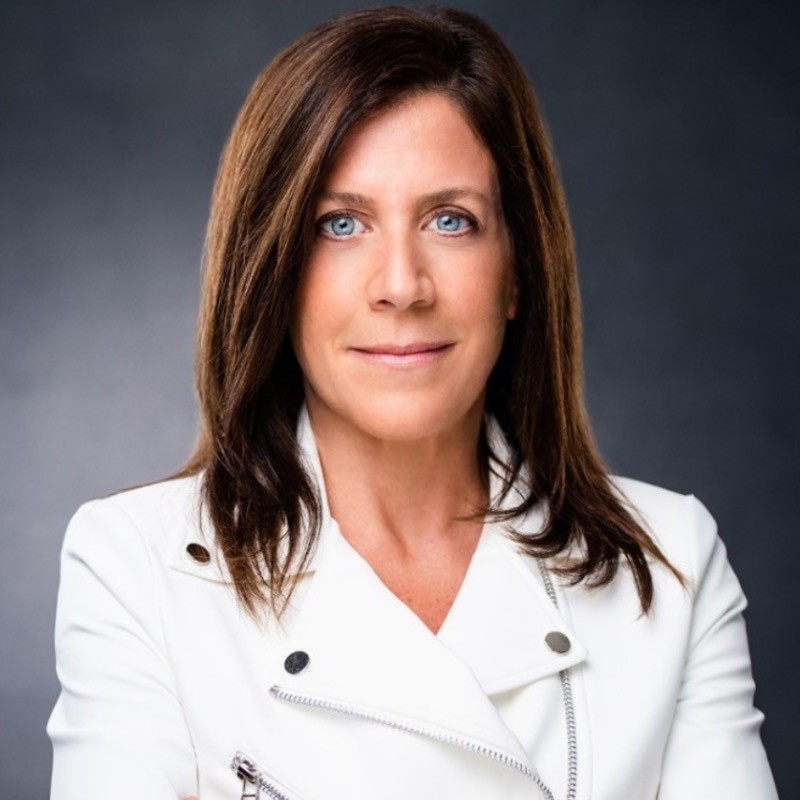
On a Beet.TV set in September 2024, Wendy MacGregor described Microsoft's Copilot as "not a replacement, but an empowerment tool," and that one sentence, more than any org chart, explains how she now sells advertising. She runs Global Media and AdTech Solutions at Microsoft Advertising, a job that did not exist in its current shape until the company tore up its sales structure last year. Her brief is the audience - work and play, Bing and Outlook, Xbox and LinkedIn-adjacent inventory - and the plumbing that connects it to buyers.
Microsoft Advertising spent 2024 reorganizing around two ideas that had been sitting awkwardly in the same conference rooms for years: large advertiser relationships, and the adtech stack underneath them. MacGregor's title - VP, Global Media & AdTech Solutions - is the seam where those two ideas finally got stitched together. She reports up through the leadership team that includes Amanda Richman and Kya Sainsbury-Carter, and her remit is to make the Microsoft audience legible to agencies and platforms that have spent two decades buying it through Google's pipes.
It is, in fairness, an unusual moment to be selling Microsoft's audience. The company is no longer the punchline about Bing search share. It is the company that owns LinkedIn, runs a non-trivial slice of the gaming market, ships Copilot inside Word and Excel, and quietly took an enormous position in OpenAI before the rest of the boardroom world knew what that meant. MacGregor's pitch sits on top of all of that, but it is also straightforwardly a sales pitch. Her job is not to lecture the industry. Her job is to get the line item.
She frames the audience differently than her competitors do, and the framing is the product. Most ad platforms describe their users by surface: search, social, video. MacGregor describes Microsoft's audience by mode - work and play - which is a way of saying that Microsoft sees the same person open a spreadsheet at 10am and a game at 10pm, and treats both as the same brand opportunity. That is the kind of sentence that sounds obvious until you remember almost no one else can credibly make it.
"Even if things don't work out a certain way, I try to look for where there's opportunity."— Wendy MacGregor, Beet.TV, September 2024
MacGregor's resume reads like a map of the open-web advertising business, in order. Each stop was a different bet on where ad dollars were about to move.
Read it forward and you see the arc of the industry itself: from a portal trying to keep readers, to a DSP trying to make bidding rational, to the search company that swallowed the budgets, to a software company that wants the budgets back. MacGregor is one of the few executives who has actually held a P&L inside all four of those stories.
Illustrative weighting based on public interviews and reporting. Not an internal calendar.
The phrase MacGregor keeps reaching for is "abundance mindset," and it is not a corporate poster. It is a specific orientation she has talked about on the record: when a deal goes sideways, when a pitch falls flat, when a reorg moves the chess pieces - look for where the opportunity is, not where the loss was. She names it explicitly. "Even if things don't work out a certain way, I try to look for where there's opportunity."
The second phrase is borrowed, and she gives the credit. Satya Nadella's "Hit Refresh" describes Microsoft's shift from a "know-it-all" culture to a "learn-it-all" culture, and MacGregor says that is what made her sign the offer. "People really appreciate the fact that we can all learn together," she said in the same interview, which is the kind of line that reads as soft until you watch a senior executive actually practice it inside a sales org that has to win every quarter.
The third phrase is the operative one for her industry: Copilot is "not a replacement, but an empowerment tool." She is selling against an anxious moment in advertising, where the buy side is genuinely uncertain whether generative AI will collapse the workflow they have just spent a decade building. Her line is that the tool makes the human faster, not redundant. Whether that holds up over time is a question for the industry. For now, it is the line on the wall.
"It's not a replacement, but it's actually an empowerment tool."— On Microsoft Copilot, 2024
As an undergraduate, MacGregor went around the world via Semester at Sea through the University of Pittsburgh. Long before she pitched media plans in Redmond, she pitched a hammock on a ship.
BA from the University of Wisconsin-Madison. Badger before Bing, by a couple of decades.
Moving directly from Google to Microsoft Advertising is a rare move at her level. Most adtech executives spend a long stretch in a holding company first. She didn't.
Microsoft Advertising in 2024 is in an unusual posture. The company has more first-party signal than it has had in twenty years. It owns the largest professional graph on the internet. It runs the second-largest search engine in the Western market. It ships the productivity suite that most knowledge workers spend their day inside. And it has put its largest single bet on generative AI in front of the consumer, in the form of Copilot, before any of its rivals have a comparable consumer wedge.
That is the audience pitch MacGregor inherited - and the audience pitch she gets to refine. The work and play framing is not poetry. It is the only honest description of a Microsoft user, because the same login spans both. Her job, day to day, is to convince a CMO that buying that login is materially different from buying a search query or a feed scroll.
The risk in the role is not small. Ad sales executives who promise "audience" without delivering measurable lift get short tenures. The advantage is that Microsoft has, for the first time in a long time, a story about audience that does not start by apologizing for Bing. It starts with Copilot in front of hundreds of millions of users, and works backward from there.
In interviews, she defaults to operating-system language - opportunity, learning, mindset - rather than ad-industry jargon. Reads as deliberate.
Few executives will name the book that made them join. MacGregor names Nadella's "Hit Refresh" on the record.
Featured in industry coverage on how senior women are building the next generation of advertising leaders - mentorship as actual line item, not garnish.
"Even if things don't work out a certain way, I try to look for where there's opportunity."
"People really appreciate the fact that we can all learn together."
"It's not a replacement, but it's actually an empowerment tool."