Wen Chu wanted to meet Japan’s mobile internet leaders. In 2008, he and a group of fellow entrepreneurs travelled there to learn from companies such as GREE, DeNA and mixi. The welcome did not immediately include a place at the table. Getting a meeting was itself a problem. He proposed joining forces with other entrepreneurs to solve it. GWC grew out of that attempt.
It is an agreeable origin for a career spent making introductions. Before the auditoriums and international itineraries came a founder trying to get through a door. The obstacle gave him a business proposition: other people needed access, too.
The organization he founded on March 27, 2008 would become associated with the Global Mobile Internet Conference, or GMIC. Its founder acquired a rather smaller description for himself: a little postman of the world
. A postman, at least, understands that a message has little value while it remains in his own bag.
The literature student with a mobile business
His route into technology began well before GWC. Wen Chu, also identified in corporate filings as Ming Zhang, received a diploma in Chinese literature from Jiangsu Changzhou Normal College in July 1998. The qualification gives a pleasingly literary preface to a working life that would involve considerable persuasion.
In 2001, he founded No4media.com, an online community for media professionals. Clickcom followed in 2003. The Guangzhou business was acquired by Nasdaq-listed PACT in 2004. In 2005 came Moabc, a mobile entertainment community; he served as its chief executive until October 2007. It grew to more than ten million users during his tenure.
These businesses give the later conference work a useful context. He had spent years dealing with people gathering around information and entertainment. GWC would gather people around an industry, its opportunities and its unresolved questions. The audience would now occasionally require a passport.
CEO · March 2005 - October 2007
- No4mediaMedia community
- MoabcMobile community
- GWCIndustry network
- GASAScience learning
A club needs more than a guest list
By 2011, GWC’s activities included events, executive trips, reports and consulting. Its membership brought together leaders from businesses including Tencent, Alibaba, Microsoft, DeNA and Gree. The Beijing conference was drawing more than 3,000 technology leaders from over 25 countries.
The combination matters. An annual conference offers a deadline and a reason to travel. A membership network offers reasons to stay in touch afterward. Visits and smaller meetings give relationships somewhere to develop between the large public occasions. GWC made room for all three.
There is an unglamorous discipline beneath this sort of enterprise. A good invitation requires knowing why two people might value each other’s time. A useful trip requires more than filling a bus. Wen Chu’s product depended on the quality of those judgments, repeatedly made.
The conference stage provided the photograph. The introduction provided the possibility. Neither guaranteed that the people involved would agree, invest or become friends. They did, however, have a chance to begin.
Jakarta gets a seat at the table
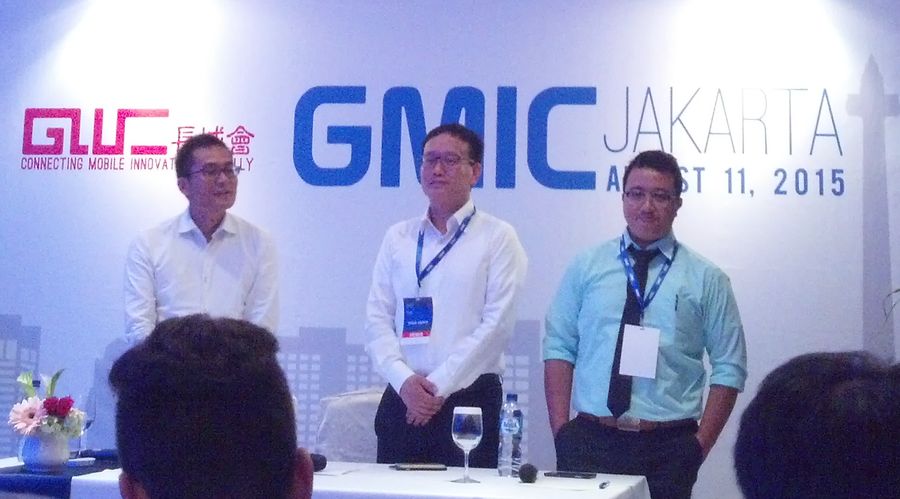
In August 2015, Wen Chu stood with Weibo chief executive Wang Gaofei and DailySocial founder Rama Mamuaya at a Jakarta press conference. The local question was how Indonesia’s mobile businesses could connect with a wider international market.
He described GMIC as a bridge between global mobile technology and Asian markets. He also acknowledged that he had initially wondered whether bringing the event to Jakarta was premature. The admission makes the episode more interesting than a frictionless expansion story. Choosing the next city required a judgment about whether the conversations were ready to happen.
The announced circuit reached beyond Beijing and Tokyo to places including Bangalore, Silicon Valley, São Paulo and Taipei. A conference founder could spend a career collecting airport stamps. The useful test was whether the people in each city gained something they could carry home besides a lanyard.
The host who invited the awkward silence
Onstage, Wen Chu could make himself part of the joke. At GMIC in 2014, introducing a conversation with Wang Gaofei, he recalled a smaller industry meeting where his approach had been to let the guests ask one another questions.
The result was silence. He then tried assigning the task. More silence followed. Eventually he asked Kai-Fu Lee to pose a question, and Lee wondered why he had been chosen. It is a fine demonstration of the difference between placing people in the same room and getting them to talk.
Wen Chu told the story himself. The willingness to advertise a hosting mishap gives his public manner some texture: he can puncture the dignity of the occasion before it becomes unbearable.
His questions could be direct, too. Speaking with Wang after Weibo’s listing, he asked about the company’s ambitions, its relationship with commerce and how Wang understood his own role. Access was the beginning; curiosity still had work to do.
At a 2018 AI salon, he asked Horizon Robotics founder Yu Kai how his company differed from Nvidia. When Yu offered the analogy of classmates pursuing the same subject, Wen Chu suggested Coca-Cola and Pepsi. Technology could have its technical distinctions; a host also needed a comparison the room could recognize. He described that year’s conference agenda through three activities: exchange, business and deeper personal conversation. A discussion could lead to a deal, but he wanted space for people to become acquainted as well.
When the conversation moved toward science
GASA, established in 2016, extended the organizing habit into education. Its early program brought groups of entrepreneurs into contact with scientists and professors around the world. The classroom could move because the people and questions worth visiting were scattered.
In 2017, Wen Chu travelled to Cambridge to meet Stephen Hawking. GWC and Sina had invited the public to submit questions beforehand. Wen Chu’s own proposed question was disarmingly practical: could Hawking recommend a reading list for people interested in science? The famous guest was being asked to help with the next book.
That August, G-Summit gathered 100 scientists alongside investors and technology executives in Pebble Beach. Physics, chemistry, computing and astronomy shared the agenda. Wen Chu’s science gatherings also encouraged discussion about sustainable development and the limits of commercialization.
For an organizer coming from mobile internet, this was a widening of the assignment. Scientists bring different methods, different uncertainties and different working horizons. An entrepreneur accustomed to a product cycle has something to learn from people whose questions may occupy a decade. The attraction lies partly in having to listen without immediately knowing how to use the answer.
GMIC was born in the mobile Internet era.
Wen Chu · 2019
A book, with room for the detours
In April 2018, Wen Chu published Bu Dong, gathering essays and reflections from the years spent building GWC. The title invokes the resolve to obtain wisdom before returning home. Its contents run through travel, conversations, business and the beginnings of GASA.
The Chinese literature graduate had found material. His book places the organizer’s own thoughts alongside encounters with people from technology, culture and public life. The career becomes something that can be read slowly, without a badge or a panel schedule.
The launch also allowed his travelling companions to supply corrections to any overly polished legend. Cheetah Mobile’s Fu Sheng recalled a train journey toward Barcelona on which the group ended up in the wrong carriages and had to hurry forward with their luggage. International ambitions had met the practical demands of railway geography.
Such detours belong in the picture. The work required the confidence to arrange a meeting abroad and the humility to discover that one had misunderstood the train.
An investor learns the price of a good story
Investment became another expression of the network. Wen Chu backed XPeng as an angel investor in 2014. His portfolio also included the audio business known as Lychee.FM. Seeing entrepreneurs early offered opportunities, though proximity was hardly a substitute for judgment.
He has been candid about a missed chance with Didi. After its third-place finish in a GMIC startup competition, he did not invest. He later adopted a rule of backing the top three finishers, then found that the rule did not reproduce Didi’s outcome. An appealing lesson had proved rather less dependable as an investment system.
That admission is useful company for the better-known names in a portfolio. Meeting founders and recognizing a future business are separate tasks. A competition result cannot close the distance between them.
His work also moved into boardrooms. In July 2020, LIZHI appointed Ming Zhang, identified as Wen Chu, an independent director and vice chairman. Sound Group’s current board biography lists him as an independent director and GWC’s chairman. The organizer’s obligations now included formal corporate oversight.
Still finding another room
The education work continued. On January 11, 2025, the GASA Scientific Forum took place at the Hong Kong University of Science and Technology’s Shaw Auditorium. Its program ranged across artificial intelligence, materials, energy and aerospace, among other fields. Wen Chu addressed GASA’s identity and direction during the associated annual gathering.
Hillnex, a venture investment organization, also lists him as a founding partner and adviser. Its model pairs capital with practical help from experienced entrepreneurs and industry specialists. In that setting, his network has another use: helping a company find the people and resources needed for its next stage.
Reading, writing, calligraphy, golf and chess appear among his interests. They offer rather different forms of concentration from running a conference. The calligrapher must attend to a stroke; the chess player must consider a reply. Both are reasonable occupations for someone who spends much of his public life thinking about what happens next.
GWC, GMIC, GASA and the investment work have different purposes. Across them, Wen Chu keeps returning to the encounter: a founder visiting another market, an executive listening to a scientist, a conversation that survives the end of the event. The little postman still needs someone to open the door.