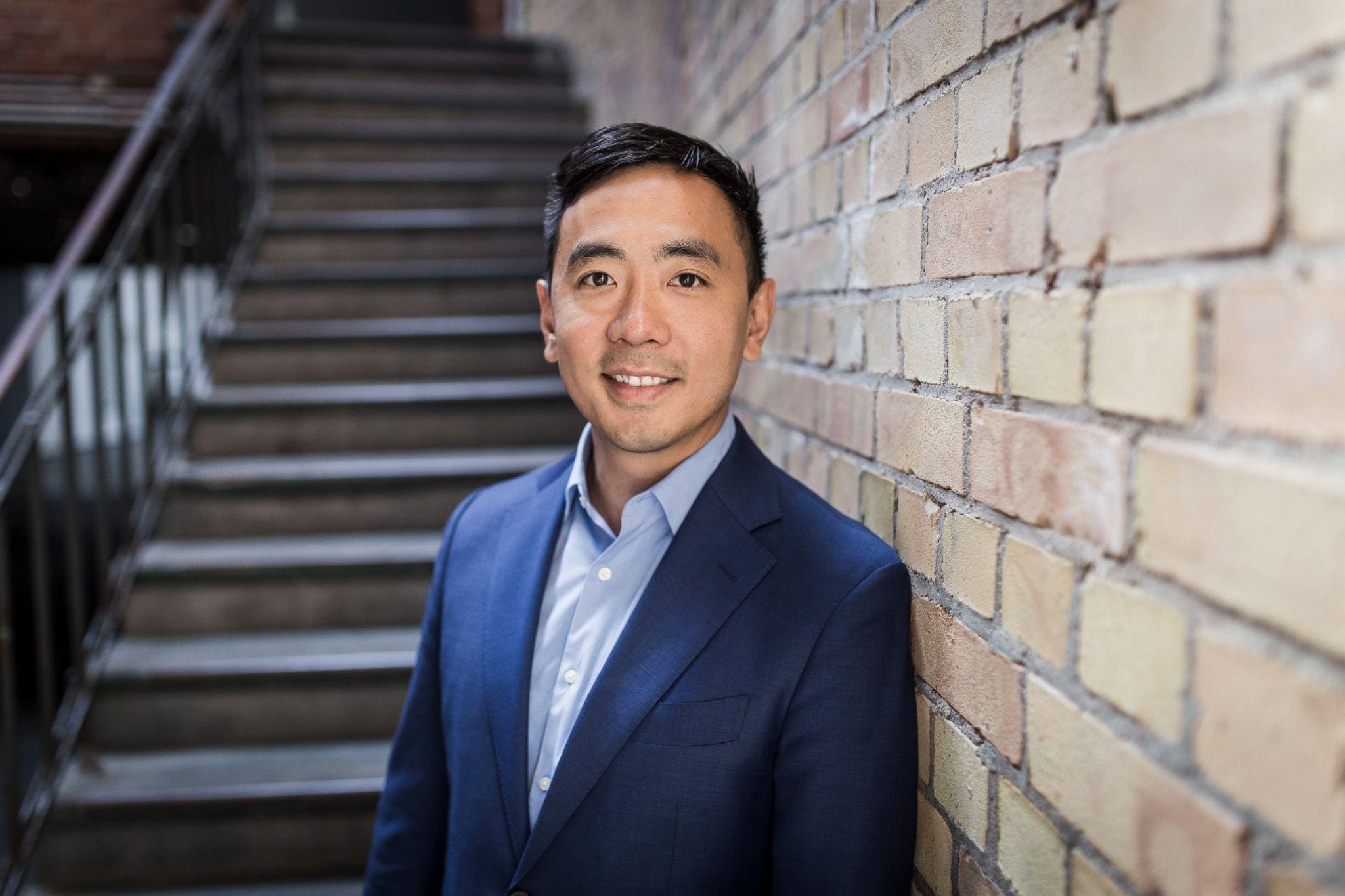
The ProfileThe man counting scooters
On any given morning, somewhere between Berlin and Brooklyn, roughly 280 cities wake up to find Lime's green scooters parked at their curbs. Wayne Ting, 42, runs that fleet from a desk in Santa Fe, New Mexico. He likes the desert and he likes spreadsheets. The combination has turned out to be unusually useful.
Ting became CEO of Lime in May 2020. The timing was, by any honest reading, terrible. Cities were locked down. Tourists, the engine of micromobility revenue, had vanished. Bird, Lime's loudest rival, was burning cash so fast it could be measured in the smoke. Within months of his appointment Lime would close out a down round that valued the company at roughly 79% less than its previous peak. Ting's first major act was to lay off about 13% of staff.
Two years later he stood in front of investors and told them Lime had become the first shared scooter-and-bike company in history to make money for a full calendar year. Adjusted EBITDA: positive. Unadjusted EBITDA: also positive. Free cash flow: positive. The industry's hype merchants had been promising this since 2018. Ting, who is not really a hype merchant, simply did it.
The story of how is less glamorous than the headline suggests. Ting cut the number of vehicle models Lime built. He pushed the unit economics of each ride into Excel and made his ops team defend every line. He centralized warehouses. He squeezed battery life. He killed the markets that didn't pencil and doubled down on the ones that did. Lime now claims it recycles 97% of materials from scrapped scooters, partly because Ting decided that "carbon-free" had to mean something operationally and not just on the marketing site.
Nebraska, by way of Taipei
He was born in Taiwan in December 1983 and moved with his parents to Lincoln, Nebraska at age nine. He has talked openly about the experience and does not particularly soften it. "There weren't a lot of immigrants in Lincoln, Nebraska," he told PinkNews in 2023, "and I remember as a kid feeling really alone and isolated, then coming to grips with being gay." The line he uses next is the one worth pinning to the wall: "It forced me to say, 'If nobody else here believes in me then I'm going to have to choose to believe in myself.'"
He was a good student. He went East for boarding school at Northfield Mount Hermon, then to Columbia, where he was elected class president. While there he co-founded a college social network called CU Community, later renamed CampusNetwork, which launched roughly six months before a more famous version of the same idea came out of a Harvard dorm. The footnote is not bitter. Ting still references it as the first time he learned what it actually felt like to ship.
From McKinsey to the Roosevelt Room
After Columbia came the predictable lineup: Bain Capital, then McKinsey. Then Harvard Business School. Then something less predictable. From 2012 to 2014 he served as a Senior Policy Advisor on the National Economic Council in the Obama White House. He worked on economic policy from inside a building where the espresso is famously terrible and the meetings are famously consequential. He has rarely traded on the credential. Friends say he treats it the way a journeyman treats a tour of duty: a thing that taught him what scale really meant.
He left Washington in 2014 to join Uber. Travis Kalanick was still in charge. The company was an undisciplined rocket. Ting ran the Northern California business, including the home market, and stayed through the leadership transition. When Dara Khosrowshahi took the CEO seat in 2017, Ting became his first chief of staff. That apprenticeship - watching a turnaround from inside the cockpit, in the most scrutinized seat in tech - is the one that arguably explains everything he has done since.
Joining Lime, then running it
Ting moved to Lime in 2018 as Global Head of Operations and Strategy. At the time the company and Bird were locked in a scorched-earth race to flood American cities with scooters; the unit economics were ugly, the regulatory blowback constant, and the average vehicle was lasting roughly three months. By 2020 the pandemic had stopped the music. Brad Bao, the co-founder running Lime, stepped aside. Ting got the job.
What he did next is the part operators study. He shrank the surface area: fewer SKUs, fewer cities, longer-lasting vehicles, better software for fleet managers. He raised emergency capital from Uber in 2020 - a deal that bundled in Jump, Uber's own scooter and bike business. He kept hiring, but selectively. He pushed Lime to design its own hardware in-house, including a four-mode vehicle that could swap between scooter, e-bike and seated formats by re-stocking modules instead of whole units. The headline number in 2023: Lime's first profitable year, and a quiet but real public conversation about an IPO.
The way he talks
Ting is not a Twitter executive. He posts occasionally, mostly about transportation policy, mostly without the influencer cadence. In interviews he tends toward direct, slightly understated sentences. He talks about "operational excellence" the way a chef talks about a stockpot: not glamorous, the whole meal depends on it.
The exception is when he talks about identity. There he becomes specific and unflinching. He has said that early in his career, working at an investment bank, he came out to colleagues and noticed something subtle - not hostility, but a sudden vanishing of questions about his weekend. He named the cost out loud: "When you spend 20 to 30 per cent of your brainpower on worrying about fitting in, there is no way you can be at your very best." It became, in effect, an operating principle for how he wanted to run Lime.
In 2009 he helped organize the National Equality March on Washington, which drew somewhere between 100,000 and 200,000 people. In 2022 he was named to the Out100. In 2023 Fast Company put him on its Most Creative People in Business list. He sits on the board of the LGBTQ+ Victory Fund. In 2024 he joined the board of directors of Cimpress plc, the parent company of Vistaprint, which suggests his appetite for the operator's life is not yet sated.
What he is really betting on
Underneath the spreadsheets, Ting's argument is simple and not entirely uncontroversial. He believes most short urban trips - the under-three-mile journeys that make up a huge share of city travel - have no business being made in a private car. He believes a battery on two wheels solves that problem cheaper, cleaner and faster than any other technology currently on the table. He believes the test of whether the world agrees is profitability, not press releases.
For five years the industry had been promising this future on stage. Wayne Ting put it on the income statement.
The next phase will be harder. Lime now has to grow without losing the discipline that made it solvent. It has to defend its margins against cheaper Chinese competitors, friendlier regulation in Europe, hostile regulation in some American cities, and the perennial human habit of leaving a scooter in the middle of a sidewalk. Ting also has to decide, sometime soon, whether to take the company public.
He does not seem to be in a rush. The man who was told as a child in Nebraska that he did not belong has spent the rest of his life building the kind of company in which everyone, especially him, does.
founderoperatorexecutiveinvestormicromobilityclimate