A mechanic can finish a repair while the dealership’s financial work has barely begun. Someone still has to translate that repair into a claim the manufacturer will accept: the right labor operation, the right allowance, the right supporting document. A car can leave the service bay long before the money arrives. That awkward interval is WarrCloud’s territory.
- Automates manufacturer warranty claims for dealerships.
- Pairs software with warranty specialists.
- Reports 1,000+ dealership customers in 2026.
The company sells automotive dealerships a combination of claims automation and professional administration. Its customers are businesses seeking reimbursement from manufacturers, rather than drivers buying protection plans. The distinction explains the product: WarrCloud works on the paperwork that turns an eligible repair into revenue. The wrench has already done its job. Now the claim has to do its own.
The easy idea met the rulebook
Founder Jim Roche brought decades of automotive technology experience to the problem, including work at Xtime and Cox Automotive and an earlier company, AutoPoint. But familiarity with dealerships did not make warranty automation straightforward. In a company Q&A, WarrCloud admitted that its initial confidence had underestimated the task. Warranty claims, it wrote, were “insanely, deeply complex.”
That admission is more revealing than a launch announcement. A repair order carries a story, but reimbursement depends on a manufacturer’s particular rules. Building useful automation meant learning those rules and handling the documents around them. WarrCloud came to market in 2021; the unglamorous preparation was part of the product, even if the customer never saw it.
Software with someone on the other end
The workflow begins inside the dealership management system, or DMS. WarrCloud extracts repair-order information, reads vehicle identification data and applies manufacturer-specific labor and allowance information. Additional documentation can be photographed and uploaded through its app. Claims then move toward submission, with status visibility helping the dealership follow the money.
People remain in the picture. Investor Centana describes WarrCloud’s administrators gathering supporting information and overseeing submissions. The useful comparison is therefore an internal warranty desk or a conventional outsourcing provider. WarrCloud puts software inside that service, aiming to make each administrator more productive. A buyer is purchasing a completed operational job, with technology doing more of its repetitive work.
Its product development has followed the same logic. In March 2023, WarrCloud announced plans for CHIRP, a tool to automate collection of reimbursement documentation. A missing attachment can hold up a good claim. Making evidence easier to collect addresses a different bottleneck from typing faster.
- 01ExtractRepair order from the DMS
- 02ValidateOEM rules + documentation
- 03SubmitSend claim + monitor status
Then the software needed a repair
Growth brought a problem inside WarrCloud itself. Engineering partner AltexSoft describes an early application whose increasing user and transaction volumes made it error-prone and difficult to maintain. More dealership demand was exposing the limits of the machinery intended to remove dealership friction.
The response was practical: split the application into smaller services, replace aging automation technology and add alerts for support staff. AltexSoft’s account names work on user management, attachments and DMS connections, including Opentrack and Fortellis. Faster scripts helped, but so did making failures easier to locate.
There was a price for that flexibility. Separate services created more coordination and maintenance work. The lesson for another operator is specific: automate a narrow workflow, then watch the failure points as volume rises. Breaking software into smaller pieces helps only when someone can see which piece needs attention.
“Warranty claims are complex - in fact, insanely, deeply complex”
WarrCloud, founder Q&A
Two numbers. Two different promises.
WarrCloud currently reports a 15.1% increase in warranty billings and a 60% reduction in processing costs for dealerships using its service. Those are company-reported results, with different denominators. Higher billings concern the value submitted; lower processing costs concern the expense of administration. Neither number means dealership profits rise by that percentage.
A named customer offers a more concrete example. In a testimonial published by WarrCloud, Autobahn Fort Worth CFO Chad Johnson reports submission time falling 50%, outstanding claims balances falling 46% and average hours per repair order rising 26%. The interesting combination is speed plus completeness. Getting a claim out sooner matters; including eligible work matters too.
A dealer should also distinguish submission speed from payment speed. A claim reaching the manufacturer quickly is a useful operational improvement. It still has to be accepted and reimbursed. Measuring the interval all the way through to cash keeps an impressive processing figure connected to the business problem it is supposed to solve.
For a prospective buyer, the sensible starting point is a baseline: processing expense, unsubmitted claims, reimbursement delays and missed allowances. Compare those with a proposal for the same claim mix. WarrCloud sells the service directly and offers a free profitability analysis. The calculation should include the work dealership employees must still perform.
Distribution is part of the product
A claims platform has to reach the systems where the records live. WarrCloud lists Dealertrack, CDK Global and Reynolds and Reynolds among its partners. AutoAp adds a complementary recall-management relationship. In 2024, FordDirect selected WarrCloud for its dealer-services marketplace, The Shop. These relationships connect a specialized service with existing dealership purchasing and technology channels.
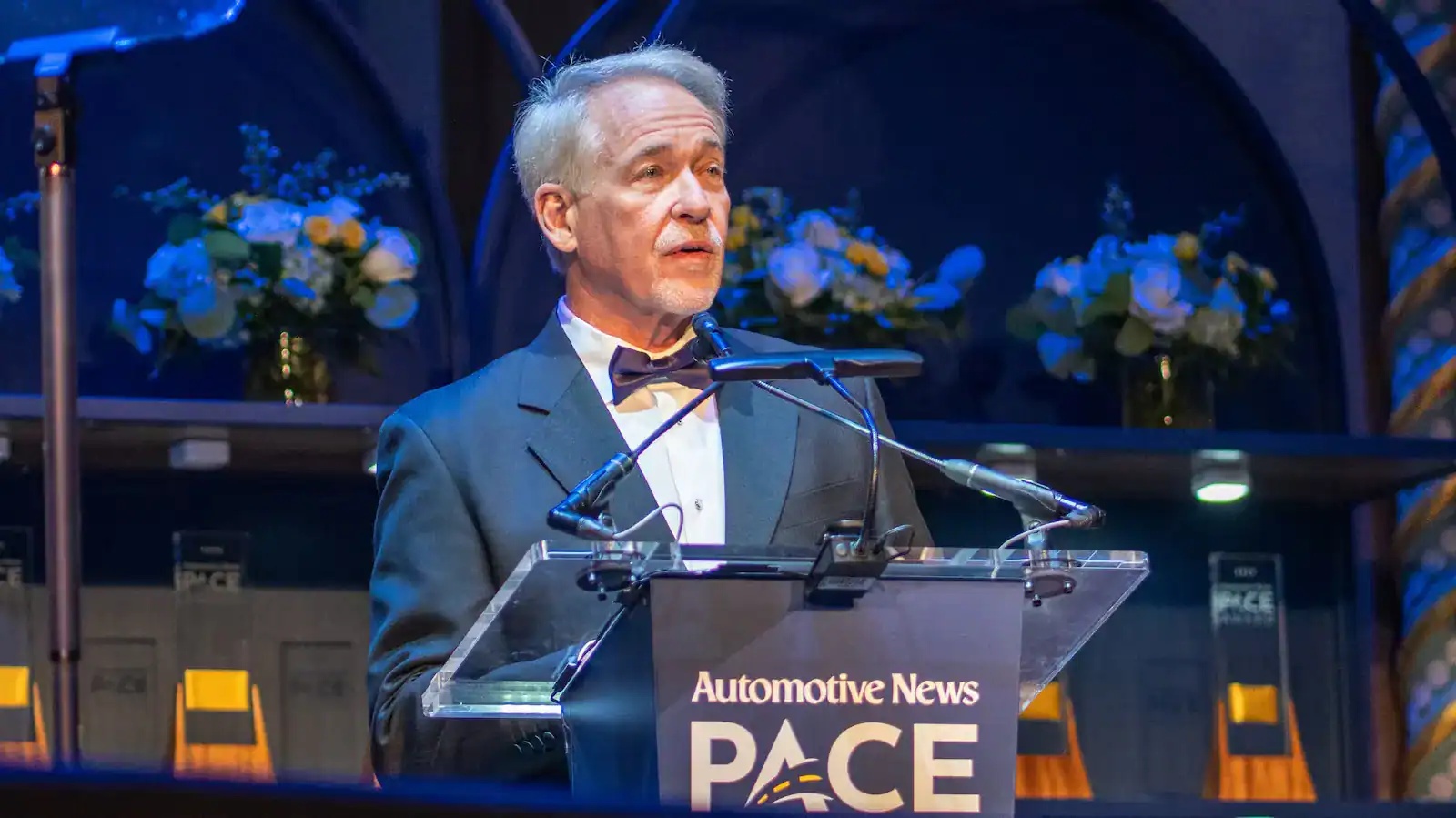
Capital has supported that expansion. WarrCloud announced a $20 million Series B in October 2024, led by Centana with Argentum and Automotive Ventures participating. The stated uses included AI development and customer success. The company won a 2025 Automotive News PACE Award; Inc. subsequently ranked it No. 469 for 2026, reporting 729% three-year revenue growth.
The next customer sits upstream
In February 2026, WarrCloud created an OEM advisory board with veterans of Toyota, Honda, General Motors, Hyundai and Ford. On September 16, it announced a Toyota Motor North America agreement for specific data supporting Toyota and Lexus warranty administration. The announcement carefully limits the arrangement to data sourcing. It does not say Toyota outsourced its warranty program.
The same test applies beyond automotive retail. Find the handoff where completed work becomes an invoice or a claim. Identify the evidence, rules and exceptions before choosing the automation. WarrCloud’s story suggests that understanding the administrative task can take longer than anyone expects.
That move illustrates the broader ambition: better claims information could help manufacturers understand warranty activity as well as help dealers get paid. WarrCloud reports more than 1,000 dealership customers. Its practical limits follow from its design: useful automation needs accessible records, supporting evidence and applicable manufacturer rules. A poorly documented repair still needs documentation. The opportunity is to make that work repeatable, visible and less expensive every time another car comes through the bay.