In 2011, a group of friends set out to cross America by rideshare, drawing attention to national parks and forests. Then a ride was cancelled in rural Virginia. They needed another way forward. Finding a bus or train should have been a modest task, somewhere between locating lunch and locating a bathroom. Instead, the group ended up renting a car. For Polina Raygorodskaya, the inconvenience suggested a business: why was buying ground travel still such an expedition?
- Wanderu puts competing bus and train options into one search.
- Its difficult work happens underneath: carrier data, stop locations and payments.
- Convenient comparison comes with a practical limit: each carrier keeps its ticket rules.
Raygorodskaya and co-founder Igor Bratnikov founded Wanderu in 2012; the service went public in 2013. The idea had an appealing lack of glamour. People already wanted to go places. Operators already had seats to sell. Between them sat a jumble of websites, timetables and unfamiliar company names. Wanderu would make those seats easier to find.
The bus stop is the database problem
Consider the difference between an airport and a bus stop. An airport comes with a recognizable code and a fairly definite location. A bus departure might be at a terminal, a street corner or another operator’s stop across town. A city name alone tells you remarkably little about where to stand with your suitcase.
Wanderu’s challenge was to make separately developed carrier systems intelligible together. Schedules, fares and locations needed to become comparable before a traveler could make a sensible choice. The expertise lay in integration and routing, the decidedly unromantic work that lets a pleasant interface tell the truth.
That work also makes combinations possible. Wanderu can assemble itineraries using different operators when a direct option is unavailable. A carrier’s website naturally shows its own services. A marketplace can connect them. The useful unit becomes the traveler’s journey, even when no single company sells the whole thing.
An interview before a sales pitch
The founders also had to persuade operators to participate. Raygorodskaya had run a fashion and lifestyle public relations firm; Bratnikov brought an engineering education and legal experience. Neither background removes the need to win a carrier’s trust. Transport executives were being asked to let a young company near their customers and their booking systems.
Raygorodskaya found a sideways entrance. As she explained to Inc., getting through corporate bureaucracy was difficult, so she invited executives to be interviewed for her blog. A conversation about their business opened a door that an ordinary partnership approach had struggled to unlock. Regional deals followed; former Greyhound CEO Craig Lentzsch became an adviser and investor.
The transferable lesson is quite specific: offer someone a reason to talk before asking them to change how they work. It requires a credible interview and an interest in the answers. Flattery alone is a poor substitute for a distribution agreement.
The price of making it look easy
Wanderu raised $2.45 million in seed funding in 2013, followed by a $5.6 million Series A in November 2014. Metamorphic Ventures led the latter round, with investors including Alta Ventures and 500 Startups. Those were investments in a business that needed both broader coverage and software capable of supporting it.
$8.05m combined · capital raised, not revenue
By late 2014, the technical build had consumed the seed money. Inc. reported that Raygorodskaya was considering salary cuts while trying to secure the next round. The immediate constraint was cash. The experience sharpened her attention to profit, and Wanderu reached profitability in 2017. The same year, it launched in Europe with National Express, FlixBus and OUIBUS.
“We are profitable.”Polina Raygorodskaya, reported by Inc., 2017
There is a useful distinction here between selling tickets and earning revenue. Much of a fare belongs to the operator carrying the passenger. A marketplace lives on what it retains. For a founder building one, the practical question is whether each transaction can support the machinery required to produce the next.
A search box with several cash registers
Wanderu’s customers include students heading home, people visiting family and travelers comparing a bus with a train. Its current operator page advertises more than 500 partners. It earns commissions from facilitated ticket sales; current terms also allow variable service fees disclosed during booking. The final total deserves attention alongside the fare.
Busbud and Omio provide overlapping comparison services. Direct booking through a carrier remains another option. Wanderu’s case rests on ground travel coverage, connections across operators and the time saved by comparing choices together. A low price is useful; a departure stop you can reach and an arrival time you can tolerate are useful too.
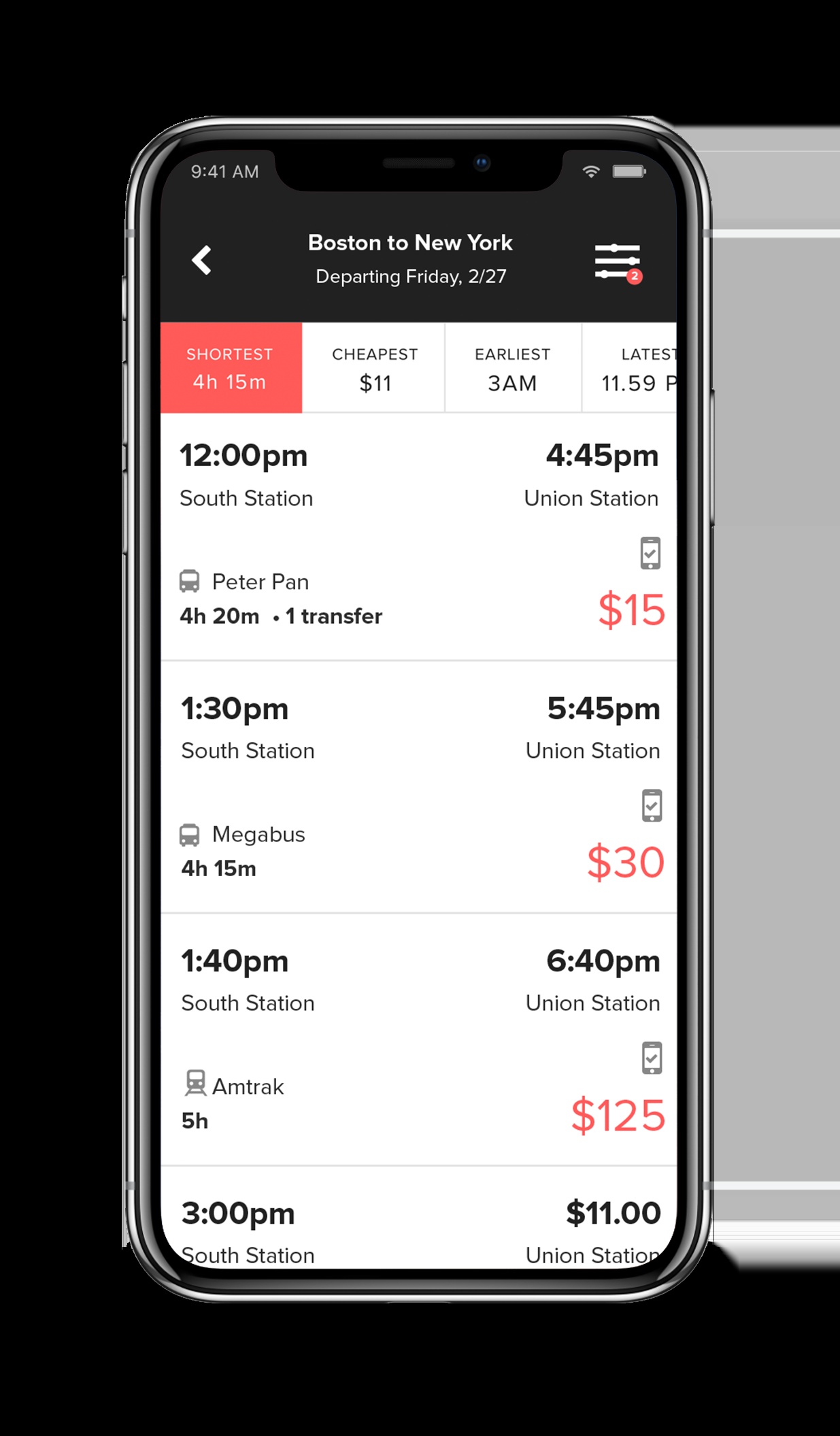
The designer’s account identifies an early stumbling block: unified search still sent customers through separate checkouts for multiple carriers. Bringing booking together reduced abandonment and errors, according to that account. No percentage is supplied, but the lesson is clear enough. Customers experience the handoff as part of the product.
Behind today’s interface, tickets for individual legs are still processed separately. A return journey can generate separate charges. Changes and refunds generally depend on the operator, and some fares are final sale. Anyone assembling a connection should check every ticket and leave enough time between stops. A tidy screen cannot make two stations adjacent.
The next window is a conversation
Andrew Savikas became CEO in June 2024, with Raygorodskaya moving to executive chairwoman. Wanderu describes its current team as fully remote, with collaborative working and unlimited time off. The company that began by joining fragmented systems now also sells operators a view of corridor demand, competing fares and potential route opportunities.
In March 2026, Wanderu documented another entrance: travelers could search its US ground travel network inside ChatGPT, then follow a link to complete checkout on Wanderu. The question can begin in ordinary language. The answer still depends on carrier inventory and the infrastructure beneath it. That is the enduring attraction of this business: someone else has done the awkward work before you decide where to go.