A bottle of wine can tell you its village, its vintage, and the name of someone’s grandfather. It can be much less forthcoming about the thing you actually want to know: will dinner be better if you buy it? This is the small, recurring confusion Vivino chose to work on. Its customer was already interested in wine. The missing ingredient was confidence.
- Scan a label, read the crowd, remember your own taste.
- A useful discovery habit became a route to wine purchases.
- Shipping costs and paid features complicate the easy part.
A bottle is a terrible search box
Founded in Copenhagen in 2010 by Heini Zachariassen and Theis Søndergaard, Vivino made the phone camera a shortcut through wine’s vocabulary. Photograph the label; get a rating, reviews, and information about what is in the bottle. You could begin with the object in your hand instead of knowing how to spell an unfamiliar appellation.
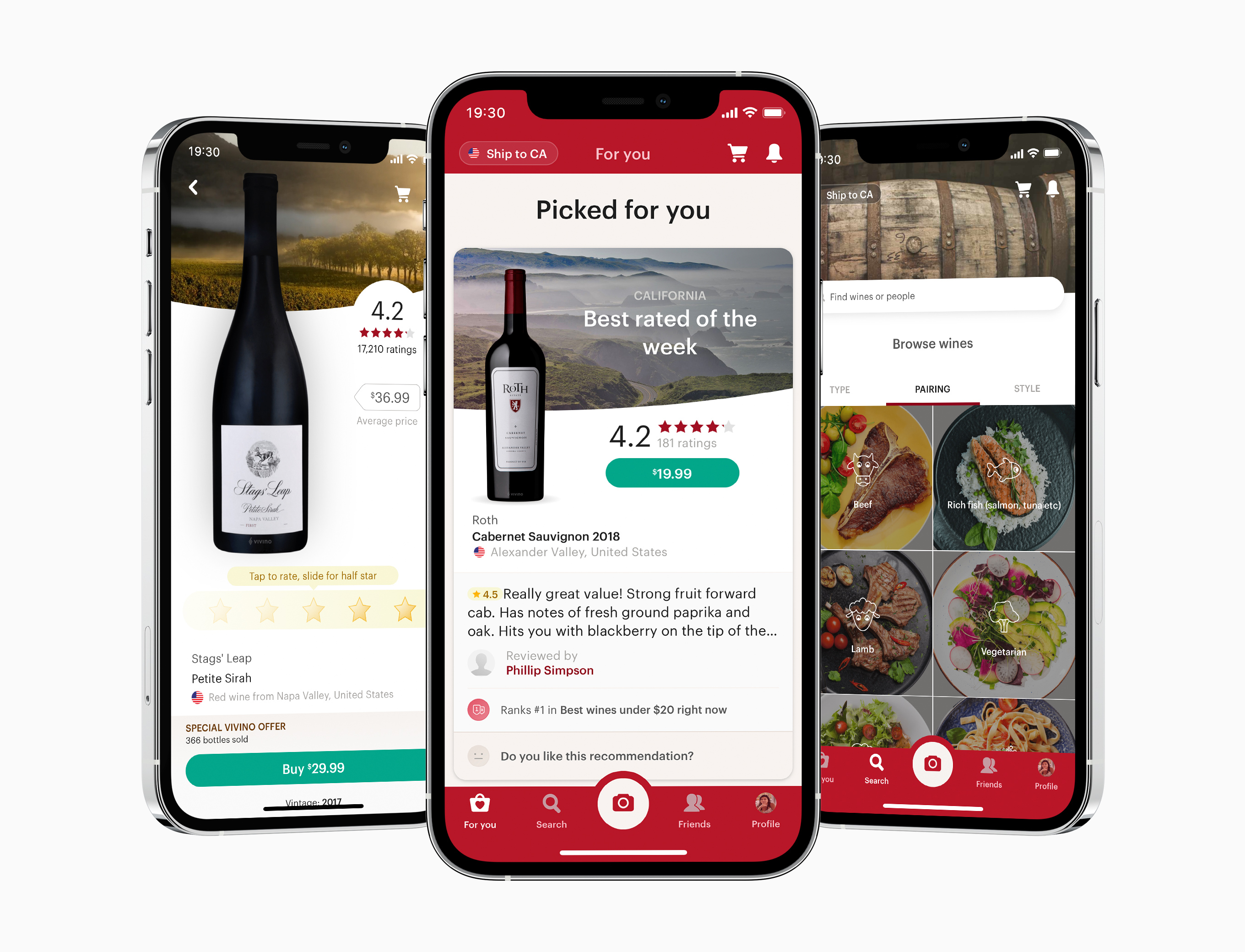
The product now stretches beyond that first scan. Drinkers can keep notes, explore food pairings, track bottles, and shop through a wine marketplace. Its expertise sits where image recognition meets a structured wine database and people’s opinions. The camera opens the door; the information behind it gives you a reason to stay.
Users reported on Vivino’s About page. A cumulative community count, not a measure of monthly activity.
That distinction matters. A large registered audience is evidence of reach, but a useful recommendation depends on the particular bottle and the people who rated it. Vivino’s promise becomes most interesting when the broad crowd meets the individual shopper.
The first failure was the database
In a Mixergy interview, Zachariassen recalled a roughly $200 web-based first version. That was a prototype price, not the cost of building Vivino. He photographed bottles in Copenhagen shops while workers in India populated the database. A competition offered a fancy corkscrew for label uploads. The prize was small; the need for photographs was large.
The early product struggled because the range of wines was longer than the founders expected. Unrecognized bottles went to manual matching. An imperfect scan could still lead to an answer later. The founder remembered growth improving when useful results became common enough, estimating a gratifying experience for roughly 60-70% of attempts.
“Don’t ever think that you know what people want.”
Heini Zachariassen / Mixergy
The copyable idea is to repair the core experience before spending heavily on acquisition. A human-assisted answer can teach you what the software needs next. It works when the task is valuable enough for customers to try again.
The scan is not the sale
Scanning a bottle in a supermarket does not automatically create an online order. The shopper can simply carry that bottle to the checkout. The scan still tells Vivino something useful: which wines attract attention. Ratings and notes add another layer, recording what the drinker actually enjoyed.
Personalization turns that history into future suggestions. Match for You asks how a wine fits your preferences, a different question from whether reviewers liked it on average. The distinction is practical. A popular style can still be one you dislike. Recording your own reaction makes the next recommendation less dependent on everybody else’s palate.
Vivino’s place in the market is this combination of casual discovery, community, and commerce. CellarTracker also offers reviews and label search, with detailed collection tools. Wine-Searcher helps locate prices and availability. A knowledgeable shopkeeper offers conversation. Vivino makes several of those jobs available in one app, with a particularly easy starting gesture.
The free experience suits someone checking a bottle before buying. Premium targets drinkers who want more precise matching, deeper collection management, and additional discovery tools. Vivino’s current guide also lists an AI assistant, Vivino Sommelier. Its published pricing varies by country, commonly around $4.99 or €4.99 monthly in the US and many European markets.
A delivery charge can ruin the romance
There is a physical business underneath all this software. Bottles need merchants, stock, packaging, and delivery. Vivino’s commerce has combined merchant partnerships with direct sales in selected markets; subscriptions and advertising add other revenue routes. The attractive sequence is discovery followed by purchase. The awkward question is whether the order makes economic sense.
In February 2021, Vivino announced a $155 million Series D led by Kinnevik, with Sprints Capital, GP Bullhound, and Creandum participating. The announcement put total funding at $221 million and specified a mix of primary and secondary investment. The stated priorities included better recommendations and expansion in selected markets.
By August 2023, its UK operation was changing. Vivino stopped pursuing direct sales there and leaned on independent merchants. UK director Stephen Bell described a healthy merchant network that could supply customers without Vivino buying the wine itself. He also pointed to a stubborn constraint: low-priced wines are difficult to sell through ecommerce.
Those observations explain why the model depends on local conditions. Recommendations cannot make an unavailable bottle appear. Cheap wine can become a less convincing bargain once shipping enters the basket. Premium shipping benefits carry minimum orders and regional terms. Checking the delivered price is part of choosing the bottle.

The crowd comes back to the shop
In September 2024, Wine Portal opened the first licensed Vivino flagship at Singapore’s Raffles City. Community data helped shape a physical selection. For an app born around bottles already on shelves, the move had a pleasing circularity: years of digital discovery could help decide what went on a shelf.
The company’s own podcast has also aired harsh community feedback about Premium. That is the ongoing bargain: drinkers supply the observations that make the service useful, while Vivino asks some of them to pay for more. For the reader, the sensible experiment is small. Scan a bottle, check the vintage, read beyond the stars, and write down whether you liked it. Your next dinner deserves that much.