Nevada had already learned what a broken health insurance website could do. Its first state exchange, built by Xerox, suffered billing and enrollment problems. The state abandoned that arrangement and moved enrollment to HealthCare.gov. Then, a few years later, officials contemplated doing something that sounded almost unreasonable: trying a state platform again.
- Vimo sells states the software and operating support behind health coverage and public benefits.
- Its GetInsured business pairs a configurable marketplace with consumer assistance.
- Buying Change & Innovation Agency added expertise in how government work actually moves.
The Xerox ghost
“The Xerox ghost lives in my office,” Nevada exchange director Heather Korbulic told the state’s Board of Examiners in 2018. The line is funny until you consider what the ghost represented: residents who had paid for coverage and encountered problems getting it. A replacement needed more than a persuasive demonstration.
Nevada required bidders to have a platform successfully deployed in another state for at least one plan year. GetInsured, the business now operating as Vimo, had a working reference in Idaho. Rising federal platform fees also changed the calculation. Keeping the existing arrangement carried its own financial risk.
Officials approved a $24.4 million contract for the platform and call center in August 2018. That figure describes a particular purchase, with a particular scope. It is a useful antidote to the idea that government can modernize an essential service for the price of a software subscription.
Fiscal 2021 budget provision for platform and consumer assistance center maintenance and operations.
The operational test was equally concrete. Nevada made the transition conditional on evidence that GetInsured could accept and process consumer application and enrollment data. Its information security officer independently verified the report. Officials kept a fallback plan to remain on HealthCare.gov. The replacement opened for enrollment for the 2020 plan year.
The product is also the phone call
Vimo began in 2005, founded by Chini Krishnan and Shankar Srinivasan. The early business, briefly called Healthia, offered health care transparency and comparison tools. Following the Affordable Care Act, the company shifted toward helping states run marketplaces. The buyer changed from someone shopping for coverage to an agency responsible for making shopping possible.
That distinction explains the product. A resident sees plans, prices, questions about a household, and an enrollment screen. Behind that screen sit eligibility rules, documents, insurer connections, and people who need to fix things when an application stalls. Vimo sells technology for that chain, alongside implementation and consumer assistance operations.
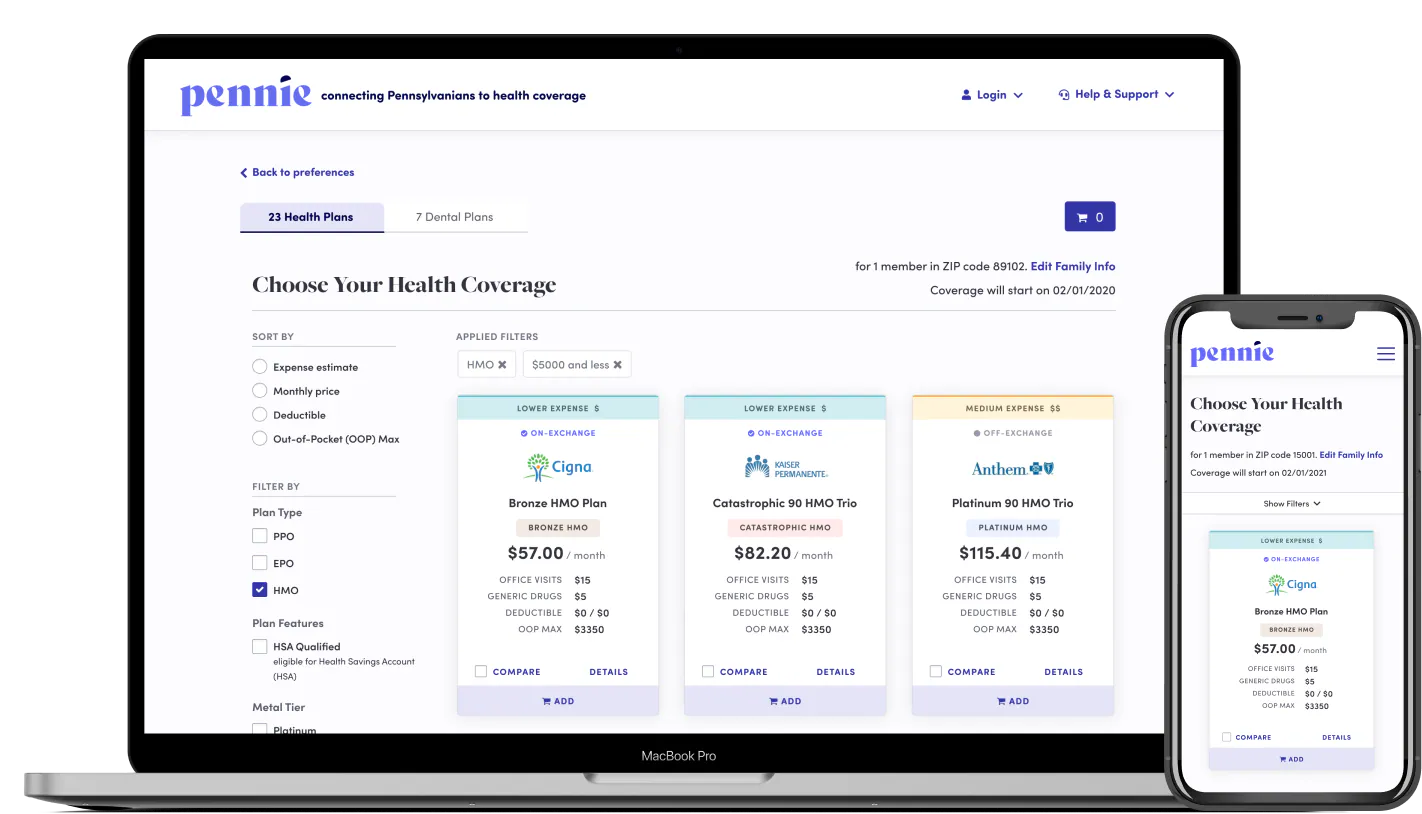
Its user portals give brokers and agencies tools to manage clients, receive authorizations, and upload documents. State staff, carriers, navigators, and consumers have different jobs, so they get different interfaces. The expertise lies partly in keeping those roles connected without allowing one participant to make unauthorized changes to another person’s coverage.
The business model follows those responsibilities. States contract for implementation and recurring platform operations, with contact center services and consulting available alongside them. Separately, GetInsured’s insurance brokerage disclosures describe carrier commissions. Vimo supplies infrastructure and enrollment services; the insurance risk belongs to the carriers.
For state buyers, alternatives include continuing with the federal enrollment platform or procuring a system through a large integrator such as Deloitte. Vimo’s pitch centers on configuring software already used elsewhere and pairing it with operating experience. The trade-off is a different relationship to the technology: agencies must evaluate fit, integration, and ongoing vendor dependence.
An insurance exchange learns child care
In 2021, Vimo acquired Change & Innovation Agency, a specialist in redesigning human services work. The acquisition widened the company’s reach into Medicaid and other safety net programs. It also acknowledged a practical problem: a new interface cannot, by itself, repair the way an agency assigns and completes work.
A new interface cannot, by itself, repair the way an agency assigns and completes work.THE OPERATING QUESTION
Wyoming offers a tangible example of the combination. Its ECARES child care system launched in August 2025. Families can check assistance eligibility and search for providers. Providers can manage assisted enrollments, track electronic payments, and handle training and licensing information. The exchange idea travels surprisingly well when the underlying task is connecting eligibility, choice, and payment.
- 01 Apply
- 02 Check eligibility
- 03 Choose care
- 04 Pay providers
This is where Vimo fits in the market: between public policy and its daily administration. Its portfolio includes Medicaid Express, SNAP Express, child welfare tools, and work management software. The common problem is translating program requirements into a sequence that residents, providers, and public employees can actually complete.

Proof before promises
Vimo’s AI work is easiest to understand at a modest scale. Nevada Health Link’s interactive virtual agent answers common questions and helps with routine tasks such as password resets outside normal call center hours. That is an intelligible use for automation: remove a predictable obstacle while retaining assistance for harder cases.
The company says its technology powered more than half of state-based exchange enrollments during the 2025 Open Enrollment Period. In November 2025, it reported migrating coverage for more than 430,000 Illinois residents. These figures describe reach; they do not establish that software alone caused enrollment growth or better access.
In September 2026, GetInsured and Change & Innovation Agency announced they would operate under the Vimo name. The branding catches up with a business that now combines code, policy knowledge, and service operations. Its stated culture emphasizes kindness and long relationships with public agencies, an unusually consequential promise when the customer’s customer needs benefits.
The lesson available to another organization is pleasantly unglamorous. Ask for a working reference. Test the transfer of real operational data. Keep a fallback. Budget for the people who answer questions. Nevada’s experience suggests that configurable software earns its place through these checks. When data cannot move reliably or workflows remain broken, the attractive front door still opens onto a queue.