He could have spent four quiet years in a Cambridge library researching cancer prevention. Instead he is in San Francisco, rewiring how hospitals decide who works which shift.
Start with the unglamorous problem nobody wanted: staffing and scheduling. That is where Veeraj Shah pointed his company. It is also where the money, the burnout, and the chaos all live.
A hospital is a building full of brilliant people running on a spreadsheet from 2009. Veeraj Shah noticed. As co-founder and CEO of Vitalize, a company he took through Y Combinator's Winter 2023 batch, he spent more than a year buried in the least romantic corner of medicine: the labor schedule. Who works tonight. Who is on call. Who is being paid overtime because a planner three weeks ago guessed wrong.
Today Vitalize describes itself as the OS for hospital operations, and the company says it is live across more than twenty hospital systems. The pitch is blunt: dramatically cut labor spend, lift operational efficiency, and hand clinical leaders back the hours they currently lose to manual scheduling. In a sector where labor is the single largest expense, that is not a feature. It is the whole game.
What makes Shah unusual is not that he found the problem. It is the road he took to get there. Most founders arrive at hospital software through fintech or sales. He arrived through a self-designed undergraduate degree, a Gates Cambridge scholarship, and a decision most people would have called reckless: he left the PhD before finishing it.
The company did not start here, either. Vitalize launched in January 2020 as something gentler - a wellness app for exhausted clinicians, all tailored mindfulness and resilience practices, beta-tested by more than a hundred doctors and nurses. The mission stayed constant. The product grew teeth. Mindfulness for the burned-out became the software that decides why they were burning out in the first place.
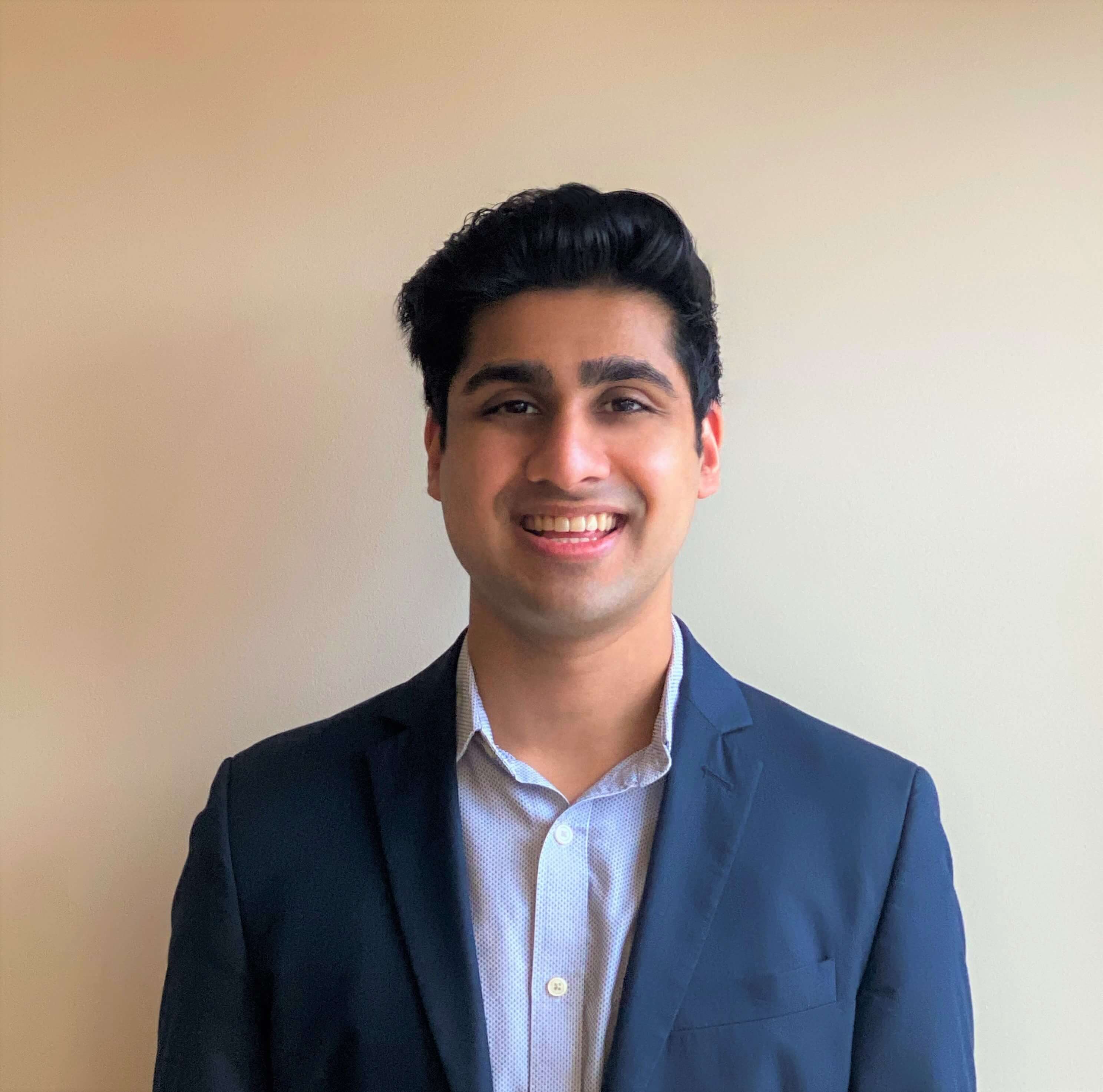
I am excited by the opportunity to use technology to help an overburdened population and, as a downstream outcome, improve the quality of care for patients.
The Gates Cambridge is one of the hardest awards in the world to win. Shah won it, moved to St Edmund's College, and started a PhD on cancer prevention. Then he left.
The plan, on paper, was beautiful. Develop and evaluate technology that automatically delivers cancer-preventive lifestyle information inside primary care, then push the evidence into National Health Service programs so millions could manage their own health. After that, an MD at the Icahn School of Medicine at Mount Sinai. It was a career engineered to make admissions committees weep with joy.
He walked away from the rest of it. Not because the research stopped mattering, but because Vitalize was already real and already growing, and a half-built company does not wait for a thesis defense. The scholarship was the safe, prestigious path. The startup was the one with hospitals on the phone. He chose the phone.
This is the tell about Shah. The credentials are stacked sky-high - summa cum laude, finalist for the Rhodes, Truman, and Marshall, a fistful of peer-reviewed papers - and he treats every one of them as a means rather than a trophy. The Entrepreneurs' Organization, which named him a global finalist, summed up his stated mission: better the healthcare system through technology, so that millions can receive the best care possible. Everything else is scaffolding around that sentence.
Research assistant on graduate-student health plans and physician pay equity; cancer research at the National Cancer Institute and Johns Hopkins.
Co-founds Chat Health; its COVID-19 chatbot reaches roughly 4,000 Marylanders. Launches the Vitalize App for healthcare-worker wellness.
Graduates UMD summa cum laude. Named a Gates Cambridge Scholar. Interns with the U.S. Surgeon General and IBM Watson Health.
Vitalize goes through Y Combinator (W23). Named UMD Outstanding Young Alumnus.
Vitalize turns toward the hard, boring, valuable core: hospital staffing and scheduling.
Live across 20+ hospital systems. Recognized on a Forbes 30 Under 30 Healthcare & Science list.
His first venture, started in his sophomore year. AI text messaging built to widen access to preventive care and lift health literacy among students and low-income communities. The COVID chatbot was its breakout.
Began as a wellness app for clinicians. Became the operating layer for hospital operations - staffing, scheduling, labor spend. YC W23. Live in 20+ hospitals and counting.
He led this student-founded organization into global health projects in India, Peru, and Sierra Leone, and pushed to set up partner chapters at other universities.
2022, the STARTITUP stage. Before the twenty hospitals and the Forbes list, there was a founder with a microphone and a problem worth solving.
Trace the line through everything Shah has built and it points one direction: the workforce. The chatbot was for patients who could not reach a clinician. Vitalize, in both of its forms, has always been for the clinicians themselves - first their minds, now their schedules and their hours.
He has said the company exists to restore purpose and joy to the global healthcare workforce. That is a soft sentence wrapped around a hard operational truth: a nurse stretched across a badly planned shift gives worse care than a rested one, and the fix is not a meditation app. It is better math behind the staffing board.
The strange, specific detail that explains him is this. A young man with finalist letters from Rhodes, Truman, and Marshall, holding a fully funded ticket to one of the world's great universities, looked at all of it and decided the more interesting problem was the one inside the staffing office of a hospital nobody writes scholarships about. He bet the prestige on the plumbing. So far, the plumbing is winning.