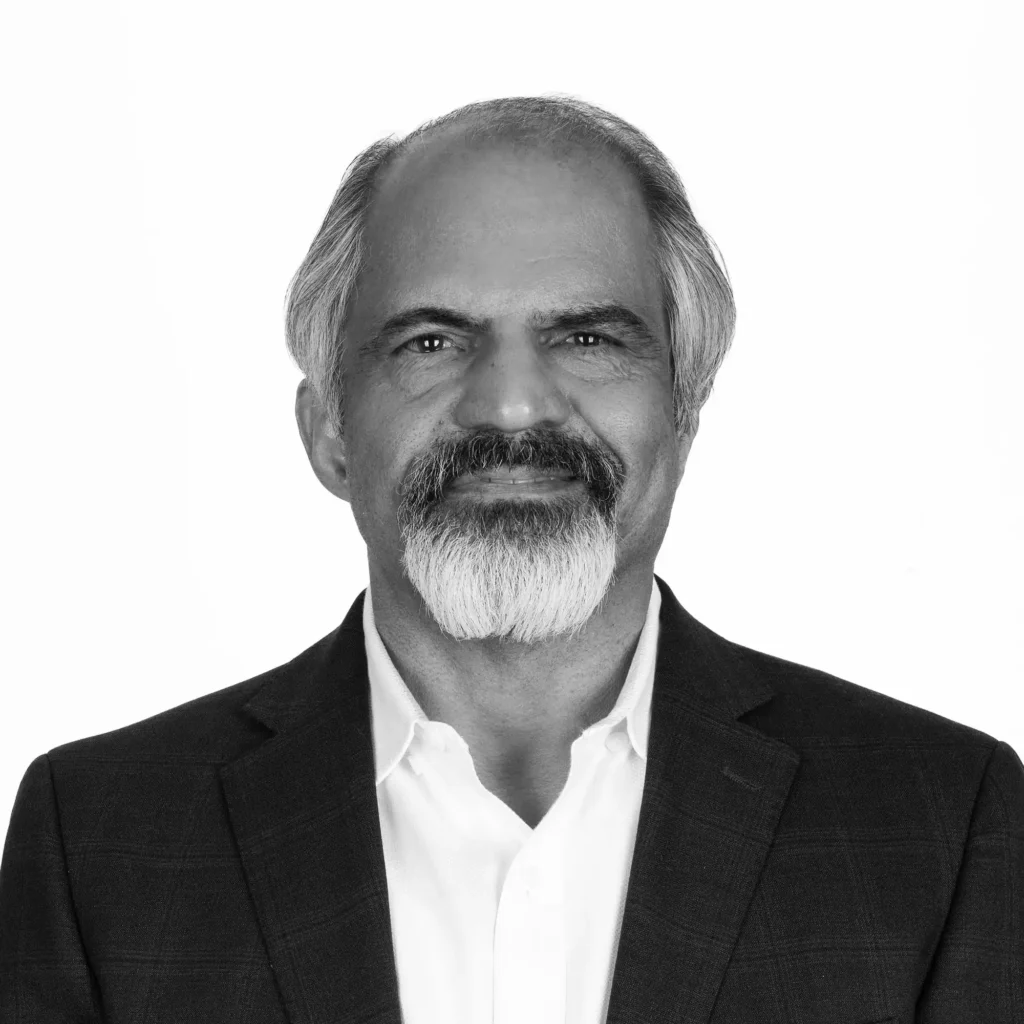
Vahid Saadat has spent his career on a single, stubborn habit: looking at a medical device and asking whether it could work better. Over more than 25 years, that question has produced at least six companies and put his name on more than 200 issued and pending patents. His latest, Inquis Medical, closed a $75 million Series C in January 2026 to expand its AVENTUS Thrombectomy System - a device built to pull blood clots out of the body in a single pass.
The through-line goes back to a lab in Texas. Saadat earned a bachelor's in electrical engineering and a master's in biomedical engineering from the University of Texas at Austin, and by his own account the direction of his life clicked into place under the mentorship of Dr. Lee Baker in a physiology and anatomy lab. There he measured intracranial pressure, lung function and blood pressure in animal models, working on something new almost every day.
Every day we worked on something different. It was an amazing lab, and the first time I knew I was working in the right area.
— Vahid Saadat, on his early research at UT Austin
His path into industry started at Trimedyne, a California medical laser company, where he rose from senior engineer to vice president of research and design. A stint at Gynecare, an early-stage startup focused on women's health, followed. But Saadat was clearly not built to stay an employee for long. The companies started coming.
A portfolio of problems
First there was AngioTrax, an interventional cardiology venture developing myocardial revascularization technology. Then USGI Medical, which worked on incisionless surgery and remote tissue attachment for the gastrointestinal tract. Then Baxano, a spine company, where Saadat patented the IO-Flex system for back pain - a design he built by borrowing principles from cardiology and applying them to orthopedics. That cross-pollination, taking a trick that works in one specialty and moving it to another, became a signature of how he works.
In 2006 he founded Voyage Medical and served as its CEO and president for roughly five years. There his team developed IRIS, described as the first direct endocardial visualization system - a way to see inside a beating heart in real time. After Voyage came Arrinex, where Saadat was CEO. Arrinex made ClariFix, a treatment aimed at long-term relief for chronic rhinitis. The company later became part of Stryker.
For someone else, though, this could be a great opportunity.
— Vahid Saadat
Inquis and the single pass
Saadat co-founded Inquis Medical in 2020 with Mojgan Saadat, and the two run the company together as co-CEOs - an unusual shared-command structure in medtech. Based in Menlo Park, California, the company set out to rework thrombectomy, the procedure for removing blood clots. The problem it targets is a familiar one to interventionalists: clot removal often takes multiple passes, and each pass risks blood loss and added complexity. The AVENTUS system is designed to enable directional aspiration with in-line blood reinfusion, aiming for efficient single-pass clot removal while reducing blood loss.
The money followed the milestones. Inquis raised a $40 million Series B led by Marshall Wace in late 2024. Through 2025 the company crossed from development into commercial operation, secured expanded regulatory clearance covering pulmonary embolism, and saw pivotal trial data published in the Journal of the Society for Cardiovascular Angiography and Interventions. The $75 million Series C in January 2026 was earmarked to scale nationwide adoption and advance the next generation of the product pipeline. All told, the company has raised roughly $115 million.
How the ideas arrive
Ask Saadat where his ideas come from and the answer is less about flashes of genius than about method. He keeps notebooks. He reads medical journals. He talks to physicians about what frustrates them, and he treats venture capitalists as sources of information rather than just checkbooks. He also encourages entrepreneurship in the people around him. The curiosity is old: as a child he split his attention between collecting butterflies and taking apart electronics, an early sign of a mind pulled toward both the living world and the machinery of how things work.
What emerges across the companies is not a single product but a temperament. Saadat finds a clinical problem, assembles a small team, and works the problem until it becomes a device. Then he does it again. Inquis Medical is the current chapter, not the last word.