The best person to fix your mouse might not speak German. For a company selling mice in Germany, that creates a peculiar hiring problem. It needs someone who understands both the customer’s sentence and the tiny technical disaster behind it. Those skills do not always arrive in the same applicant. Unbabel’s business begins in that gap.
- AI translates; quality estimation helps decide what needs attention.
- Human expertise and helpdesk integrations turn translation into a working service.
- TransPerfect acquired Unbabel in August 2025.
The expert in the wrong language
Consider Logitech. Its customers can have questions about custom lighting or finely tuned mouse settings. A fluent generalist may understand every word and still lack the answer. Unbabel’s published case study describes another problem: generic translation tools struggled with technical jargon, while agents copied text between applications. Language coverage was consuming effort that belonged to solving the problem.
Logitech adopted Unbabel in 2019, putting translation inside Zendesk. During the pandemic, support tickets surged 300%. According to the 2021 case study, Logitech increased staffing 45% while keeping spending flat. Ticket response time fell from 48 hours with native-speaking agents to 12 hours using the new arrangement. These are customer-case results reported by the vendor, rather than a promise for every buyer.
The interesting change was who could be hired. Product knowledge could carry more weight once language became something the workflow handled. A translation service had altered the labor pool. That is a more consequential proposition than saving somebody a trip to a browser tab.
A queue with a quality gate
Unbabel calls its approach Language Operations, or LangOps. A business assigns ownership of translation across departments, connects its tools and watches the results. Machine translation, human editors, terminology and reporting become parts of one process. The customer service agent stays in the helpdesk; the language machinery works around the conversation.
The platform supports different pipelines, from adapted machine translation to more extensive human involvement. That flexibility matters because a routine support reply and a carefully written campaign deserve different treatment. The decision involves turnaround time, budget and the consequences of getting a sentence wrong. Unbabel sells the ability to organize those decisions alongside the translated words.
- 01TranslateAI creates the draft
- 02EvaluateEstimate quality
- 03RefineHuman input as configured
Review levels depend on the content and the chosen workflow.
Quality estimation supplies a second opinion at machine scale. Unbabel’s customer documentation says its models estimate the score a human evaluation would assign, while linguists help calibrate the system. Its reporting separates performance by language pair and content channel. Averages can hide precisely the weakness a support manager needs to see.
The research also has a public outlet. COMET, released in 2020, is an open-source framework for evaluating machine translation. Its repository includes tools for comparing systems; XCOMET models can identify error spans and severity. Evaluation is a distinct technical discipline here, with software other researchers and developers can inspect.
Thirty percent is a place to start
Unbabel’s own assistant needed correction. In May 2025, the company described early Translator Copilot tests in which instruction-compliance checks succeeded only 30% of the time. Prompt and provider experiments raised that figure to 78% before rollout. HTML in instructions hurt performance; glossary context helped prevent conflicting suggestions.
Inside the translator interface, Copilot flags possible errors and instruction problems. Translators can accept suggestions or report false positives. The company also found differences between language pairs. The lesson for another AI team is practical: test your actual instructions, provide terminology context and give users a way to challenge the checker.

Buying the rest of the journey
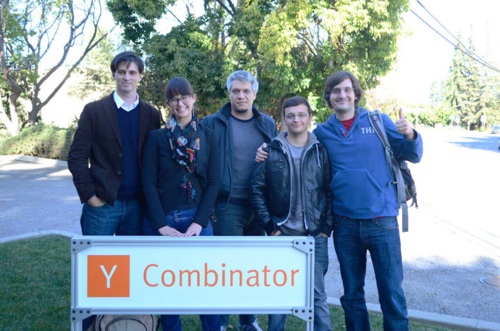
The company began in Lisbon in 2013. Its five co-founders were Vasco Pedro, João Graça, Sofia Pessanha, Bruno Prezado Silva and Hugo Silva. It entered Y Combinator’s winter 2014 batch. In a later founder interview, Pedro described Portugal’s returning researchers and engineers as talent looking for ambitious projects. Lisbon supplied a base; the intended market stretched well beyond Portugal.
A $60 million Series C in 2019 brought announced funding to $91 million. Expansion also meant buying capabilities. Lingo24, acquired in 2021, added experience handling enterprise localization across marketing and product content. Bablic followed in 2023 with website translation management. Together, the deals connected answering customers with reaching them in the first place.
The products kept changing with the work. Tower’s initial open-model release in 2024 covered ten languages and included tasks such as translation ranking and post-editing. By the Q1 2025 update, Unbabel reported 22-language coverage for TowerLLM. The same update described reference-file uploads, different pipelines for individual files and a PDF translation beta. These are small controls with practical consequences: a translator can receive context, a project can contain different review needs, and a buyer can inspect the estimate before submitting.
The commercial model reflects that breadth. Published platform terms describe subscriptions, paid pilots and self-service units. The 2025 Projects App updates added clearer estimates and final-cost visibility. Buyers have to weigh the whole operation: translation charges, integration work, review effort and time spent waiting. Logitech’s flat-spending result concerns its support operation, not a disclosed Unbabel invoice.
“Our ultimate goal has always been to create universal understanding.”Vasco Pedro / December 2021
A bigger home for the translation layer
Unbabel occupies a crowded intersection of software, translation services and AI research. DeepL offers enterprise translation and APIs. Smartling combines translation management with AI and professional linguists. Unbabel’s case rests on how its translation models, quality estimation and human workflows fit together, particularly where multilingual support meets existing business systems.
There are limits to the proposition. A quality estimate cannot remove the need to decide which mistakes matter. Where terminology is unusual or performance varies between language pairs, a business still needs review and escalation. The economics depend on matching that effort to the job.
On August 22, 2025, TransPerfect announced its acquisition of Unbabel, with terms undisclosed. TowerLLM and COMET joined the buyer’s technology portfolio. For a company whose product depends on both research and delivery, the combination has a clear logic: better language tools need a route into everyday business work.
The useful idea to borrow is the quality gate. Before adding another language, decide what good means, where errors become expensive and who can intervene. Unbabel’s story shows how much of translation happens around the sentence. The words are only the part the customer sees.