Economist / Blogger / Talent Scout
Tyler Cowen
A book a day, a blog post every morning, and a standing belief that the rarest thing in the world is context.
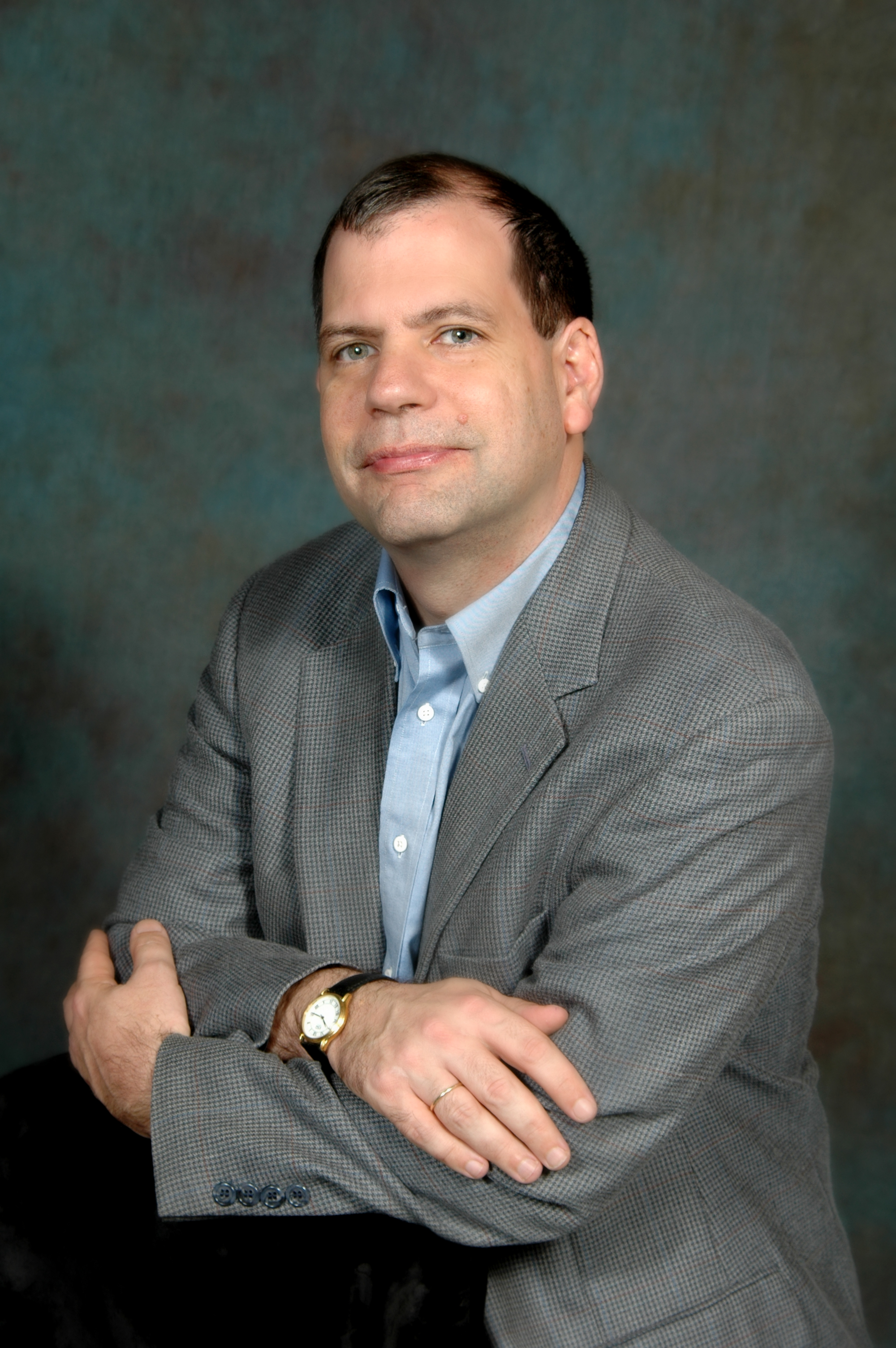
The chess kid who never stopped calculating moves.
A book a day, a blog post every morning, and a standing belief that the rarest thing in the world is context.
Most mornings, before the rest of the economics profession has finished its coffee, Tyler Cowen has already posted to the internet. Marginal Revolution, the blog he has co-written with Alex Tabarrok since 2003, has not missed a day in over two decades. The posts arrive in clusters: a link to an obscure paper on Roman grain prices, a question about why nobody has built a great restaurant in a particular suburb, a one-line dismissal of a fashionable idea. It reads less like a column and more like a brain that refuses to stop indexing the world.
That brain currently sits at George Mason University, where Cowen holds the Holbert L. Harris chair in economics and runs the Mercatus Center. The arrangement has a nice symmetry: he did his undergraduate degree at George Mason in 1983, left for a Harvard PhD under the Nobel laureate Thomas Schelling, and then came back to the same campus to build something larger than a teaching career.
What he built is a machine for finding and funding talent. In 2018 he started Emergent Ventures, a grant program with an unusual thesis: that the world is full of brilliant, undercapitalized people who need a small check and a vote of confidence more than they need a committee. Since then it has backed more than 1,000 of them, scattered across science, policy, journalism, and ventures that resist easy labels. The applications are short. The decisions are fast. The bet is on the person.
When the pandemic hit in 2020, the slowness of conventional science funding became a moral problem rather than a bureaucratic annoyance. Cowen's answer was Fast Grants, an offshoot that promised researchers a decision in days. It raised more than $50 million and shipped 260 grants to scientists working on COVID-19. The premise was simple and a little subversive: when the cost of waiting is measured in lives, the heroic act is to write the check now and ask questions later.
Speed runs through everything he does. He coined the phrase "state capacity libertarianism" in 2020 to describe a worldview that irritates purists on both sides: free markets, yes, but also a government competent enough to build infrastructure, fund research, and keep the lights on. It is libertarianism that has made peace with the fact that someone has to pave the roads.
Context is that which is scarce.Tyler Cowen / Marginal Revolution
If Cowen has one big idea, it is in Stubborn Attachments, his 2018 book that doubles as a moral philosophy. The claim is that sustained economic growth is not merely nice but ethically obligatory, because compounding prosperity over decades is what actually lifts billions of human lives. He pairs it with a warning. In The Great Stagnation, published in 2011 when techno-optimism was unfashionable to doubt, he argued that America had eaten the low-hanging fruit of cheap land, mass education, and easy technological wins, and that growth had quietly slowed. The follow-ups, Average Is Over and The Complacent Class, sharpened the discomfort: a society that stops taking risks, he warned, gets exactly the stagnation it tolerates.
His range is the point. He has written a book defending big business as an underappreciated American hero, a book on how globalization expands rather than flattens culture, and An Economist Gets Lunch, a guide to eating well that treats a strip-mall taqueria as a serious research subject. The food writing is not a hobby grafted onto the economics. It is the same instinct: follow the incentives, distrust the prestige signals, and you will eat better than the people paying four times as much downtown.
Since 2015 he has hosted Conversations with Tyler, a podcast built on an almost adversarial level of preparation. The running joke is that the host frequently knows more about the guest's work than the guest remembers writing. Amartya Sen, Esther Duflo, Margaret Atwood, and Peter Thiel have all sat across from a man who opens with a question they did not see coming and rarely lets the conversation settle into a comfortable groove.
The teaching ambition is just as wide. With Tabarrok he co-created Marginal Revolution University, a free library of economics videos now used by more than 7,500 US high school teachers. The recognition has followed the output. The Economist named him among its most influential economists in 2024, Foreign Policy put him on its Top 100 Global Thinkers, Prospect ranked him among the world's leading thinkers, and in 2025 TIME placed him on its first-ever philanthropy list.
His latest move is, characteristically, ahead of the curve and slightly mischievous. He has been working on a generative book that invites the reader to use an AI assistant to expand on it, argue with it, or skip the reading entirely and let the machine do it. For a writer who has spent twenty years pointing at things and asking "why hasn't anyone done this yet," it is the obvious next experiment. He is, as ever, catching up to no one and waiting for everyone else to arrive.
For all the output, the personal footprint is famously spare. He does not drink, joking that he is "with the Mormons on this one." He reads at a speed that colleagues describe with a mixture of awe and suspicion. And he was, before any of this, the youngest chess champion in New Jersey history at fifteen, which may be the cleanest explanation of the whole career: a mind that learned early to see several moves ahead and never quite turned it off.
Context is that which is scarce.
Average is over.
Sustained economic growth generates most of humanity's welfare improvements and should guide long-term policymaking.
We are at a technological plateau, and the trees are more bare than we would like to think.
The age at which he became New Jersey's youngest chess champion, before economics ever entered the picture.
Drinks consumed. He is a committed teetotaler who says he is "with the Mormons on this one."
His reported reading pace - a book a day, which goes a long way toward explaining the blog.
He did his undergrad at George Mason and now holds an endowed chair at the same school.