On December 22, 2021, a truck traveled from Tucson toward Phoenix with nobody inside. It covered roughly 80 miles, negotiating highway traffic, ramps and surface streets. The trip took about 80 minutes. For TuSimple, the company behind it, an empty cab was the point. Here was a machine doing something people were paid to do, on roads people actually used.
- The proof: a driverless Arizona trip in 2021.
- The break: the Navistar production agreement ended in 2022.
- The bet: games, animation and AI tools under the CreateAI name.
Then consider the next destination. The same corporation now promotes an open-world martial arts game, an animated adaptation of The Three-Body Problem, and a Beijing performance-capture stage. TuSimple became CreateAI. The connection between the two businesses deserves more scrutiny than the easy joke about a company taking a wrong turn.
Eighty miles, then what?
Founded in 2015 by Mo Chen and Xiaodi Hou, TuSimple pursued a specific customer: the freight operator. Trucks carry goods over predictable routes, but drivers need rest and transport companies need dependable capacity. Automating the driving promised a different cost structure. TuSimple’s ambition extended beyond teaching a vehicle to stay in its lane.
Its Autonomous Freight Network, launched in 2020, combined trucks, mapped routes, terminals and oversight software. UPS and McLane participated; U.S. Xpress signed up for the network. That distinction matters. A carrier needs a usable service, including somewhere to dispatch the vehicle and somewhere to receive it. The product was an operating system for freight in the broadest sense.
“Driver Out is not an endpoint.”TuSimple, Q4 2021 shareholder letter
The company understood the distance still ahead. Its shareholder letter described removing the driver as the start of scaling. In April 2021, its IPO offered shares at $40. The offering totaled about $1.35 billion, including stock sold by an existing shareholder; TuSimple itself was due approximately $1.08 billion before fees. Even the fundraising headline contained two different numbers.
The factory leaves the picture
One revealing break arrived in December 2022. Navistar and TuSimple ended their agreement to develop purpose-built autonomous trucks. The arrangement had aimed at production in 2024. A demonstration vehicle and a truck a fleet can order, maintain and trust are different industrial propositions.
This was a failure in the route to commercialization before the entertainment rebrand arrived. Losing Navistar left TuSimple needing another way to obtain vehicles with the redundant systems required for driverless operation. Boardroom upheaval and regulatory scrutiny complicated the task. There is no need to invent a single fatal flaw in the algorithm to explain why this mattered.
proof
deal ends
wind-down
rebrand
In December 2022, management announced a quarter of the workforce would go. CEO Cheng Lu pointed to conserving cash and the industry’s readiness to adopt the technology. By December 2023, the company had announced a U.S. wind-down. Nasdaq delisting followed in February 2024. The original commercial system was coming apart around the engineering achievement.
A different kind of motion
The entertainment expansion was announced in August 2024; the legal name changed that December. Management’s argument was that AI expertise could travel. That is plausible at the level of engineering teams, computing and handling visual data. It does not establish that a truck’s driving software can simply be repurposed to produce a good game.
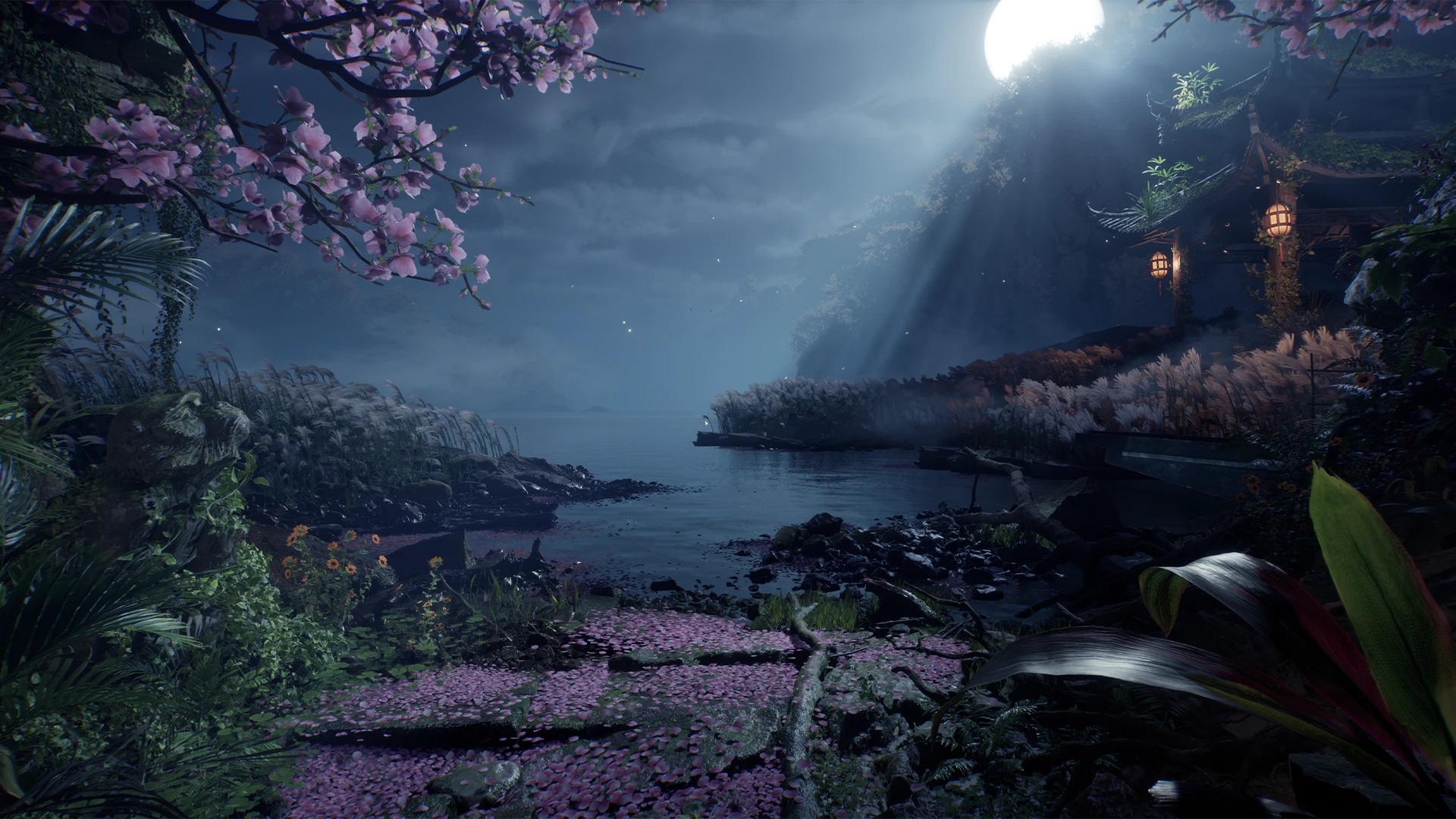
The current strategy joins recognizable stories to production technology. Heroes of Jin Yong draws on the novelist’s martial arts universe. Its February 2026 gameplay trailer shows combat and environments; composer Cai Zhizhan also scored the 1996 game bearing the same name. That is a rather specific bridge between technical ambition and an audience’s memory.
Alongside its own entertainment projects, CreateAI has released something developers can inspect. Ruyi-Mini-7B turns an input image into a short video, with controls for camera movement and motion. Its public weights carry an Apache 2.0 license. Artists can experiment with moving a still composition; developers can incorporate the model into their workflows, including through ComfyUI.
Access has a cost even when the code is open. Generation needs computing resources and time. The documentation offers memory-saving settings that trade speed for lower GPU use. Its model card also acknowledges distorted text, hands and crowded faces, plus unwanted scene changes. Those are consequential defects when a customer needs a consistent character across shots.
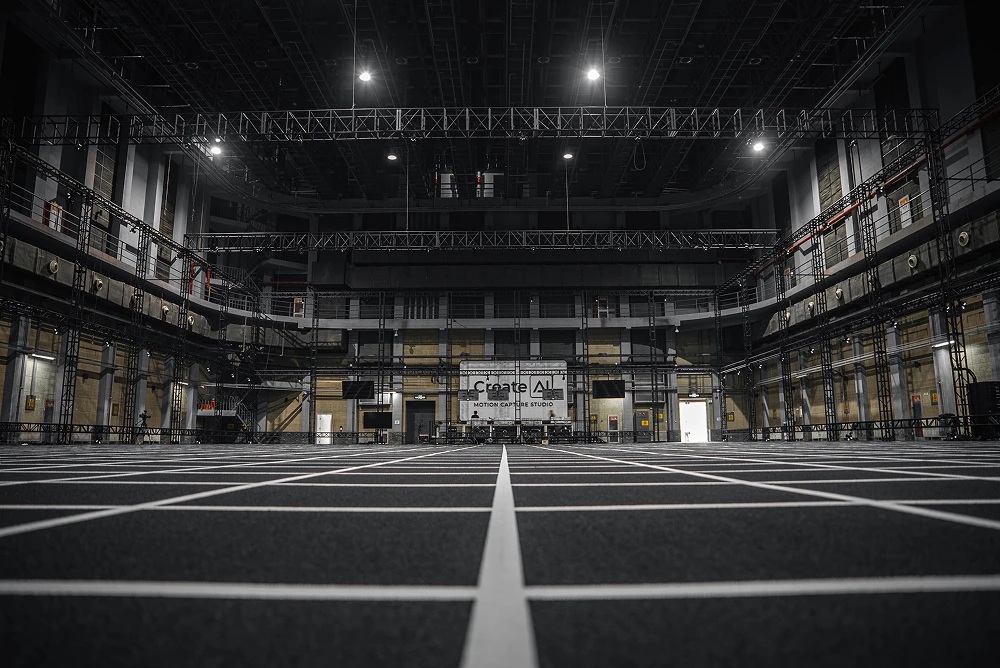
There is substantial physical production here, too. The Beijing motion capture facility opened in August 2025 with 130 optical cameras across 2,000 square meters. It supports the company’s games and offers services to outside productions. Filmmakers and game studios can buy capture expertise; players are the eventual audience for the resulting entertainment.
The meter is still running
CreateAI therefore occupies an awkward, interesting intersection: content studio, production-service provider and AI developer. Its proposed distinction is control over more of the creative chain. Its company site targets cutting development time and costs by more than half within five years. Treat that as a goal, rather than a measured saving already delivered.
Different measures, one commercial gap.
The accounts keep the ambition in perspective. They also record a $132.8 million capital distribution to shareholders in December 2025. A lower cash balance cannot all be called spending on games. Nor can a trailer be counted as a successful turnaround. Product progress and business performance need separate scorecards. A studio can improve its tools, secure recognizable material and show convincing footage while still facing the ordinary work of finishing, distributing and selling an expensive production.
What can another builder copy? Map every dependency between the impressive demonstration and the repeatable sale. Test the manufacturing partner, the production workflow and the customer’s willingness to pay. This approach becomes less useful when outputs cannot meet a buyer’s quality threshold or external partners cannot deliver. TuSimple’s empty cab remains an achievement. CreateAI’s next test is getting customers to come along.