Dylan Ayrey was unemployed, sleeping on his college friend Dustin Decker's sofa and looking for bug bounties when he wrote the first TruffleHog in 2016. The Python script rummaged through Git history for passwords, tokens and API keys - digital valuables buried in the layers developers thought they had deleted. Ayrey gave it away. For five years it remained the sort of open-source side project that acquires conference talks, weekend maintenance and an alarming number of users while its creator insists it is not a business.
Then the users supplied the business plan. Companies were stitching together cloud platforms, SaaS products and internal services with machine credentials. Those keys leaked into source code, Docker images, build logs, Slack, Jira, wikis and package registries. The free scanner could point at suspicious strings; large security teams needed the next dozen steps. In 2021, Ayrey left Netflix and formed Truffle Security with Decker and security consultant Julian Dunning.
The company now sells the operational layer around TruffleHog: continuous scanning, a central dashboard, access controls, alerts, analytics, deployment help and integrations across more than 20 tools. Add-ons search public GitHub and npm, analyze what a live SaaS or cloud credential can reach, and map the connections between a leaked secret and the services it may unlock. The customer is usually not a lone developer. It is the AppSec, DevSecOps or cloud-security team responsible for thousands of repositories and a much larger pile of organizational amnesia.
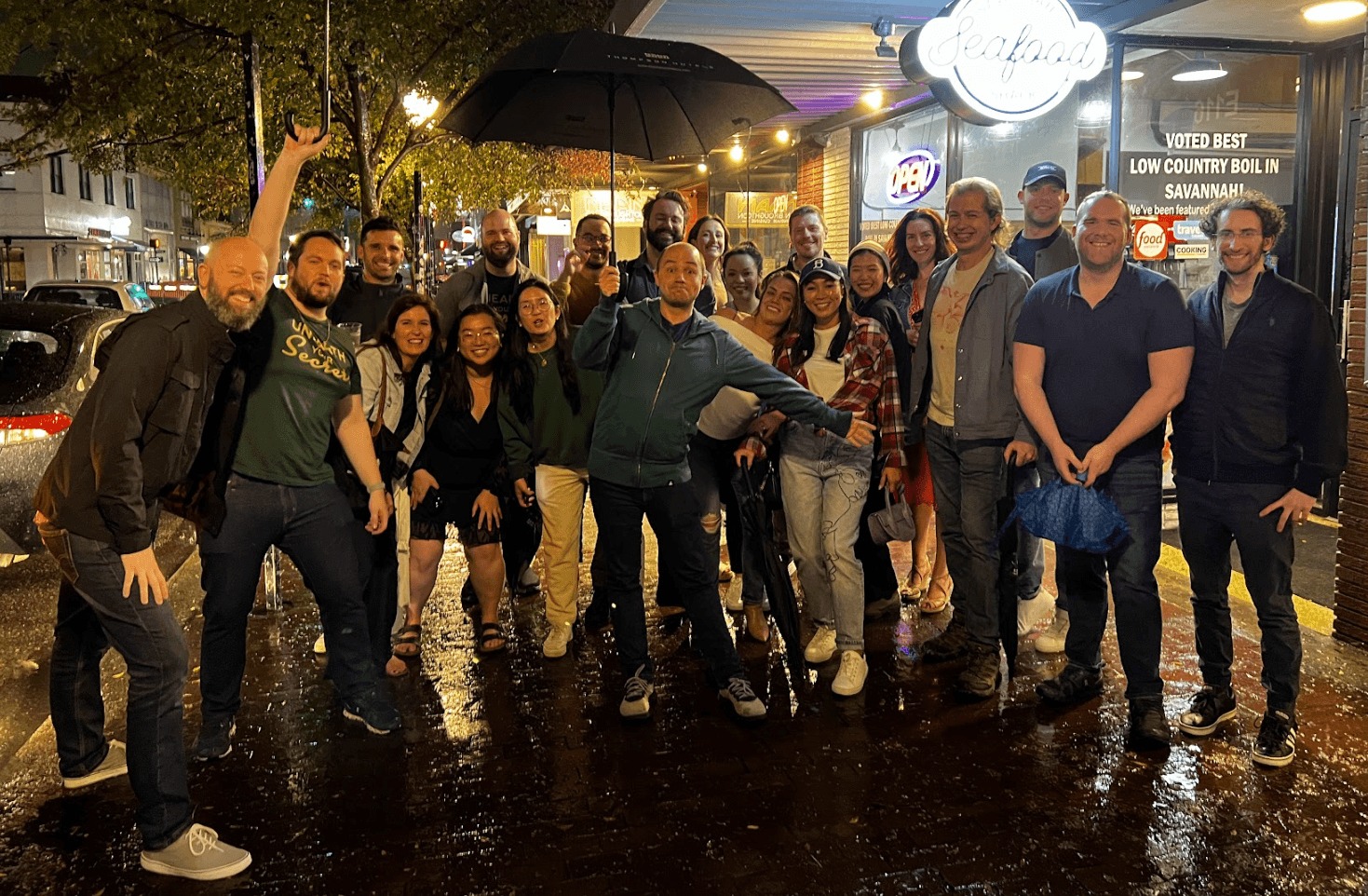
The first thing that failed was the obvious thing
Old secret scanners leaned heavily on entropy checks and regular expressions. Translation: find a random-looking string, announce danger, repeat until the security team loses the will to open another ticket. Truffle Security has described the result bluntly - an extremely high ratio of false positives to true positives. At enterprise scale, “we found 40,000 suspicious things” is not a security outcome. It is an unpaid internship for everyone receiving the alert.
Ayrey called the original TruffleHog a good research tool that fell short in many ways. The 2022 version 3 rewrite changed the proposition. It ran faster, covered roughly ten times as many secret types as the first generation, and dynamically verified supported credentials. When TruffleHog finds something shaped like an AWS key, for example, it can make a benign call to AWS's identity endpoint. A successful authentication moves the finding from “looks scary” to “works.”
“An alert tells you a key leaked. Context tells you what to do next.”Truffle Security, introducing AWS Analyze
That check sounds small. It is the product. A safe verifier must choose an endpoint that proves authentication without changing data, creating resources or charging the credential owner. Network failures must be separated from invalid keys. Database credentials need drivers and connection logic. Two providers may issue keys with the same shape, creating a risk that the scanner sends a candidate to the wrong service. Each of the 800-plus detectors becomes a tiny, maintained security integration.
What changed their minds
Ayrey did not wake up craving a sales pipeline. Open-source traction kept attracting enterprise requests and investors. Founders from Material Security and Signal Sciences urged the team to treat the adoption as evidence, not a flattering GitHub graph. A pre-seed round followed; Andreessen Horowitz then led a $14 million Series A. In November 2025, Intel Capital and a16z co-led a $25 million Series B, taking disclosed funding above $40 million.
The business model is unusually legible. Researchers and small shops can use the same open-source detection engine. Enterprises fund the coordination machinery: continuous monitoring, non-code coverage, SSO, role-based access, audit-friendly reporting, support and add-ons. The public pricing page labels open source “FREE!” and sends enterprise buyers to sales. AWS Marketplace displays a $100,000 12-month contract dimension for several TruffleHog products, while emphasizing that actual pricing is custom and tied to negotiated scope. This is not a $19-a-month developer toy with a bigger button.
Public customers include Gett, Cmd and Klaviyo. Gett's application-security lead said verification and precise location made TruffleHog stand apart during evaluation. Klaviyo reported using the context to remediate more than 200 high-impact secrets without drowning developers in false alerts. That trust matters. A scanner that cries wolf becomes shelfware with excellent telemetry.
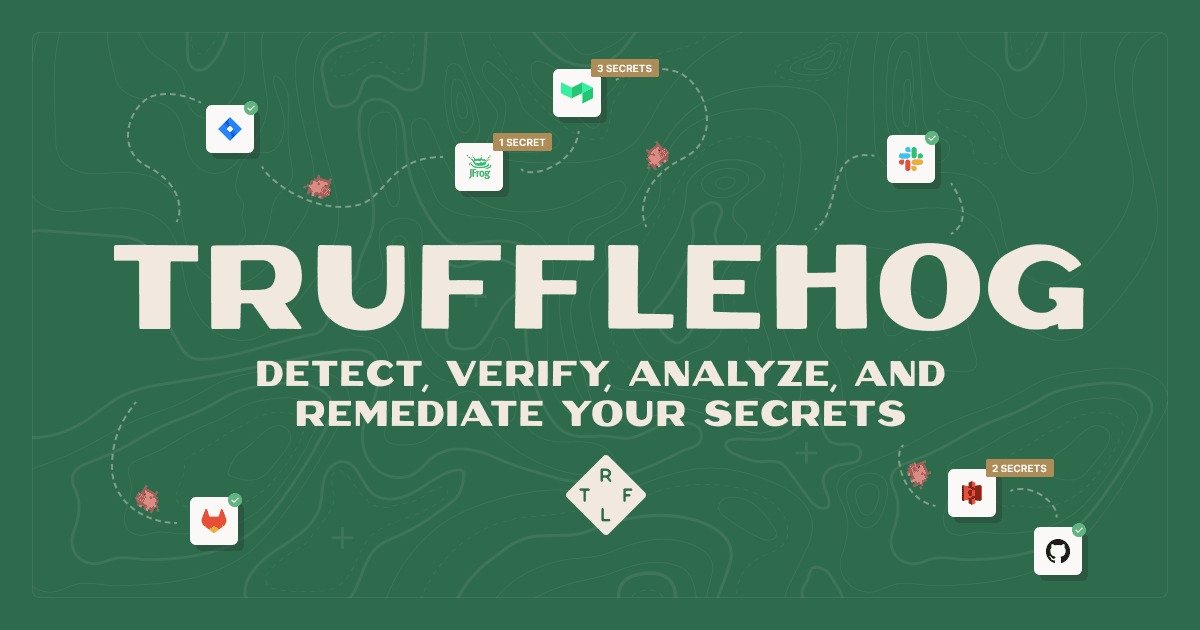
The product is climbing from alarm to decision
Secret scanning is crowded. GitGuardian, Gitleaks, GitHub's native scanning and Advanced Security, Snyk, detect-secrets and Nosey Parker all offer alternatives or adjacent coverage. Truffle Security's main distinction is not that it can recognize more key-shaped strings. It is the verification-first system, paired with breadth beyond code and analysis after a key proves live.
Forager points the scanner outward, watching public ecosystems such as GitHub and npm for credentials that appear to belong to a customer. Analyze asks what a verified SaaS key can do. GCP Analyze maps service-account permissions and inherited access. The August 2026 AWS Analyze release resolves the IAM principal behind a leaked access key, gathers policies and follows potential role paths. Enterprise Topology turns verified findings into a graph: where a credential was found, which service it opens and what an attacker might reach next.
The timing is good and slightly grim. AI coding agents and third-party APIs create more machine identities and more places to paste their credentials. Truffle Security's August 2026 study examined 64,024 AWS keys its scanners had verified across public findings. Of 10,616 complete key pairs it could re-check, 88 percent still authenticated. The median live key in a measurable subset was five years old. Deleting the offending file had often happened; revoking the credential had not.
This also explains where the company fits. It is not a password manager and does not replace Vault, AWS Secrets Manager or Google Secret Manager. It is closer to exposure management for non-human identities: discover what escaped, test whether it remains dangerous, understand the blast radius and prove the response closed the door.
What a reader can copy - and what will break
Steal this
- Give away the technically valuable primitive.
- Charge for coordination, history and governance.
- Turn noisy output into a ranked work queue.
- Let real usage reveal the enterprise roadmap.
Do not pretend
- Detection alone equals remediation.
- A deleted commit makes a key safe.
- Every failed verification means an invalid secret.
- Open-source popularity automatically creates a buyer.
The transferable lesson is to find the labor your free product creates after it works. TruffleHog found secrets; enterprises still needed ownership, routing, permissions, prioritization, rotation instructions and evidence of revocation. The company sells those missing verbs. It also keeps the detector code open, turning researchers and users into contributors who add credential types, repair failing checks and report vulnerabilities.
This playbook fails under clear conditions. If the free tool does not become a habit, there is no distribution advantage. If individuals can finish the entire workflow themselves, there is little coordination tax to monetize. If the enterprise-only layer weakens the open product, community trust erodes. And in security, a verifier that mutates customer data or sprays credentials at the wrong provider would destroy the premise. The boring implementation details are the moat and the liability.
Truffle Security's culture follows the same open-source logic: remote-first, security-first, experimental and unusually fond of mutual teaching. Its team now includes Zach Rice, creator of Gitleaks, and Brad Larsen, creator of Nosey Parker, putting stewards of three influential secret-scanning projects under one roof. The result is part software company, part public research shop and part neighborhood watch for keys developers forgot they ever made.
For a security team, the practical starting point is smaller than the platform diagram. Scan the full history, not merely the latest branch. Put a pre-commit check close enough to the developer that feedback arrives before embarrassment. Route a verified finding to the person who owns the service, include rotation guidance, and then re-check the credential. Expand into Slack, ticketing systems, cloud storage and package artifacts only after the response loop works. Otherwise, broader coverage simply creates a more ambitious backlog.
There is also a healthy caveat inside the word “verified.” A provider can be down, an endpoint can change, or a credential may be valid only from a private network. TruffleHog distinguishes an invalid result from an indeterminate one where possible, but no scanner gets to repeal messy infrastructure. Teams still need least-privilege IAM, inventories, secret managers, owners who answer tickets and a rotation procedure that will not knock production over. TruffleHog makes the dangerous object visible. The organization still has to behave like it believes the alert.
The mascot may be a pig rooting for treasure. The grown-up product is less whimsical: an organizational memory for credentials. It remembers the commit nobody else remembers, checks the key nobody rotated and asks the one question that turns a security ticket into a closed incident - does it still work?
Go down the rabbit hole