There is a peculiar moment in software security when knowing more makes the afternoon worse. A scanner finds a vulnerable library. The fix exists. Then someone discovers that installing it means upgrading a framework, revisiting integrations, and testing an application whose original authors have moved on. A small flaw has acquired the social life of a construction project. Seal Security makes its living in that moment.
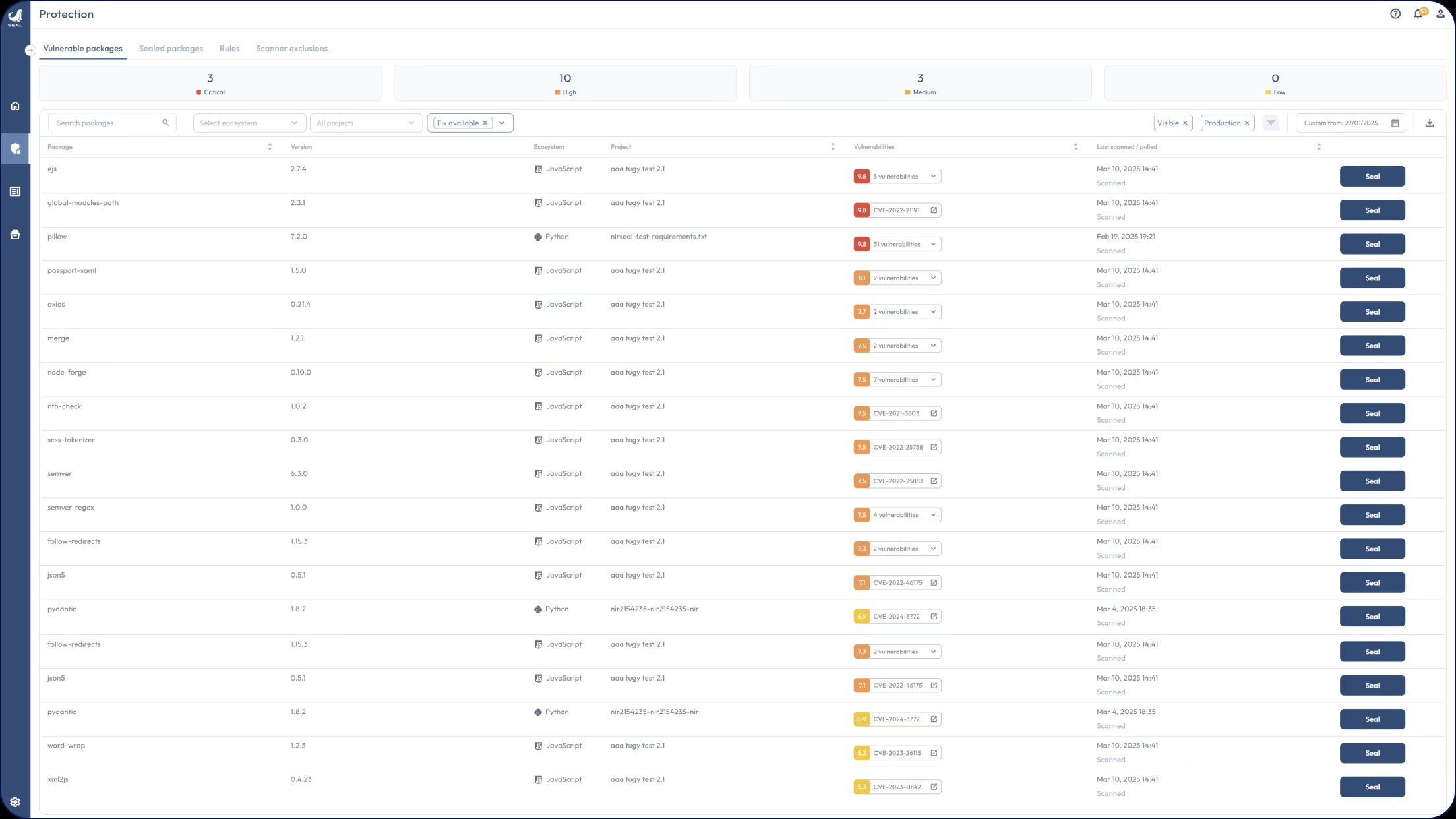
- Backported patches let teams fix supported open source components on existing versions.
- Coverage spans application dependencies, Linux packages, and container images.
- Commercial plans are quote-based; an agent can handle remediation steps and request human approval.
The company’s proposition is unusually concrete: take the security change from a newer release, adapt it to the older version already in use, and deliver a tested package. The customer gets a fix without automatically inheriting a migration. For application security teams, that offers a way to move a ticket forward without first winning an argument about the product roadmap.
The six-line renovation
Seal’s website illustrates the approach with Spring, the Java framework. Its example starts with an end-of-life Spring 4.3 package affected by Spring4Shell. The security fix landed in newer branches. Seal shows the relevant change being backported into a patched build of the older package, with checks for build success, existing tests, API compatibility, and the exploit itself.
The distinction matters. A feature release bundles security changes with other decisions. A backport tries to extract only the necessary repair. Seal’s published example makes the patch look modest beside the migration it avoids. The difficult work lies in proving that those few changed lines behave correctly in their unfamiliar, older surroundings.
A conceptual workflow, not a promise that every package can be repaired.
That is the product category: commercial open source remediation. Seal covers direct dependencies and the transitive ones dragged in by other packages. Its portfolio also includes Linux patching through Seal OS and maintained container foundations through Seal Base Images. Older operating systems make the proposition particularly legible: software can remain useful long after its original maintenance arrangement expires.
Fifty conversations, one awkward queue
Itamar Sher, Lev Pachmanov, and Alon Navon founded Seal in 2022. Today their roles are CEO, CTO, and CPO. The company describes a founding team with more than 30 years of combined experience in vulnerability mitigation and exploitation. That background suits a business whose output must survive contact with both attackers and ordinary application behavior.
In his public launch account, Sher said the founders interviewed more than 50 organizations. Those conversations convinced them that existing open source security programs had a problem. He also recalled the discouraging fundraising climate at the end of 2022. The story is customer discovery under awkward conditions, rather than a miraculous idea arriving fully dressed.
The financing followed: a $7.4 million seed announcement in February 2024, then a $13 million Series A in July 2025. Vertex Ventures Israel led both announced rounds. The later announcement put cumulative funding at roughly $20 million and described plans to expand the platform and go-to-market effort. That money financed the supplier; customers still have to make their own purchasing case.
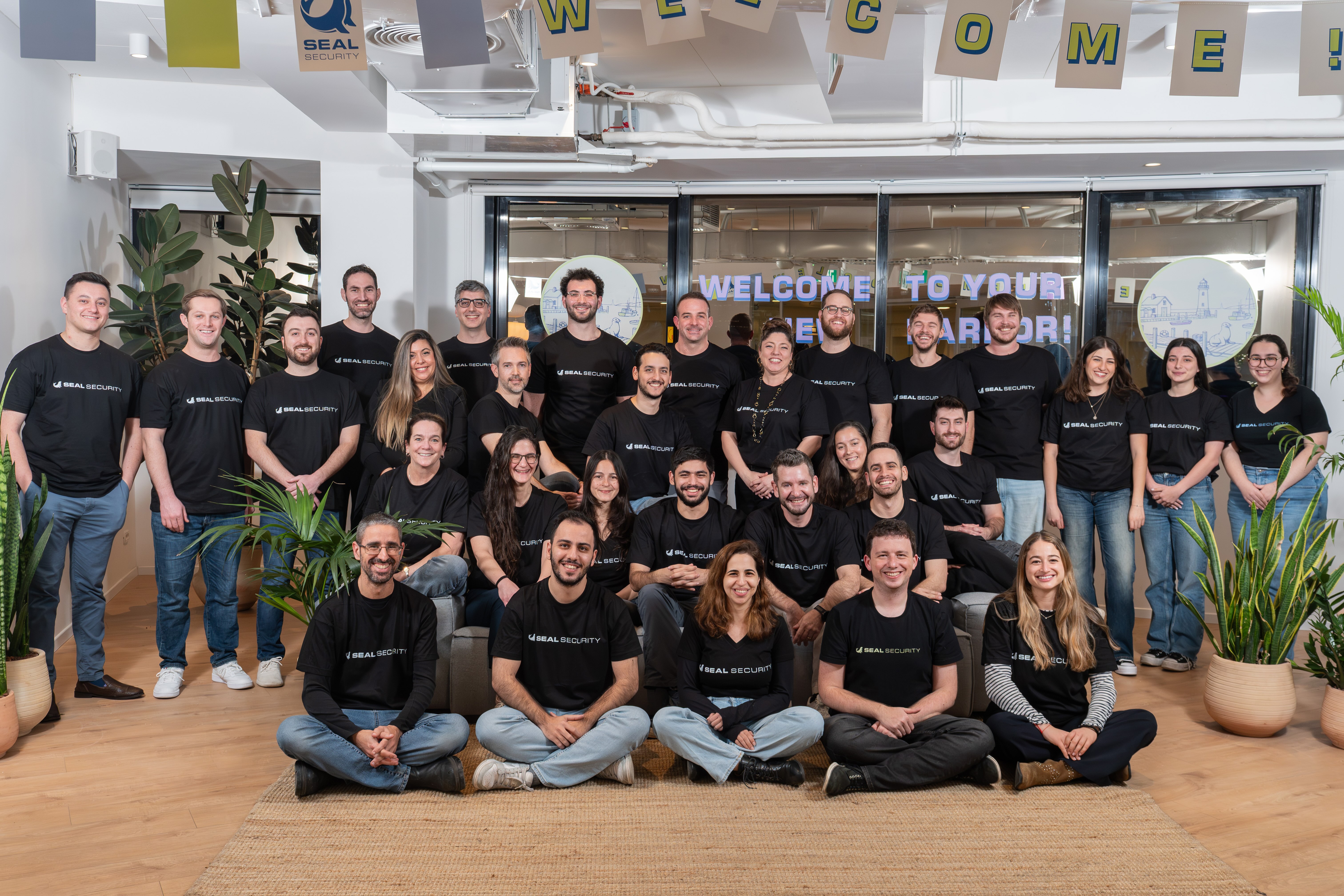
Its careers material stresses teamwork, learning, and reducing developers’ patching burden. Those are employer-published accounts, but the last theme neatly fits the product: doing maintenance well enough that someone else can get back to building.
The dashboard has to believe the fix
A backport creates another problem. If a scanner associates vulnerability status with familiar version numbers, a repaired older package can still look guilty. The code and the dashboard disagree. For a team answering audit questions, that disagreement is consequential.
Seal’s December 2025 Checkmarx partnership and January 2026 Wiz integration tackle this handoff. The Checkmarx integration communicates remediation status for sealed packages. Wiz recognizes patched packages inside container workflows. These relationships explain where Seal fits: alongside detection tools, supplying a repair those tools can recognize.
In March 2026, Seal announced an autonomous agentic capability. Its described sequence identifies remediation gaps, installs the remediation component, applies compatible fixes, follows automated testing, and asks a human for final approval. The last step is revealing. Shipping a change remains an accountable decision, even when the repetitive work has been delegated.
“It’s just a matter of: can Seal fix it? Yeah, absolutely.”Kyle Kurdziolek, BigID VP of Security, in a Seal-published testimonial
The price of leaving Tuesday alone
The likely buyer is an AppSec, DevOps, or IT team with a persistent dependency backlog. Seal displays PayPal, Kiteworks, Censys, BigID, and others among its customer references. In a published testimonial, PayPal engineering director Gad Meyer credits the product with saving an estimated months of engineering work. It is a customer’s account, not a universal savings formula.
Seal’s plans run from a bounded Starter pilot to Business coverage for selected environments and Scale coverage for enterprise rollout. Quotes depend on scope, supported ecosystems, deployment requirements, and support. The recurring purchase is continuing remediation coverage. Its advertised 72-hour SLA for critical and high vulnerabilities gives buyers a timing commitment to examine in the contract.
Seal’s advertised remediation SLA for critical and high vulnerabilities. Confirm coverage and contractual terms for your environment.
A sensible pilot starts with one troublesome, supported dependency. Run the existing tests against its patched counterpart, inspect the changes, check the scanner result, and measure the work required to release. That is a lesson any team can copy: evaluate remediation at the point where a fix becomes deployable.
The approach depends on package coverage, compatible repairs, artifact access, and meaningful tests. It cannot replace application-specific security work or make an audit pass by itself. Teams also still need a long-term upgrade plan. Seal’s useful offer is room to separate an urgent repair from a larger renovation. Sometimes the most valuable software change is the one that lets Tuesday remain Tuesday.