Two hundred and forty days is a curious unit of time for a security problem. It is long enough for a product roadmap to change, a developer to move teams, and a ticket to acquire the quiet dignity of office furniture. In an ArmorCode customer story, an unnamed agricultural and construction equipment manufacturer reported cutting that interval to 15 days. The vulnerability had become work someone could finish.
- ArmorCode collects findings from existing security tools and turns them into prioritized work.
- Its customers are enterprises with applications, infrastructure and ownership scattered across teams.
- The differentiator is independent governance: keep the scanners, connect their results, coordinate the fixes.
- AI agents extend the workflow, but context and human accountability still matter.
The same manufacturer reported 30% fewer vulnerabilities over six months across 243 applications. These are vendor-published results from one customer, not a forecast for everyone who buys the software. Still, they suggest a more interesting story than the usual catalogue of things a security product can detect. Detection was already happening. The trouble was everything that came afterward.
The queue behind the dashboard
Imagine a company with a code scanner, a cloud security tool and a penetration-testing report. Each can describe a weakness in its own vocabulary. None necessarily knows whether another tool has reported the same underlying problem, which application earns revenue, or which team inherited responsibility after a reorganization. The dashboard may be splendid. The handoff may be a disaster.
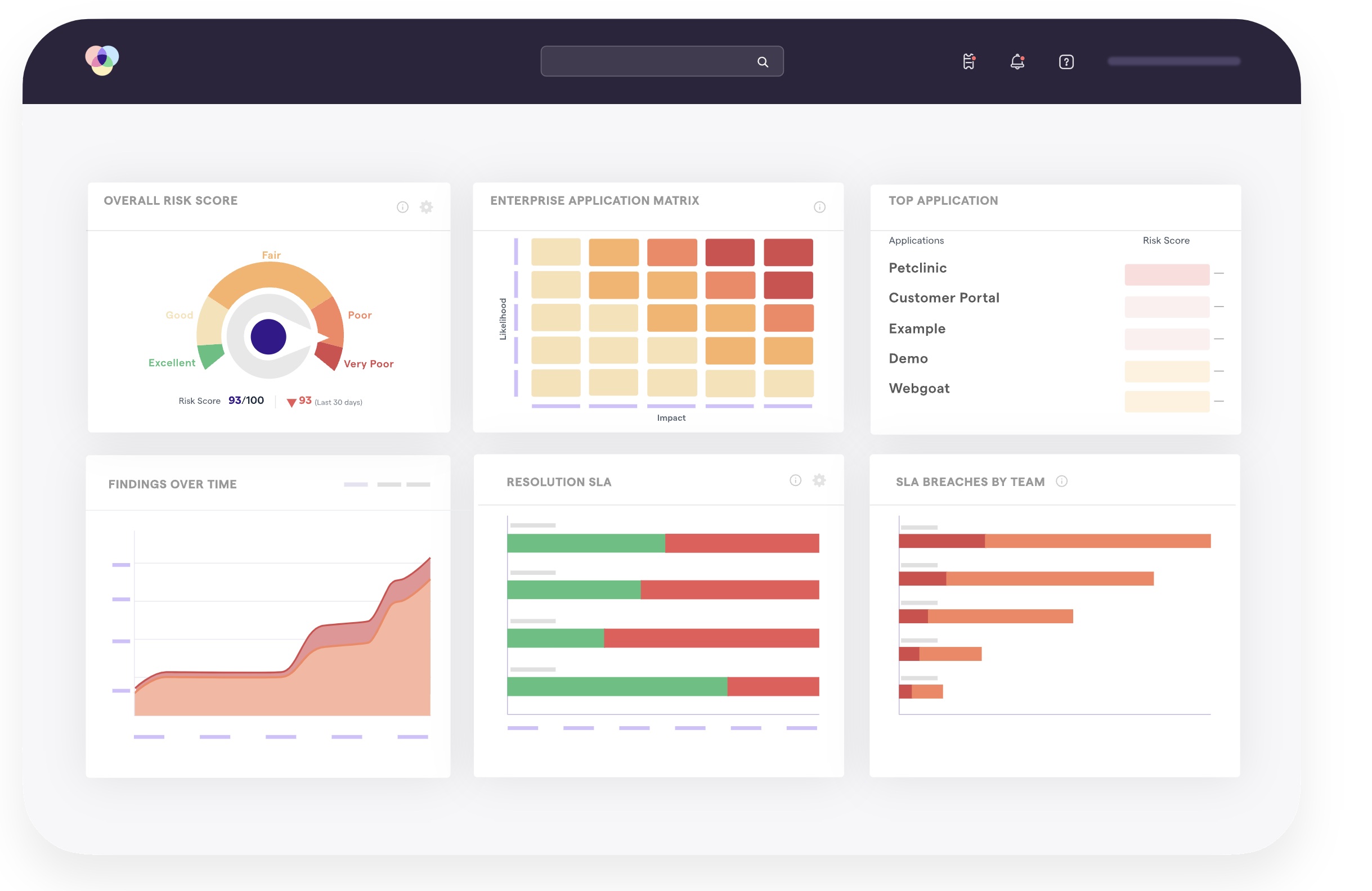
ArmorCode operates in that handoff. Its Application Security Posture Management software, usually shortened to ASPM, ingests findings and brings them into a common format. It correlates related issues, adds context and helps route remediation through tools such as Jira, ServiceNow and Azure Boards. A developer receives work in a system the team already uses. Security can follow progress rather than repeatedly asking for an update.
The distinction between severity and priority is central. Severity describes the technical seriousness of a flaw. Priority must also reflect the environment: the affected asset, its business importance and whether exploitation is plausible. In editorial terms, a severity score is a fact in a notebook. A priority decision is the assignment desk deciding which fact deserves a reporter.
A referee who does not sell the whistle
ArmorCode’s pitch has a deliberate political edge: it does not run its own security scanner. A scanner supplier that also ranks findings has an obvious commercial interest in its own tool. ArmorCode argues that an independent governance layer can sit above those competing products without that incentive. Independence is its positioning; it is not proof that every prioritization decision will be correct.
For buyers, this creates a practical choice. They can consolidate more functions with a security vendor, or keep a mixed collection of tools and pay for a layer that makes them cooperate. ArmorCode occupies the latter position. Apiiro is another name buyers will encounter in application security. ServiceNow Vulnerability Response is a workflow alternative ArmorCode explicitly addresses. The right comparison depends on whether the buyer’s biggest gap is detection, code context or coordinating existing findings.
Risk-Based Vulnerability Management extends the approach into infrastructure. Software Supply Chain Security brings package and software-bill-of-materials information into investigations. A software bill of materials, or SBOM, is the ingredient list for a piece of software. When a dependency becomes suspect, an ingredient list helps teams work out which products require attention. The appeal is shared governance across these domains, with less manual translation between them.
- 01CollectExisting tools
- 02ConnectRisk + context
- 03AssignOwner + workflow
- 04VerifyClosure + evidence
Conceptual illustration of the governance workflow, not a measured performance claim.
Customers wanted their time back
VTS, the real estate technology company, provides a less numerical but revealing example. Its published customer story describes a multi-product environment that needed consistent visibility and standardized risk management. Comparing products becomes difficult when every team reports security differently. A shared framework lets people discuss resource allocation using comparable information rather than a contest of incompatible dashboards.
“We don’t need more dashboards.”
Renan Dias, VTS, in the May 2026 Anya Agents announcement
That sentence is a useful antidote to the industry’s fondness for attractive screens. VTS’s interest in agents is about getting work done against its environment. ArmorCode also publishes references from Shutterfly, S&P Global, Athenahealth and The Motley Fool. These are organizations for which security work crosses product and infrastructure boundaries. The target buyer is an enterprise security leader; the eventual beneficiary may be the developer who receives a comprehensible ticket.
The commercial model fits that audience. ArmorCode sells enterprise software through a demo-led process and a partner ecosystem. Its GitHub Marketplace authentication app is marked free, but explicitly reserved for paid ArmorCode customers. It is a connector, not a giveaway of the platform. A buyer should evaluate the contract alongside the integration work, internal ownership mapping and operating time needed to make a governance program useful.
Born between two speeds
ArmorCode began in July 2020. Early investor Sierra Ventures named Nikhil Gupta and Anant Misra as its founders and described the mismatch they were addressing: software releases were becoming faster while security teams were expected to enforce standards at the same pace. Developers were acquiring security responsibilities without necessarily having the training or information to discharge them.
Gupta remains CEO. The current leadership page also identifies Praneet Khare as co-founder and engineering leader, and Deepak Yadav as co-founder and chief architect. Product leadership comes from Mark Lambert. Their area of expertise is the connective machinery of enterprise security: turning outputs from different tools into an operating process that security and development teams can share.

The financing tells the expansion story. A $3 million seed announcement in 2021 was followed by another $8 million in January 2022. The $14 million Series A that November brought total disclosed funding to $25 million. HighlandX led a $40 million Series B in December 2023. In March 2026, a further $16 million strategic round led by Cheyenne Ventures brought the company’s stated total to $81 million; Phil Venables joined its board.
The product direction broadened with the business. In his 2024 anniversary account, Gupta described customers with old systems, new systems and business units that used different tools. Their needs supported a vendor-independent governance approach. This is a documented explanation of the strategy, rather than a tidy tale of a founder abandoning a failed first idea.
AI enters the same ownership problem
March 2026 brought AI Exposure Management, which applies inventory, ownership and policy oversight to enterprise AI usage. The problem is familiar with a different cast: a tool, model or agent appears; somebody must determine whether it is approved, who is responsible and what risk it introduces. ArmorCode collects signals from existing systems and preserves records of governance decisions.
In May, the company announced Anya Agents, purpose-built workers for tasks including remediation guidance, explaining risk scores and investigating exposure to new vulnerabilities. Their foundation is a Context Risk Graph that connects technical findings with information about assets, threats and the organization. The useful ambition is repeatable work with bounded actions, rather than asking a general chatbot to improvise security policy.
ArmorCode joined Anthropic’s Cyber Verification Program in July. In August it expanded agent and graph capabilities around exploitability, cloud risk, mitigation and patch orchestration. The announcement also addressed a quieter cost: separate AI agents repeatedly analyzing the same issues. Shared context is intended to reduce that duplicate effort. These are product capabilities and company claims; they do not establish an automatic fix for every environment.
Follow one finding all the way home
ArmorCode describes its culture through five Hs: Hungry, Humble, Hardworking, Honest and Human. Its product story makes the last word particularly relevant. Assigning work, accepting exceptions and authorizing changes are human responsibilities, even when software performs much of the analysis.
The reader can copy a useful discipline without purchasing anything: take one real finding and follow it from detection to closure. Record the duplicate reports, the missing context, the unanswered ownership question and the time spent waiting between teams. That exercise reveals whether the organization needs another scanner or a better way to finish the work its scanners already create.
A governance platform earns its keep when those handoffs are costly and numerous. Its usefulness depends on connected data, credible asset ownership and people able to act on priorities. If those inputs are missing, automation can accelerate a confused process. If a small team already handles its findings clearly, another coordinating layer may add more administration than value. The buying test is wonderfully unglamorous: does the right person receive the right work, and does the problem get resolved?