The Accountant Who Built an Incubator for Women
A chartered accountant who left the comfort of blue-chip advisory work to build an incubator for women who were told, quietly, to expect less - and then to expect more.
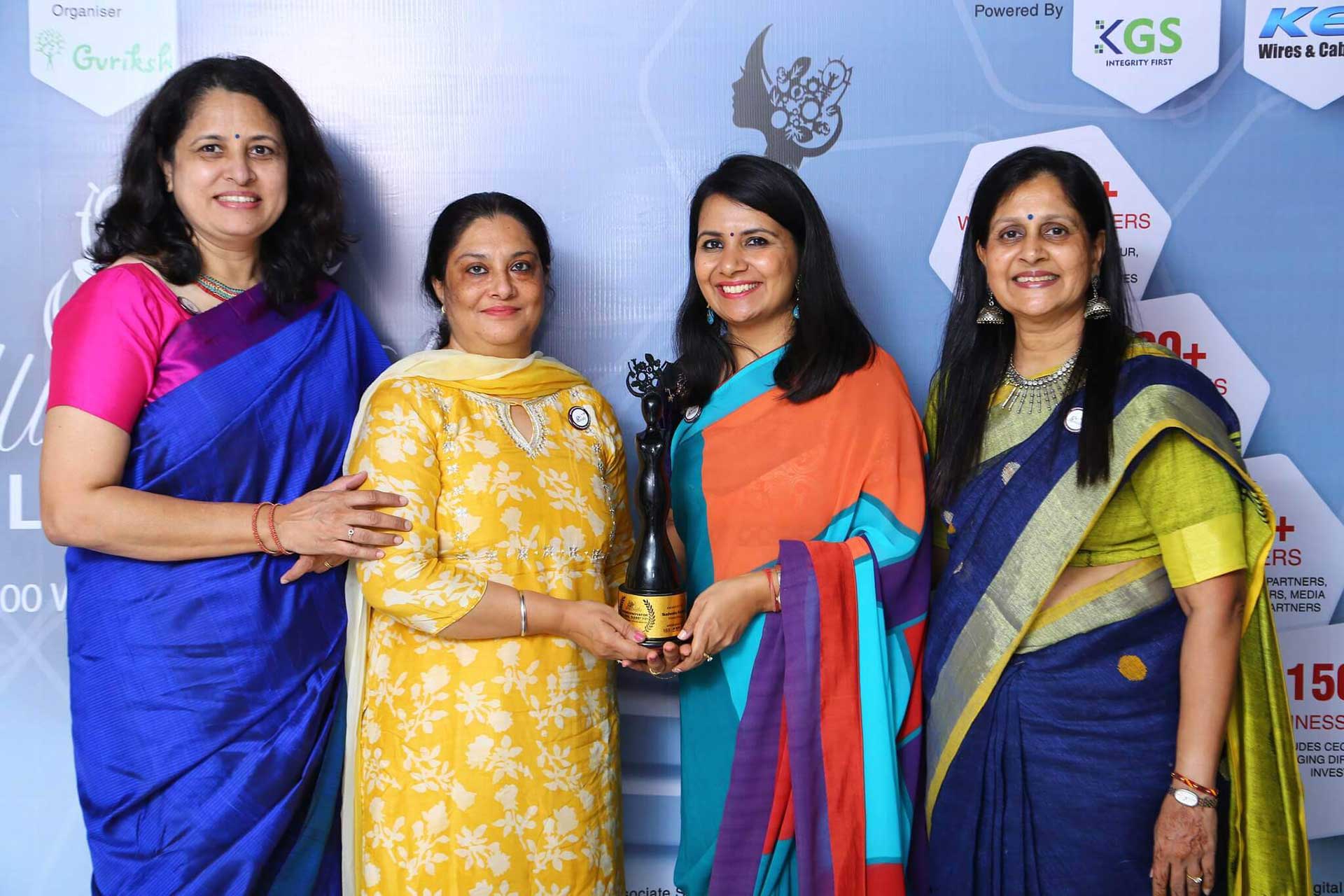
Tripti Shinghal Somani spent the first decade of her working life inside places where the numbers had to add up. She trained as a chartered accountant, studied business law at National Law School in Bangalore, and carried a clipboard of advisory work through PwC, Grant Thornton and the World Bank. Then, in 2015, she started doing something that does not fit neatly on a balance sheet. She began building an incubator for women, and she has not stopped building since.
The venture is called Womennovator. On paper it is a social impact incubator and a global virtual platform for women entrepreneurs. In practice it is a machine for changing one number at a time - the number of women who believe a business is something they are allowed to run. Somani describes the obstacle in clinical terms, which is what you would expect from someone who counts for a living. She points to the Golem Effect: the pattern where lower expectations, whether placed on you by others or by yourself, quietly produce lower results.
She has watched it happen up close. Women would come to her for help raising money. She would ask them for a little more paperwork, a few more details. And some would simply disappear. Not because they lacked the ability. Because somewhere along the way they had absorbed a story that this was not really for them.
01 / THE PIVOTFrom audits to activism
There is an easy version of Somani's career, and she did not take it. The easy version is a chartered accountant with a master's in business law and a resume full of blue-chip names. That person becomes a partner, collects board seats, and lets the compounding do its work. Somani did the first part. She is CEO of KGS Advisors, a business and financial advisory firm, and she has sat on boards and governing councils across the Indian enterprise and skilling landscape.
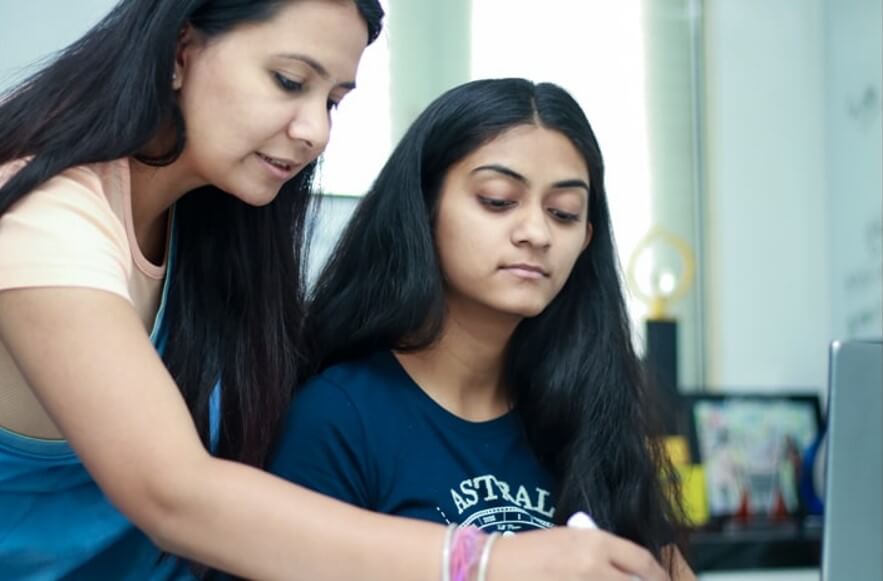
But she kept adding a second track that had nothing to do with billable hours. The corporate work gave her a rare vantage point. She had seen how capital actually moves inside large organizations, and she had noticed a stubborn gap. Banks, she observed, were sometimes unable to meet their own targets for lending to women. The money existed. The pipeline did not. That gap became the thing she decided to work on.
Womennovator was the answer, and it grew into a network rather than a nonprofit. It now connects more than 200 influencers, a jury pool of roughly a thousand people, and businesses across dozens of sectors and multiple countries. The structure matters to Somani. She is careful not to frame the work as charity. It is an incubator, with mentors and metrics and demanding follow-through - generosity built like a company rather than handed out like a favor.
02 / THE METHODMany hats, one move
Look at Somani's list of ventures and the first impression is scatter. There is Womennovator. There is Incupedia, a business incubator. There is BEconomy, a peer-to-peer exchange. There is Gvriksh, which leans environmental. And then there are the ones that make people do a double take: Rasoi Queen, a culinary contest that turns home kitchens into businesses, and the Queen XI Cricket League, a women's T20 competition.
A cooking contest and a cricket league do not obviously belong in a portfolio built by a chartered accountant. Until you notice they are the same idea wearing different costumes. Each one hands a woman a stage, an audience, and a route to a market. The cricket pitch creates visibility. The kitchen creates a product. The incubator creates a network. Change the surface, keep the engine.
She has said, in her own words, that she has had the privilege of wearing many hats. It reads like modesty, and it is, but it is also an accurate description of a strategy. Pick one thing you believe, then build a lot of front doors to it. Some women will walk in through cricket. Some through cooking. Some through a mentoring program. The door is not the point. Getting them inside is.
03 / THE POLICYThe unglamorous lever
For all the color of cricket leagues and cooking finals, the lever Somani seems most serious about is deeply unglamorous: procurement. Womennovator has run a gender-responsive procurement campaign, pushing public and private buyers to actively source from women-owned businesses. It is the kind of policy work that never trends, but it moves real money into real hands, and it does so at a scale that a single mentoring session never could.
That instinct - to reach for the structural fix rather than the feel-good moment - runs through her public roles. She has served on the governing council of the national skilling body NIESBUD, chaired committees at PHDCCI, taken a committee chair at the MEPSC Skill Council, and sat as a member of the National Startup Advisory Council. NITI Aayog picked her to mentor young innovators through the Atal Tinkering Labs program. The through-line is that she keeps positioning herself where the rules get written, not just where the ribbons get cut.
04 / THE RECORDHonors, and a small word for it
The recognition has arrived in a steady stream. She was honored at the Times 40Under40 Leaders Awards and named among the Economic Times Inspiring Leaders in 2022. There is a BMW Unstoppable Women Award, a Vivekananda Young Change Makers Award, and a Shakti Lifetime Award going back to 2015, the same year Womennovator began. She is also a TEDx speaker, and the topic she chose - "Mental Strength over Mental Block" - is basically the Golem Effect told as a personal challenge rather than a research finding.
And yet the word she reaches for to describe herself is small. She calls herself a coach for MSMEs. Not a mogul, not a movement leader. A coach. The gap between what she has assembled and how she names it is, in a way, the most revealing thing about her. The people who compound quietly rarely announce it. They just keep showing up on a Saturday, at the cricket ground or the cooking final or the mentoring table.
05 / THE THESISExpectation as infrastructure
Strip away the ventures and the awards and you are left with a single, slightly uncomfortable idea. Somani believes that a great deal of what looks like inability is actually expectation - a ceiling nobody bothered to update. When she talks about the Golem Effect, she is not being poetic. She is naming a design flaw in how opportunity gets distributed, and she has spent a decade building patches for it.
That is why the incubator has structure instead of slogans, why the procurement campaign matters more to her than the applause, and why she keeps launching new front doors even after the last one worked. A pep talk raises expectations for an afternoon. A system that keeps showing up until the woman does too can raise them for good. Somani, true to her training, prefers the version that scales.
She still runs the advisory firm. The spreadsheets still have to balance. But the work that seems to define her is the one where the return on investment is harder to book - a woman who finally filled out the extra form, applied for the loan, and stayed in the room. Count enough of those, and you have built something that no single award quite captures.