At 1:50 on a February afternoon in 2021, an email landed in the inbox of a public-affairs firm in California. It was a Google Alert for “Rolling Hills Estates.” Ordinarily this would have been the small machinery of municipal life doing its job - a place name noticed, a link delivered, a communications person informed. Except the alert concerned Tiger Woods, whose car had left the road around seven that morning. By the time the software spoke, the world already had.
The crash began in Rancho Palos Verdes and ended across the boundary in Rolling Hills Estates. Two cities, their lawyers, an insurance pool, sheriff and fire departments, hospitals and a ravenous press were now attached to the same patch of Hawthorne Boulevard. Even the battered welcome sign had to be secured by the city manager before it became memorabilia. Tripepi Smith represented Rolling Hills Estates and the California Joint Powers Insurance Authority. A firm built to explain council decisions and recycling schedules was suddenly inside an international news event.
“We want things to be boring.”Tripepi Smith, describing the public-sector communicator's preferred news cycle
That sentence explains the company better than a list of services. Tripepi Smith is a marketing, technology and public-affairs consultancy founded by Ryder Todd Smith in 2001. It writes, designs, photographs, films, codes, monitors and advises. But its real product is composure for institutions that are not allowed to improvise casually.
The customer hiding in plain sight
A local government is a peculiar client. It speaks to everyone but rarely has a consumer brand's budget or freedom. Its facts may pass through lawyers, department heads and elected officials. Its audience includes the resident who missed a meeting, the reporter on deadline and the person convinced that a road closure is evidence of civilizational decline. A campaign must be attractive, accessible, accurate and defensible in public.
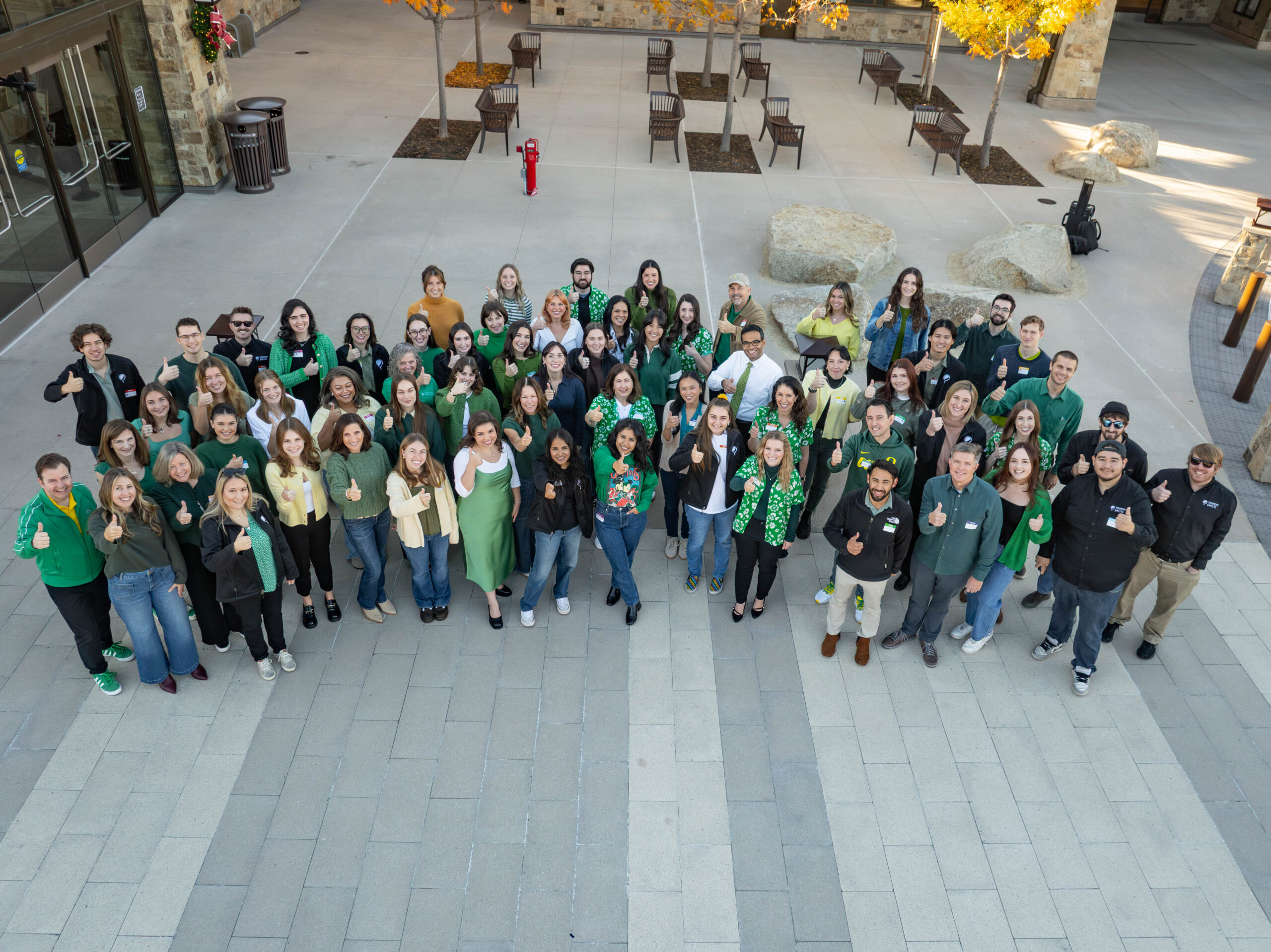
Many agencies also run lean. That creates a gap between what residents expect - instant updates, legible websites, video, newsletters, social replies - and what a small city-manager's office can produce. Tripepi Smith fills the gap as an outsourced newsroom crossed with a creative studio and a crisis desk. Its team page says clients span more than 200 public, private and nonprofit organizations. The center of gravity is cities, counties, special districts, municipal associations, joint powers authorities and community-choice energy agencies.
The difference from a general agency is not that Tripepi Smith owns secret tools. It is that the firm already knows the room. It understands public meeting cycles, procurement, accessibility, ballot-measure boundaries, multilingual outreach and the political cost of an unforced error. A generalist may arrive with campaign ideas. A municipal specialist arrives knowing why the city attorney is copied.
The first thing to fail was the query
The old alert watched for the exact phrase “Rolling Hills Estates.” The incident did not respect that syntax. It crossed a city boundary; early reports emphasized Rancho Palos Verdes; the search arrived roughly seven hours late. This was not a failure of effort. It was a failure to define the world broadly enough.
Tripepi Smith was a new Meltwater customer and had not completed its first training session. The team began with a simple search: Tiger Woods combined with either city name. As questions moved from the driver's condition to the road's safety, the search could move too. The firm later wrote down what it would do earlier next time: agree on the purpose of the search, build a modular Boolean query, create categories for officials and issues, monitor elected officials' public posts and make a dashboard that shows spikes, themes and influential coverage.
The amusing part is the lack of retrospective swagger. The firm published the miss. For buyers of crisis advice, candor is a better credential than pretending the alert arrived at 7:01.
A retainer should know what it cannot predict
Public procurement makes the agency's economics unusually visible. In a Foster City proposal for communications around a levee project, Tripepi Smith offered a full fixed-price scope at $10,588 a month, or $127,056 for a year. The city and firm settled on a smaller $6,500 monthly retainer for predictable work - a weekly newsletter, website updates, coordination, a dashboard, limited social content and monitoring. Less predictable work, including extra releases, design, video, hotline management and community events, could be authorized as needed.
The logic is more interesting than the number. Put regular, schedulable production inside the retainer. Keep volatile demand outside it. The client avoids paying every month for a crisis that may not come; the firm avoids pretending that every surprise fits a neat allotment. Another public proposal in 2025 priced a smaller general-communications package at $3,300 a month. Culver City, at a larger scale, authorized up to $127,900 for communications support in fiscal 2018-19. There is no universal menu because municipal need is shaped by staffing, project risk and the volume of public attention.
The assessment comes before the content calendar
In Richland, Washington, only 5 percent of residents in a 2022 survey rated public information services excellent; 38 percent rated the city's openness and transparency good or excellent. Tripepi Smith did not answer with a burst of posts. It conducted 24 interviews with staff, councilmembers and community stakeholders, then audited the website, social performance and email metrics. The result exceeded 100 pages and became a three-year plan containing 43 actions.
Windsor, California, followed a similar sequence on a smaller scale: assess the system, refine the visual identity, update the website with CivicPlus, establish a social policy, create a local photo library and manage publishing. Over eight months, followers rose nearly 13 percent and Facebook engagement increased 46 percent. In El Cerrito, more video and steadier publishing helped the city reach 12,934 unique Instagram accounts in 90 days; Facebook engagement rose 627.7 percent against the previous period. The numbers are platform measures, not proof of civic trust. They do show that the machinery began moving.
- Interview before prescribingAsk staff, elected officials and residents where information stalls.
- Audit the whole routeWebsite, email, social, accessibility, approvals and response time belong on one map.
- Separate rhythm from surpriseRetain recurring production; authorize volatile work when it appears.
- Monitor the incident, not the logoInclude geography, people, aliases and emerging issues in search design.
- Build reusable raw materialPhoto libraries, templates and policies make tomorrow's deadline cheaper.
A Swiss Army knife, with a municipal permit
The service list is broad because the customer's problem is broad. One week can require a council newsletter, a redesigned web page and a Spanish-language social graphic. Another can require drone footage, a ballot education campaign, media talking points or an emergency statement coordinated through an operations center. The firm also produces events, annual reports, photography, animation and interactive tools - including a 2026 heat map designed to help Rancho Palos Verdes residents follow land movement in the Portuguese Bend landslide complex.
This breadth is the advantage and the boundary. The model makes sense when an agency needs several communications disciplines but cannot justify building each one in-house, or when its staff needs extra capacity with minimal municipal orientation. It is less compelling for an organization with a mature internal newsroom, a single narrow production need, a nationwide consumer launch or policy advocacy that requires a lobbying specialist. Local fluency travels, but local government is still the organizing idea.
Tripepi Smith's durable insight is pleasantly unglamorous: civic communication is infrastructure. You notice it when it fails, when an alert is late, when a website hides the answer or when five officials describe the same event five ways. The firm sells the interviews, calendars, templates, photos, searches and approval habits that make failure less likely. Then it keeps a crisis desk nearby, because sometimes the quiet road outside City Hall becomes the biggest story in the world.