Imagine two people typing the same address into a browser. One lives in New York. The other lives in London. Both arrive at Trading.com. Both see a promise of easier access to financial markets. Yet the New Yorker is entering a retail foreign exchange business, while the Londoner can encounter CFDs, shares and ETFs. The name is wonderfully uncomplicated. Understanding what sits behind it takes another minute.
- The idea: bundle trading, research and account management so customers have fewer decisions to make.
- The distinction: U.S. forex and regional investing or CFD services operate under different entities.
- The catch: zero commission still leaves costs, and easier access still carries market risk.
That minute is the key to the company. Trading.com belongs to the Trading Point family, which also includes XM. Its brand launched in Britain in 2019; the American retail launch followed in February 2022. Rather than inventing a new asset class, it set out to rearrange the experience around familiar ones. The ambition was to make the broker easier to understand.
A broker with fewer forks in the road
Consider the U.S. T1 account. The minimum deposit is $50. The account currency is dollars. There is no elaborate ladder of account names requiring a beginner to guess which version contains the useful tools. Trading, a learning center, news and account administration come together. Removing that choice is a small product decision with a clear benefit: the customer can spend less time shopping inside the brokerage.
The interface offers another kind of choice. WebTrader works in a browser; the mobile app travels with the user; MetaTrader 5 serves traders who want its established analytical and automation tools. This combination gives the company room to serve people with different habits. A trader can prefer a simpler front door without wanting every advanced feature removed from the building.
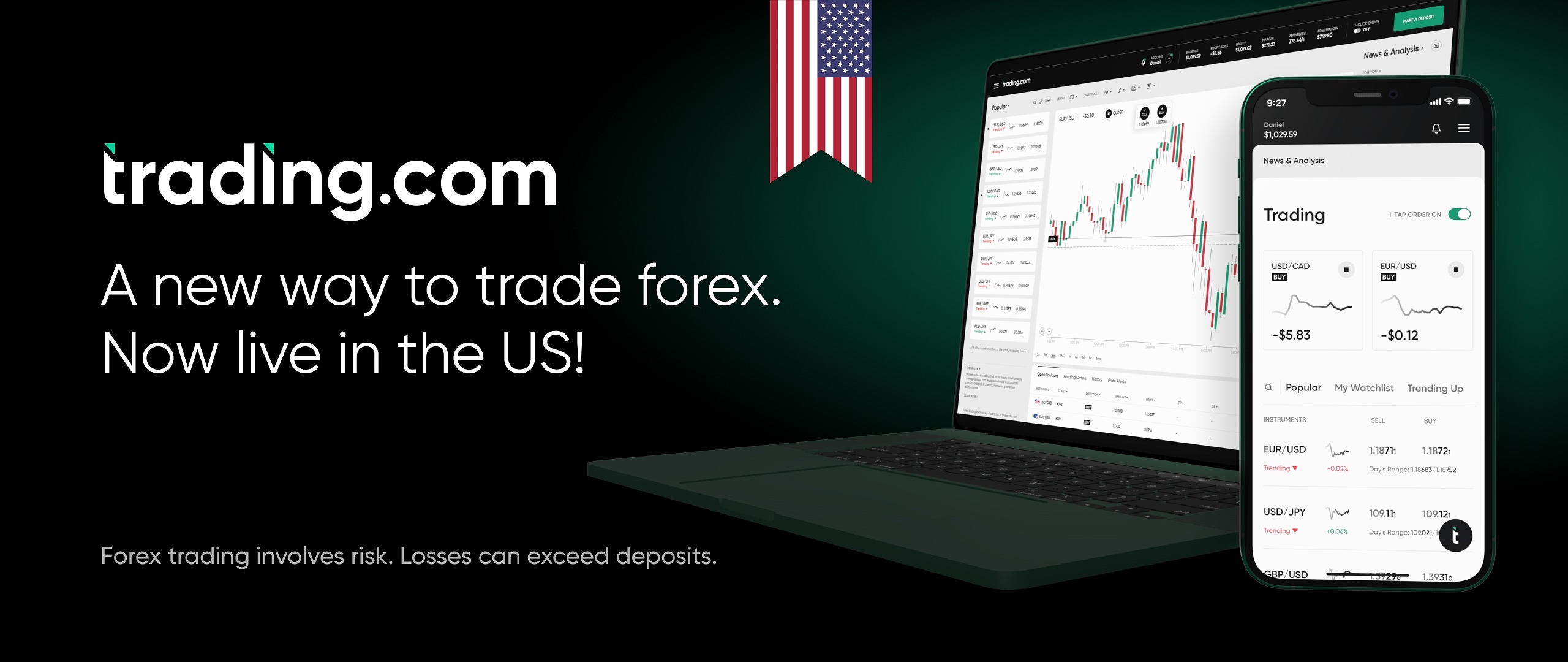
The UK WebTrader page shows what this means in practice: TradingView charting, adjustable charts, one-click orders, stop loss and take profit settings, and a margin tracker. Account management sits beside those tools. The convenience comes from proximity. Funding, analysis and execution happen within the same environment, reducing the administrative scavenger hunt that can surround a trade.
Your postcode changes the product
Convenience, however, does not make the offering universal. The U.S. company’s October 2026 disclosure describes a business offering foreign exchange currency pairs to U.S. retail residents. Those trades occur over the counter rather than on a centralized exchange. A reader who imports an overseas instrument list into an American account comparison has already made the wrong comparison.
Same brand. Local entity. Different account agreement.
Britain presents a broader picture. Alongside leveraged CFD trading, the UK site markets an Investment Account for shares and ETFs, with a £50 minimum deposit. That distinction matters. Buying an investment and speculating on a price through a derivative are different activities, even when an app makes them look like neighboring buttons. Product separation has to survive good interface design.
The company records European and Australian expansion in 2024. Its regulatory map spans the FCA in Britain, CySEC in Cyprus, ASIC in Australia, and CFTC registration and NFA membership in America. Those names identify separate supervisory relationships. They are useful starting points for checking an account, rather than a single worldwide promise about available products or client protections.
The price hiding in plain sight
The phrase “zero commission” is attractive because it ends a calculation before it begins. Trading.com’s economics require the calculation to continue. Its U.S. launch disclosure identifies the spread and overnight rollover charges as compensation. The spread is the gap between buying and selling prices. A customer can pay it without seeing a separate commission line.
In Britain, the published CFD charges also include overnight adjustments and a dormant-account fee after twelve months without qualifying activity. The Investment Account has a different schedule: no execution commission, but a 0.25% conversion charge per trade when a security’s currency differs from the account currency. The useful comparison is therefore a particular trade, held for a particular period, in a particular account.
That positions Trading.com among retail brokers competing on access, pricing and usability. U.S. forex customers can compare alternatives such as FOREX.com and OANDA; eligible overseas CFD customers have a different field. A tidy interface is a reason to investigate. The local instrument list, actual trading costs and suitability determine whether it belongs on someone’s shortlist.
The paperwork caught up
Simplicity also has a backstage. In February 2024, the NFA brought a complaint against Trading.com Markets Inc. involving late financial and trade reports, internal financial controls and supervision. A May settlement decision ordered a $50,000 fine and a cease-and-desist order. The episode puts an operational price beside the marketing promise. Financial infrastructure includes deadlines as well as dashboards.
“We explain complex ideas simply.”
Trading.com’s stated core values
Its stated values emphasize relatability, simplicity and transparency. Its careers material advertises development, recognition and diverse teams. Those aspirations describe the organization it wants to build. The reporting case supplies a separate, concrete test: whether the systems behind an accessible product can meet the demands of a regulated business.
Copy the fewer-decisions idea
There is a useful lesson here for anyone building a service: gather related jobs together, reduce unnecessary account choices, and explain the price where the decision happens. Trading.com’s account and platform design offer a practical example. That lesson applies well beyond brokerage. Customers rarely arrive hoping to become experts in a company’s internal menu.
For traders, the boundary is equally practical. A browser platform helps someone access and manage positions; it cannot supply a profitable strategy. Leverage magnifies losses as well as gains, and the U.S. warning says losses can exceed deposits. A person seeking passive investing will need a different conversation from someone seeking leveraged currency exposure. Trading.com can simplify the route to a trade. The reason for making it remains the customer’s work.