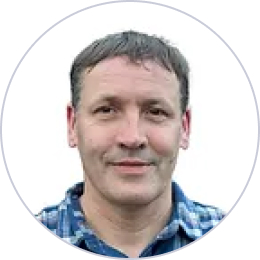
Start with the uncomfortable question Tom Siegel keeps asking rooms full of platform executives: who, exactly, is checking your work? Not the team that reports to you. Not the dashboard you designed. Somebody on the outside, with no stock options riding on the answer. The silence that follows is the entire business plan for TrustLab.
Siegel is co-founder and CEO of TrustLab, a company in San Mateo, California that builds technology to detect and, more importantly, to measure harmful online content - misinformation, hate speech, identity fraud, the synthetic sludge that machines now produce at industrial scale. The pitch is deceptively simple. Platforms grade their own homework. TrustLab grades it for them, and does not flinch.
He earned the right to make that pitch the hard way. Siegel spent close to 15 years at Google, where he founded the company's first Trust & Safety team in the early 2000s and grew it into what became the tech industry's leading user-protection and abuse-fighting organization. Product policy, enforcement, user advocacy, product quality - across many products and many markets, the apparatus that kept the worst of the web away from billions of people was, to a meaningful degree, his to design. He directed thousands of engineers, policy experts, and operations specialists. He learned where the bodies are buried because, often, he was the one drawing the map.
It's definitely a good first step. But it does not go anywhere near where it needs to go.
- Siegel, on voluntary AI safeguards
That sentence is the whole man in miniature. Polite, precise, and quietly unsatisfied. He has watched the industry promise to police itself for two decades, and he no longer believes the promise without an audit attached. The comparison he reaches for again and again is not flattering to Silicon Valley: pharmaceuticals had no oversight once. Aviation had no oversight once. Both industries got good - measurably good - only after someone independent was empowered to set the guardrails and check whether anyone was inside them.
Why he walked out of Google.
Leaving the safest job in content safety was not a midlife whim. By the end of his Google run, Siegel had concluded that the thorniest Trust & Safety problems could not be solved from inside any single platform. A company measuring its own abuse rates has every incentive to define abuse narrowly. A company reporting its own progress has every incentive to report on a good day. The conflict is structural, not moral - and structural problems need structural fixes. So in 2020 he founded TrustLab to be the thing the internet had never had: an independent, unbiased third party whose only product is the truth about what is happening on a platform.
He did not do it alone. His co-founders came from precisely the places you would want them to. Shankar Ponnekanti, TrustLab's CTO, previously led Brand Safety and Suitability at YouTube. Benji Loney, who runs product, policy and operations, ran Trust & Safety teams at both YouTube and TikTok. Between the three of them, the founding table had already moderated a sizable fraction of the planet's video.
I do think we need guardrails in the absence of industry standards. The Digital Services Act is a very sensible approach to that.
- Siegel, on EU platform regulation
The day the EU called.
Independence is easy to claim and hard to prove. TrustLab proved it the way you would hope - by being hired as the neutral party in a fight everyone was watching. The European Commission selected the company to run the first independent measurement of disinformation under its Code of Practice, the world's first self-regulatory instrument aimed at the problem. When a continent wants a referee for the most politically radioactive metric on the internet, the bar for "unbiased" is unforgiving. Siegel's framing of why they won is characteristically unsentimental: measuring disinformation is hard because it is ambiguous and fast-changing, and TrustLab got the call because of a track record as an independent, unbiased technology solution. The study became a benchmark.
Then the ground shifted under everyone. Generative AI arrived, and with it a content firehose that does not sleep, does not tire, and increasingly does not look fake. TrustLab ran red-team tests against ChatGPT and reported that over a third of responses to harmful prompts were concerning, and over half were realistic enough to do damage. Siegel's forecast is not apocalyptic so much as inconvenient: more synthetic content, blurrier lines between human and machine, more convincing deepfakes, and real risk around elections - partly offset by the same automation finally making moderation cheaper to do well. The tools cut both ways. The referee just has more games to officiate.
1/3+
ChatGPT responses flagged concerning
1st
Independent EU disinfo measurement
3
Co-founders, ex-Google/YouTube/TikTok
The argument he won't drop.
If there is a single idea Siegel has been repeating long enough for it to count as a worldview, it is this: voluntary commitments are a floor, not a ceiling. He calls them a good first step and then, in the same breath, says they go nowhere near far enough. He wants independent, government-funded organizations - free from political interference - that can actually build the technical expertise to set frameworks and enforce them. Not a ministry of truth. A measurement agency. The difference matters to him enormously, and he is fluent enough in both policy and engineering to defend the distinction without retreating into either camp's clichés.
His path to that conviction ran through Dresden and Palo Alto. Siegel earned an M.S. at the University of Technology Dresden and an MBA from Stanford - an engineer's training married to an operator's. It shows in how he talks. He does not moralize about bad content; he asks how you would count it, who is allowed to count it, and whether you would trust the count if the counter were also the defendant. These are not rhetorical questions. They are TrustLab's product roadmap.
What makes him genuinely unusual in this field is the refusal to pick the easy side. Plenty of people in Trust & Safety either cheerlead for platforms or torch them. Siegel does neither. He thinks the platforms are mostly trying, that the problem is mostly structural, and that the fix is mostly boring - independent measurement, applied relentlessly, until trust stops being a marketing word and becomes a number you can audit. He has spent his career proving that the unglamorous middle is where the actual safety lives.
The boring fix is the radical fix.
There is a particular kind of courage in choosing dull solutions to loud problems. The internet's safety debate runs hot - free speech versus moderation, censorship versus chaos, each camp certain the other is the villain. Siegel keeps stepping out of the shouting match to ask the question nobody monetizes: how would you measure it, and would you trust the measurement? TrustLab's product is built around that discipline. It develops the tools and metrics that let digital platforms - social networks, online marketplaces, mobile apps - detect and quantify harmful content, from misinformation and hate speech to identity fraud and the rest of the abuse catalog he spent two decades cataloguing. The work is technical, the output is numbers, and the numbers are the point.
That instinct is why his framing of the Digital Services Act lands differently than most. He likes it not because it is European, or strict, or symbolic, but because it draws a clean line: it focuses on practices that are already illegal offline. No new theory of harm, no committee deciding what is true - just the offline rulebook, applied to the online world, with someone independent checking compliance. He has compared its effect on the industry to what GDPR did for data: a structural reset in how companies are forced to think about user-generated content. For a man who distrusts grand pronouncements, that is high praise.
Today he writes op-eds in Fortune and The Hill, advises organizations, invests in bold ideas, and keeps building the watchdog he could not find inside any single company. He runs a team of roughly 80 people from San Mateo, a few miles and one philosophical leap from the Mountain View campus where his career began. The mission statement he uses is plain to the point of stubbornness: bring trust back to online content. The internet still has no FAA, no FDA, no independent agency with the authority and the technical chops to say what is actually happening on the platforms billions of people live inside. Tom Siegel is closer than anyone to building one - not by shouting louder than the others, but by quietly insisting on the receipt.