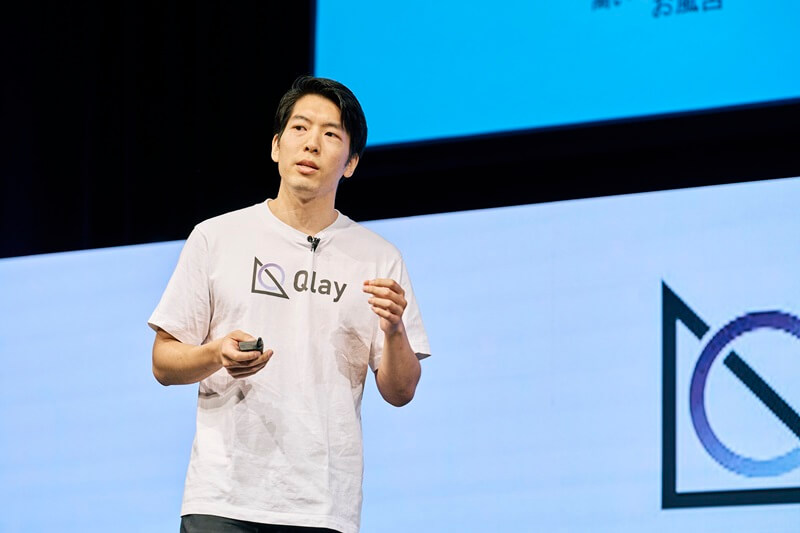
He built an AI that can tell when you are reading answers off a hidden second screen. The trick was knowing where to look.
Somewhere in a recruiter's dashboard right now, a small alert is firing. A candidate's eyes drifted to the same off-screen corner three times in ninety seconds. The speech got a little too even, a little too pre-written. That alert is Tom Nakata's company talking.
Nakata is the co-founder and CEO of Qlay, a San Francisco company that builds AI proctoring for the era of the AI cheater. The premise is uncomfortably timely. The same large language models that let anyone draft a flawless answer in two seconds have made the remote technical interview a contest of who can hide their browser tabs best. Qlay's response is to watch the things a person can't fake on command: eye-gaze patterns, the cadence of speech, the tell-tale glance toward a phone propped just out of frame.
The toolkit reads like a heist film in reverse. Eye-gaze tracking flags unusual eye movement. Speech-cadence analysis listens for the flat rhythm of someone reading machine-written text aloud. A secondary mobile camera turns the candidate's own phone into a side-angle witness for hidden devices. Tab and process monitoring catches the silent app-switch. When something looks off, the recruiter gets a real-time alert and, afterward, a tidy report of everything that happened.
It plugs into the hiring stack companies already run - Greenhouse, Lever, Workday, Ashby, and the rest - and it sits underneath a bigger ambition: sourcing pre-vetted engineering talent across borders, from Africa to Vietnam, then making sure the person who aces the interview is the same person who shows up to work. Cross-border hiring only works if you can trust the screen. Nakata is selling the trust.
What makes the story worth telling is not the feature list. It is that Nakata did not set out to build any of this. Qlay started as something else entirely, and the pivot is the most honest thing about him.
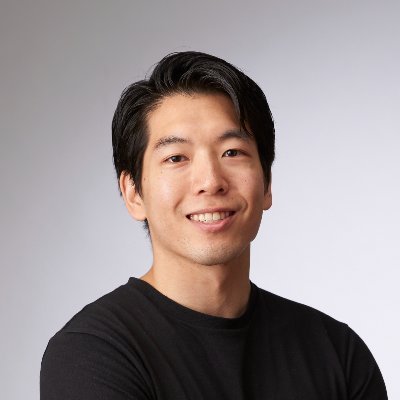
“We are a shark that never stops.”Tom Nakata, on the DNA of his team
Nakata grew up across three places that rarely share a passport stamp in the same person: Singapore, Tokyo, and California. Children raised between cultures tend to become professional translators of context - reading the room is the first language they learn. It is a useful instinct for someone who would later build software that judges what is normal and what is not.
He landed at Harvard intending to study film production. The plan didn't survive contact with a statistics class. He switched, joined the Financial Analyst Club, and then did something that captures the whole arc of his thinking: he wrote an academic paper using statistics to predict how movies would do at the box office. Principal component analysis. Clustering. The art he came to study, now an output variable. The film kid never really left; he just learned to put numbers around the magic.
After Harvard came the resume that opens doors. J.P. Morgan. The Walt Disney Company. And then McKinsey & Company, where he worked out of both the Tokyo and Los Angeles offices, building marketing strategy for the kind of consumer-goods giants whose products sit in every kitchen. He advised a global manufacturer's chief strategy officer on where to put investment. He helped an international electronics company shed more than $25 million in net working capital. He built an AI-assisted growth framework for a major beverage brand.
He was good at it. Good enough that leaving looked like a strange decision. Nakata's own explanation is refreshingly blunt: he wanted the core of business, not the slide about it. “Producing things that are needed, selling them, and earning money” - the actual machine, not the advice memo describing the machine.
He found his co-founder, Tokumasa Yamashita, the modern way: a co-founder matching program, not a college dorm. Two AI professionals, no shared history, one shared appetite for building.
Their first swing was Qlay as a generative-AI consumer-sentiment engine - software that scraped social media and review sites and turned the messy natural language of human opinion into clean, actionable reports. The pitch was tight: “Qlay not only aggregates data; it transforms it into actionable insights.” It worked well enough that within a year they signed a Fortune 100 company to automate sentiment analysis for an automotive marketing campaign.
Then they pivoted hard - from reading the market's mind to verifying a candidate's identity. Same founder, same statistical instinct for separating signal from noise, pointed at a problem that got more urgent by the month.
Four signals, one verdict. None of them require the candidate to do anything except be themselves - which is precisely the point.
Flags the repeated drift toward an off-screen reference - the corner of the room where a second monitor lives.
Listens for the unnatural evenness of a person reading AI-written text instead of thinking out loud.
The candidate's own phone becomes a side-angle witness, catching hidden devices the webcam can't see.
Tracks suspicious app-switching and background processes, then files a full report after the session.
Graduates with an A.B. in Statistics. Member of the Financial Analyst Club. Writes a paper predicting box-office returns with PCA and clustering.
Two names that teach a young analyst how the big machines actually run.
Consultant in Tokyo and Los Angeles. Consumer-goods marketing strategy, C-suite advisory, a $25M+ working-capital reduction.
Co-founds Qlay Technologies with Tokumasa Yamashita, met through a co-founder matching program.
Qlay joins Global Brain's accelerator and wins the Audience Award.
Within the first year, Qlay automates consumer sentiment analysis for an automaker's marketing.
Qlay reframes around AI interview proctoring and global engineer hiring. Seed funding; $1.4M total. ~15 people in San Francisco.
Sourcing pre-vetted engineering talent across borders - and guaranteeing the person who interviews is the person who works.
Before he can persuade anyone else, he has to persuade himself. The test he applies to his own work: is this something I genuinely want to be doing? If the answer wobbles, nothing else matters.
A commitment to leave the world measurably better - not as a slogan, but as the reason to use his own development at all. Technology, in his telling, exists to free people from the work a machine should be doing.
His team's operating principle is action over analysis - “jumping right in” rather than chasing minimum effort for maximum result. For a recovering consultant, that is almost a confession.
When a decision gets knotted, Nakata walks alone and talks through it out loud. Hearing his own reasoning from the outside is how he gets objective about it.
He processes failure in stages - sit with it, shift the perspective, then put the lesson into words. The verbalizing is what makes it stick.
The team's self-image is a shark that never stops moving, because to stop is to sink. It is also, conveniently, an accurate description of a seed-stage startup.
It transforms data into decisions you can make in real time.”Tom Nakata, on the original vision for Qlay