The revealing object in TMC’s history is a telephone. Around 1980, a publisher of chemical-coatings magazines began experimenting with selling advertising by phone. Outside sales representatives were expensive. Calling seemed cheaper. Nadji Tehrani, who had founded the company in 1972, noticed something more interesting than a smaller selling bill: the technique itself deserved a publication. In 1982, TMC launched Telemarketing magazine. A tool in the office had become a subject worth selling.
- TMC publishes for technology buyers and sells vendors ways to reach them.
- TMCnet, sponsored webinars and ITEXPO turn specialist attention into a business.
- The transferable idea: investigate the problems you have already solved for yourself.
The customer was sitting inside the company
That origin matters because it explains a business which otherwise looks like a crowded collection of websites and conferences. TMC’s skill is finding a technical subject around which buyers and sellers need to gather. First comes information. Then come the introductions. The subject can change considerably while the commercial logic stays familiar.
Today, Technology Marketing Corporation operates in business technology media and events. TMCnet carries reporting and resources on communications, cloud computing, customer experience and related markets. Readers include people choosing technology for their employers and people supplying it. The company’s public description connects those activities explicitly: help buyers research decisions, then offer sellers branding and lead generation around that research.
For an IT manager, the attraction is practical education: what a communications product does, which questions to ask, what changed in a market. For a vendor, the attraction is a room already populated with relevant people. TMC monetizes that overlap through advertising, sponsored content, online communities and events. Its inventory includes both space on a screen and time with a prospective customer.
A magazine learns to leave the page
The family’s expertise broadened with the technology. Nadji’s son Rich became associated with internet telephony publishing and events; current announcements identify him as CEO. INTERNET TELEPHONY launched in 1998, followed by its conference and expo in 1999. Rich also wrote an IP telephony dictionary. Explaining unfamiliar terminology was part of the job before AI supplied the latest batch of acronyms.
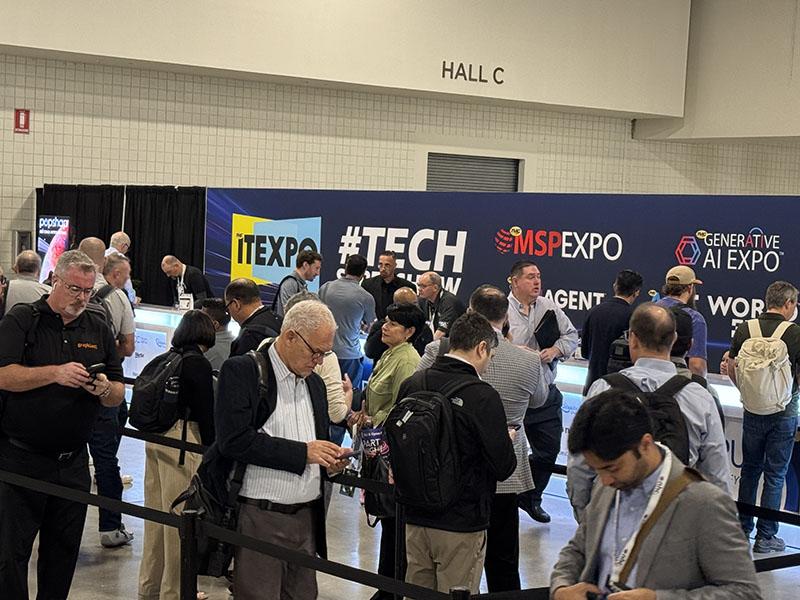
A trade publication gives a dispersed industry a common reading list. A conference gives it somewhere to stand. ITEXPO’s audience includes enterprise buyers, service providers, managed service providers and channel partners. That mix matters: a technology supplier may need a reseller as much as an end customer. A useful introduction can move through more than one business before reaching the person using the product.
There was also a prosaic reason to move beyond print. In a 2010 local newspaper interview, Rich said reduced printing costs had saved millions, freeing money for other uses. Online communities had become the core business. Distribution economics changed the allocation of resources. A publisher could keep serving an audience while spending less on delivering paper to it.
What $10,000 actually buys
The webinar offering makes the machinery unusually visible. TMC’s 2026 media kit lists a turnkey webinar at $10,000. Buy two and the listed price becomes $9,000 each; three or more cost $7,000 each. These are published package rates, rather than a promise about what every campaign will cost.
The package includes an eight-week promotional cycle, email outreach, banners, registration and landing pages, supporting articles and a moderator. The sponsor is purchasing distribution and production around a presentation. TMC assembles the audience and handles the event mechanics. That is a different assignment from simply opening a video meeting and hoping someone arrives.
Its webinar archive shows the range: KORE on global IoT deployments, N-able on security operations, Forethought on customer-experience AI. The audience gets a specific lesson; the sponsor gets a way into a specific conversation. For a small marketing team, outsourcing those mechanics may be useful. The economics still depend on reaching people who could plausibly buy.
The awkward lesson about speed
TMC’s history is more useful when it gets uncomfortable. In a 2010 anniversary essay, Rich recalled being told by someone at a competitor that TMC was too slow to compete. He thought the criticism was right. His account describes rethinking how the company launched products, with an emphasis on speed and inexpensive experiments built around existing businesses.
“Launch, launch, launch and learn from your mistakes”Rich Tehrani, 2010
Read that as management’s stated philosophy. The useful instruction is concrete: lower the cost of testing an adjacent idea. A publisher with readers can try a webinar. An event with exhibitors can try a related conference track. Each experiment starts with an existing relationship, which is a more economical starting point than finding an audience from scratch.
There are limits to copying it. Registrations need qualification and follow-up before becoming revenue. A broad consumer product has little reason to pay for a narrowly technical audience. And buyers should distinguish vendor-sponsored material from independent evaluation. The connection between education and selling is central to this model; understanding who paid helps readers use it intelligently.
The next room is already being booked
In May 2026, TMC reported that returning-exhibitor booth renewals for ITEXPO 2027 were 19.9% ahead of the same point a year earlier, measured by signed contract revenue. That measures commercial commitments, not attendance growth or profit. It is nevertheless a useful signal: some previous exhibitors were committing money to return and expand.
MSP Expo’s September announcements added Network Optix and TotalPrintUSA as 2027 silver sponsors. AI and cybersecurity now share the programme with communications. The interesting continuity is the company’s task: give a specialist audience reasons to gather, then make that gathering useful enough for sellers to fund. The telephone in the original sales office was an early clue.