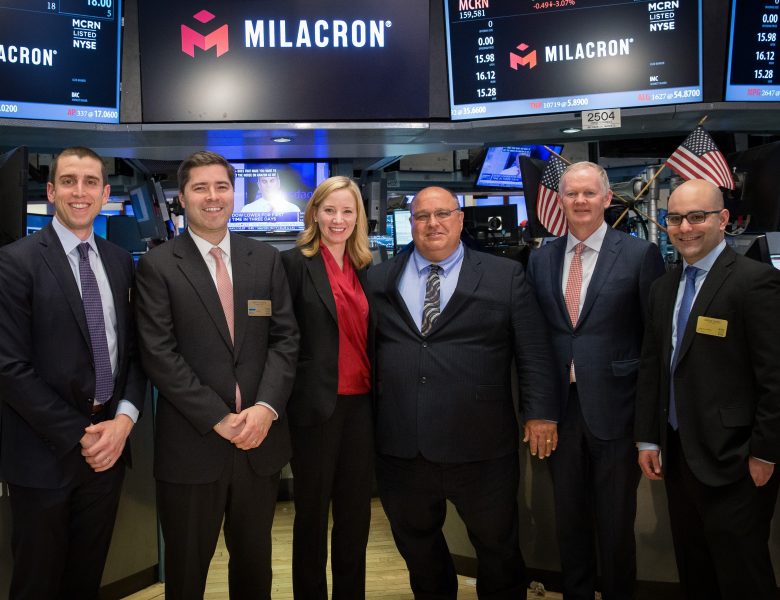
When Ira Boots talked about working with Tim Walsh at Milacron, he remembered the involvement. Walsh and fellow CCMP executive Greg Brenneman took board seats, Boots became chairman, and the partnership helped bring the plastics machinery company to the public market in 2015. In Boots’s account, the investors had taken a personal interest in the business. A board seat, in this story, came with people attached.
Walsh’s career passes through financial institutions and executive titles. The businesses underneath them give it substance: generators, industrial chemicals, plastics processing systems, pool equipment. These are businesses with production schedules and customers who need something to work. The products are less likely to become conversational shorthand than the investment firms behind them. They are also where much of the work happens.
Walsh helped found CCMP Capital in 2006, became its president and CEO in 2016, and stepped down from those roles in March 2022. He remains a managing director and investment committee member. At CCMP Growth, he sits on the Investment Committee Advisory Board. Alongside those responsibilities is Walsh Private Equity Partners, the family investment office he formed in 2020. The titles have changed more quickly than his connection to investing.
The companies beneath the capital
Before the independent partnership, there was banking. Walsh worked on industry-focused client teams within Chase Manhattan. His current CCMP Growth biography dates his move into Chase’s private equity division to 1992. That background places the beginning of his investment career inside an institution where businesses were already being studied by industry. A manufacturer’s finances have a context: what it sells, how it makes it, and who needs to buy it.
The corporate names subsequently changed. Chase Capital Partners became part of the lineage of J.P. Morgan Partners; CCMP would later carry that investment business into an independent organization. Walsh’s work persisted across those institutional changes. His conference biography records his appointment as partner and head of the industrial practice in 1999. Chemicals, basic manufacturing, consumer products and packaging became the recurring subjects of his investment responsibilities.
Consider PQ. In 2014, when CCMP invested, Walsh emphasized the importance of the company’s products within its customers’ manufacturing processes. The products included performance chemicals, catalysts and specialty glass materials, reaching a range of industrial uses. It is an example of the particular questions an industrial investor encounters. A company’s importance may sit inside somebody else’s production process, almost invisible to the eventual consumer. You can use the finished product for years without ever learning the supplier’s name.
For Walsh, that industrial territory produced a network of investments and board positions. His record includes Kraton, Klöckner Pentaplast, Generac, Milacron and PQ. The names describe different businesses, rather than a single repeatable transaction. Across those businesses, Walsh worked with physical products and the executives responsible for turning investment plans into operating decisions.
A firm of their own
In 2006, the CCMP partnership gave that work a new institutional home. Walsh was part of the leadership team that formed the firm out of J.P. Morgan Partners. He became a founding partner after years in the predecessor business. Founding, here, arrived as an act of continuity as well as a beginning. There was already a professional history to bring into the new organization.
CCMP raised $3.4 billion for its inaugural fund. That was capital entrusted to the partnership, with investment decisions still ahead of it. The amount describes the scale of the institution Walsh helped establish; it does not measure his personal wealth or assign the fundraising achievement to him alone. A fund is a collection of commitments. Turning those commitments into investments requires another set of choices.
Firm-level capital, raised by the partnership
Walsh’s subsequent promotions moved him from industry leadership toward responsibility for the firm itself. He became chief operating officer in 2015, then president and CEO in 2016. The change widened his remit beyond the industrial practice. The investment committee remained part of his work, tying the executive role to the decisions at the center of a private equity organization.
It is easy to let the CEO title swallow the earlier career. In Walsh’s case, the earlier years explain why the appointment belongs in the story. He had worked within the predecessor institutions, participated in the independent firm’s founding, and served on portfolio-company boards. The executive title came after that accumulation of responsibilities. It was one chapter in a career already populated by businesses and colleagues.
Three years to the exchange
Milacron supplies a closer view of the relationship between capital and operations. CCMP invested in the Cincinnati-based plastics processing technology company in 2012. Walsh joined its board that April. Boots, who had previously led Berry Plastics, became non-executive chairman. The investor and the operating executive occupied different seats around the same business.
In his later recollection, Boots described Walsh and Brenneman’s involvement as personal, and recalled working together toward the public listing. The relationship had a history: CCMP’s predecessor had an ownership position in Berry, where the investors knew Boots. Bringing an experienced executive into Milacron drew on that earlier connection. The episode gives the phrase management partnership a more concrete cast.
The business developed through research, product line extensions and acquisitions. In 2013, Milacron announced its agreement to buy Mold-Masters at an enterprise value of C$975 million. Mold-Masters supplied hot runner technology for injection molding: heated components that guide molten plastic into mold cavities. The acquisition added technology to a company already selling plastics processing machinery.
Walsh described the transaction as part of Milacron’s strategic growth plan and pointed to the firm’s experience in plastics. The acquisition concerned what Milacron could offer its customers and how its technologies fitted together. Milacron completed its IPO in 2015, three years after CCMP’s original investment.
- 2012CCMP investment
Walsh joins the board - 2013Mold-Masters agreement
C$975m enterprise value - 2015Public listing
NYSE: MCRN
The sequence has several authors. Boots chaired the board; management ran the business; investors supplied capital and participated in governance. Walsh’s place in that sequence is specific enough to be interesting without making him responsible for every outcome. The group photograph fits the story rather well. Finance occasionally permits the entire cast into the frame.
The board seat has a public side
Generac provides another set of dates. Walsh became a director in November 2006, was appointed lead director in connection with the company’s IPO, and became independent non-executive chairman in July 2013. His board service continued until 2016. The progression shows his involvement extending beyond the initial investment and into the governance of a publicly traded manufacturer.
He also served on the board of PQ, later Ecovyst, beginning in 2014, and joined Hayward’s board in June 2017. Public-company board service makes the investment relationship visible in another way. Directors appear in filings that record their experience, responsibilities and affiliations. The documents place the investor within a formal governance structure, alongside executives and other directors.
There is a recent legal chapter to the Hayward relationship. Walsh was among the defendants named in securities litigation concerning allegedly misleading statements about inventory, growth and demand for Hayward’s pool products during 2021-2022. The claims included alleged control-person liability for sponsor-affiliated directors. These were allegations. The defendants denied wrongdoing and liability.
On July 28, 2026, the court granted final approval to a $19.85 million settlement. The settlement resolved the action rather than producing a trial decision in favor of either side. The total is the settlement fund for the case; it is not identified as a personal payment by Walsh. The episode belongs alongside the investment history because board responsibilities continue into public scrutiny.
A smaller room, a wider remit
Walsh’s personal account of business school begins with an economics graduate who wanted stronger finance and accounting foundations. He earned his MBA at Chicago in 1989. One course stayed with him: Kenneth French’s Futures & Options, which helped him think about uncertainty. He also recalled arriving newly married and forming lasting friendships in student housing. The education came with a household and a community.
In 2020, he described success in terms of outcomes and identified hard work, collaboration, resilience and humility as personal priorities. His pride centered on teams. He named his wife and children as inspirations. His reading included biographies of Grant and Churchill; Lincoln and Churchill were his choices for an imagined meeting. It is a reading list with rather demanding dinner guests.
“It’s all about creating successful outcomes.”
Tim Walsh / 2020
That same year, Walsh formed WPEP to invest his and his family’s assets. The family office has a broad alternative-investment remit. Its leadership includes Connor Walsh, whose biography records work at Fox and DoorDash before joining WPEP in 2023 to lead growth equity and venture investments. Those activities put technology investments alongside the industrial businesses associated with Tim’s earlier career.
In March 2022, Walsh stepped down as CCMP’s president and CEO. CCMP Growth was formed that June as the successor for new investment opportunities. Mark McFadden and Joe Scharfenberger are its co-managing partners; Walsh serves on the advisory board. CCMP Capital now describes itself as no longer actively investing, while CCMP Growth pursues new investments. The distinction gives the succession a practical shape.
Walsh’s current work therefore occupies several settings: an investment committee at the earlier firm, an advisory board at its successor, and a family office with its own remit. The institutional arrangement has evolved. The career remains attached to decisions about businesses and the people entrusted to run them. Milacron’s stock-exchange photograph offers a fitting last image: a named company on the screens, a group beneath them, and years of work outside the picture.