Profile • Energy • Houston, Texas
Tim Latimer
He quit the oil patch, talked his way into Stanford, and pointed fracking's tools straight down into hot rock.
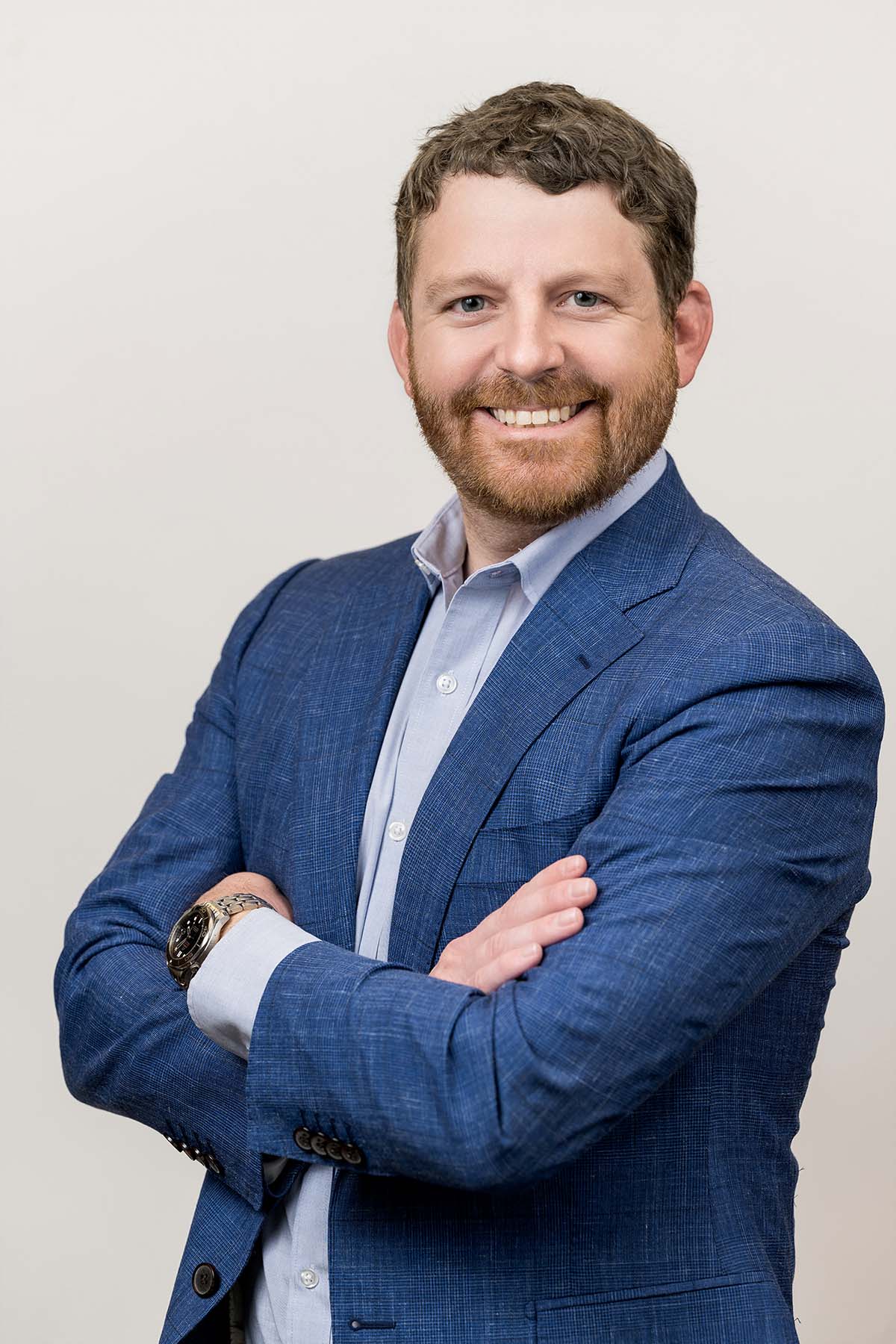
Tim Latimer. The roughneck who reads rock for a living. // Fervo Energy
He quit the oil patch, talked his way into Stanford, and pointed fracking's tools straight down into hot rock.
Right now, in the high desert of Beaver County, Utah, crews are drilling wells that look exactly like the ones that fueled America's shale boom. Same rigs. Same horizontal bends. Same fiber optic cables threaded down the bore to read the rock in real time. The difference is what comes back up. Not oil. Not gas. Heat. Enough of it, Tim Latimer is betting, to keep the lights on day and night, forever, without burning a thing.
That site is called Cape Station, and it is the largest next-generation geothermal project in the world. Latimer is the co-founder and CEO of the company building it, Fervo Energy. He is also, by training and by temperament, a driller. The whole company is built on a single stubborn idea he could not shake: the techniques that made it cheap and fast to pull hydrocarbons out of the ground could be turned around and used to pull clean energy out of it instead.
For years, people told him this was a fantasy. Geothermal was a sleepy corner of the energy world, useful only where the earth conveniently cooked itself near the surface - Iceland, parts of California, a few volcanic pockets. Latimer's pitch, that you could engineer a hot reservoir almost anywhere by drilling deep and fracturing rock the way the oil and gas industry already did, got polite nods and closed doors. Then Fervo started hitting numbers that the experts had penciled in for the 2040s.
To understand why Latimer is so comfortable underground, start in Riesel, a central Texas town of roughly 900 people. He comes from eight generations of Texans - one ancestor signed the Texas Declaration of Independence - and energy was the water he swam in. While he was in middle and high school, his community became the site of one of the last coal-fired power plants ever built in the United States. He watched it rise. That front-row seat to the end of one energy era quietly shaped his appetite for starting the next one.
He earned a mechanical engineering degree from the University of Tulsa in 2008, then went straight into the oil fields as a drilling engineer at BHP, working the Permian and Eagle Ford basins. This is the part of the story most clean-energy founders do not have. Latimer did not arrive at climate from a lab or a hedge fund. He arrived from a drilling rig, having personally watched American engineers turn shale from a punchline into the most productive hydrocarbon machine on earth in under a decade.
"Once you start working in energy, and you see how important it is to people's lives," he has said, "everything else feels less fulfilling." But the longer he worked, the more the urgency of climate change gnawed at him. In 2015 he did something his colleagues found baffling: he left a successful oil and gas career to go back to school.
At Stanford he stacked an MBA on top of a master's in Environment and Resources, with a focus that kept bending toward geothermal. There he met Jack Norbeck, a PhD student deep in Stanford's geothermal research program. Latimer brought the drilling and the business instinct; Norbeck brought the subsurface science. Their conversations turned a class-project notion into a thesis worth a company. The thesis: take horizontal drilling and fiber optic sensing - boring, proven, off-the-shelf in oil and gas - and aim them at enhanced geothermal systems.
"I just saw this opportunity," Latimer explained, "that if you could figure out how to adapt the innovations that made drilling efficient and cheap in oil and gas over the last decade, and apply it to geothermal, you could open up the resource to be far more viable and applicable." In 2017 the two co-founded Fervo. Norbeck became CTO. Latimer became the one who had to convince the world.
There's really no limit to where we can go. We can make this work anywhere.
Crews drill deep, then bend horizontal - the exact move that unlocked shale. It exposes far more hot rock than a straight vertical hole ever could.
Fiber optic cable runs down the well, sensing temperature and fractures in real time. The reservoir stops being a guess and becomes a live dashboard.
Water cycles down, picks up heat, comes back up to spin a turbine. No sun required, no wind required. Power at 3 a.m. in a dead calm.
Fervo's first home was not a gleaming headquarters. In 2018, Latimer joined the Activate fellowship at Lawrence Berkeley National Lab - a program built to give hard-tech founders runway when venture capital still finds them too weird. He was a Forbes 30 Under 30 honoree by 2019, but honors do not drill wells. Money does, and geothermal money was scarce.
The turning point was proof. In 2023, Fervo's Project Red pilot in Nevada delivered carbon-free power to the grid, tied to a partnership with Google that wanted around-the-clock clean energy for its data centers, not the intermittent kind. That same year, the company broke ground on Cape Station in Utah. The well results kept beating forecasts. "Fervo continues to achieve technical milestones for geothermal development that experts predicted to be set decades from now," Latimer noted - not as a boast so much as a recurring fact he had to keep reporting.
The capital followed the proof. More than a billion dollars has flowed into Fervo since 2017, and in 2026 the company did the thing almost no deep-tech climate startup manages: it went public on the Nasdaq. For a sector littered with cautionary tales, a geothermal driller ringing the opening bell was a statement. Latimer rang it as the same guy who once logged wells in South Texas, now running a public company built on the skills of the workforce he came from.
Latimer has carried that argument all the way to Washington. Testifying before the U.S. House, he framed Cape Station not as a science project but as industrial strategy: "It is the start of a new era of American energy, built on American innovation, with American technology, by American workers." The pitch is shrewd. It does not ask oil and gas workers to abandon their expertise. It asks them to redeploy it. The same crews, rigs, and know-how that drill for hydrocarbons can drill for heat. That reframing is part of why a geothermal company headquartered in Houston, the oil capital of the world, feels less like an insurgency and more like a homecoming.
It helps that he is hard to caricature. He is intentional, strategic, and famously persistent in the face of rejection, but he wears the engineer's pragmatism more than the founder's bravado. He is proudly Texan in a way that disarms a room. And he is unembarrassed about where he came from, which lets him talk to a roomful of roughnecks and a roomful of climate scientists in the same afternoon and lose neither.
"Once you start working in energy, and you see how important it is to people's lives, everything else feels less fulfilling."
"I just saw this opportunity that if you could adapt the innovations that made drilling efficient and cheap in oil and gas, and apply it to geothermal, you could open up the resource to be far more viable."
"Fervo continues to achieve technical milestones for geothermal development that experts predicted to be set decades from now."
"It is the start of a new era of American energy, built on American innovation, with American technology, by American workers."
Raised over $1 billion in capital, then took Fervo public on the Nasdaq in 2026 - a rare feat for deep-tech climate.
Drove drilling and reservoir milestones the field had predicted were decades out.
Signed Google as a buyer of round-the-clock carbon-free geothermal power.
TIME100 Next, TIME100 Climate, MIT Technology Review Innovators Under 35, Forbes 30 Under 30.
Riesel, Texas hosted one of the last coal plants ever built in the U.S. One kid who watched it go up now builds the alternative.
Eight generations of Texans - with an ancestor who signed the Texas Declaration of Independence.
He went from drilling oil wells to drilling for heat using nearly the same crews, rigs, and skills.
The flagship plant, Cape Station, sits near tiny Milford, Utah - now arguably the world's most productive engineered geothermal system.
Fervo began as a thesis-grade idea between two Stanford students and a whiteboard.
Investors said no for years. The well data eventually said yes louder than he could.