The Friedlander Group began with an absence. In the autumn of 2001, Ezra Friedlander could see a job at New York City Hall waiting just beyond election day. He had worked for Mark Green, the city’s first public advocate. If Green became mayor, the natural assumption was that Friedlander would follow him into government. Green lost to Michael Bloomberg. The imagined office, title and institutional future disappeared at once.
Years later, Friedlander described the loss as useful. A government career would have made a later move into private practice harder. So he made the move immediately and founded the firm that bears his name. It is now a small, founder-led government-relations operation with work in New York and Washington. Its clients have included nonprofit service providers, healthcare organizations, companies, municipalities and foreign entities. Its offering stretches from lobbying and appropriations to press strategy and political event production.
That list can sound like nine separate businesses. It is really one: translation. A client arrives with a mission stated in its own language - care, history, funding, recognition, regulation. The firm recasts it as a case that a legislator, agency, reporter or coalition partner can understand and act upon. The deliverable is not merely a meeting. It is a sequence in which the right argument reaches the right room at the right time.
“Often what a person thinks is the worst thing that could happen is actually the best.”Ezra Friedlander, on the 2001 election loss
The first product was proof
The new firm’s first client was the Israeli city of Beitar Illit. Its newly elected mayor wanted public-relations help and, more specifically, a meeting with Mayor Bloomberg. There was a catch: Friedlander had worked for Bloomberg’s opponent. He called Jonathan Greenspun, a contact from the Bloomberg campaign, and asked for help. The solution was modest - catch the mayor near the open “bullpen” where he worked, bring the visitor over and make the encounter visible.
This is a revealing founding anecdote because it strips government relations of its grand language. The client did not initially need a white paper or a national campaign. He needed evidence of motion. Friedlander found a narrow, achievable version of the request and delivered something the client could show. The useful unit of political consulting was not access in the abstract. It was a specific scene, created by someone who knew whom to call.
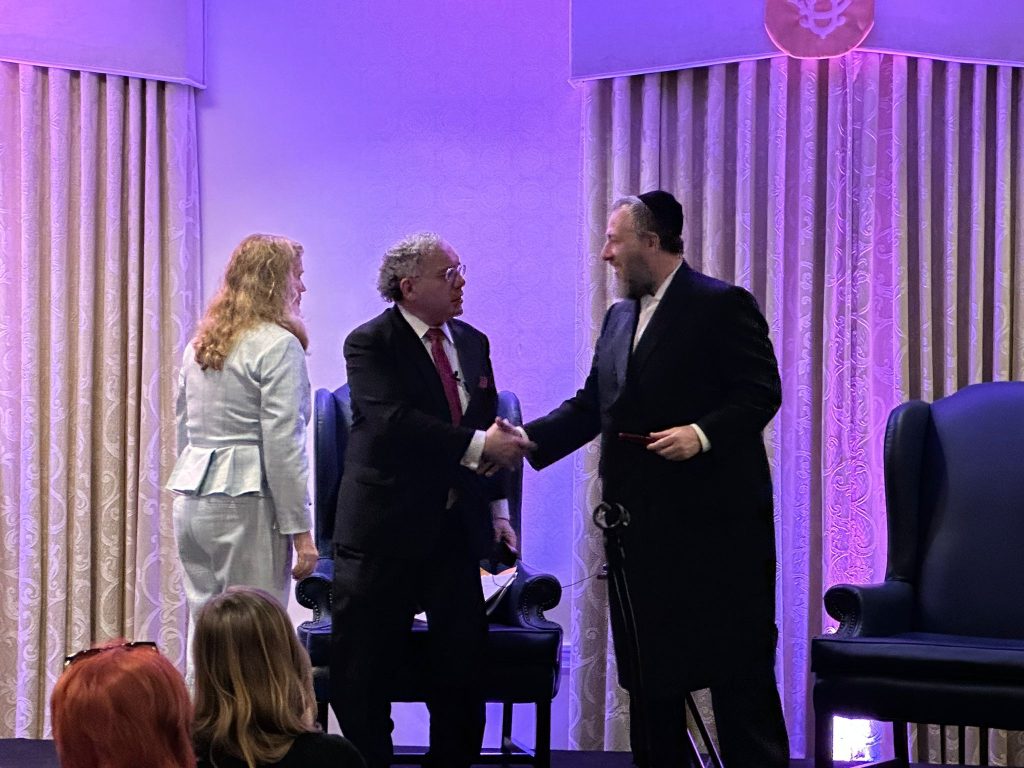
A medal is a very difficult product demo
The firm’s most distinctive public work involves Congressional Gold Medals. These campaigns are an unusually stern test of advocacy. They sell no conventional economic benefit. They require a supermajority threshold, bipartisan sponsors and the patience to keep a historical case alive while Congress attends to everything else.
In 2011, Friedlander created the Raoul Wallenberg Centennial Celebration Commission with partner organizations. Wallenberg, the Swedish diplomat who rescued Jews in Nazi-occupied Hungary, was a morally powerful subject. Moral power, however, does not schedule a vote. The campaign still required a commission, credible institutions, congressional sponsors and hundreds of co-sponsors. In April 2012, Representative Gregory Meeks thanked the commission headed by Friedlander and its partners on the House floor. The act became law that July; the medal was presented in 2014.
The method appeared again with Anwar Sadat. A commission was formed, legislation introduced in 2017, and Congress authorized the medal near the end of 2018. The object was bronze. The product was agreement - enough of it, across party lines, maintained for long enough to become law.
Read the field
Name the obstacle, the opening and the decision-maker.
Make a map
Turn a broad ambition into sponsors, proof points and steps.
Carry the case
Match the argument to officials, staff, press and partners.
Keep momentum
Convert a win into durable attention and the next opening.
What does it cost?
There is no public menu. That is normal for bespoke government-relations work, where scope can range from a local funding issue to a federal campaign. Disclosure records do offer glimpses. A 2009 New York City filing for Shema Kolainu reported $20,000 in year-to-date compensation for work concerning education funding and regulation. Federal records list $30,000 for Logista Advisors in the first quarter of 2026 and $10,000 in the second quarter, when the engagement ended. Those are examples, not rate cards.
Two disclosed engagements, not a price list
Publicly disclosed compensation. Different clients, periods and scopes; figures are not directly comparable.The larger lesson is that the client is buying coordination. Lobbying competes with in-house government-affairs teams, trade associations, law firms and public-relations agencies. The Friedlander Group’s position is between those categories. It can develop the policy case, create the press frame and produce the event where supporters become visible. A larger firm may offer more specialists; an internal team may know the institution more deeply. A boutique earns its keep when one compact team can hold the entire thread.
The habit beneath the network
Friedlander says his political education began as a teenager, when he wrote letters to elected officials about antisemitism and Jewish concerns and received replies, including one from Senator Ted Kennedy. At 21, he became involved in the 1989 mayoral race. Before opening the firm, he worked for Assemblyman Dov Hikind and Public Advocate Mark Green.
This matters because “relationships” is the most overused word in lobbying. A network is not a possession. It is the residue of repeated behavior: writing, calling, attending, remembering, helping and not making an enemy when a job falls through. Friedlander’s own account of his early career is less about a privileged entrance than a willingness to knock on doors. That habit became the company’s underlying asset.
Enter New York politics
A first mayoral campaign turns interest into a working network.
Lose the expected job, start the firm
Mark Green’s defeat closes the City Hall route and opens a private one.
Wallenberg legislation becomes law
A coalition turns historical commemoration into congressional action.
Sadat medal is authorized
A second multi-year recognition campaign reaches the same finish line.
Nine pillars, one firm
The public offer now spans policy, funding, media, elections and events.
The part worth copying
Most readers do not need a lobbyist tomorrow. Many do need to move an idea through a reluctant institution. The transferable part of Friedlander’s approach is to replace a vague wish with a chain of decisions. Who can authorize the next step? What proof matters to that person? Which ally makes the request more credible? What visible moment keeps the issue from becoming private again?
A small advocacy brief
- Write the desired decision in one sentence, with a named decision-maker.
- Build a merit case before building an attention campaign.
- Recruit partners whose credibility is different from your own.
- Create a public moment only when it advances the decision.
- Plan the follow-up before the meeting, event or announcement occurs.
The conditions matter. This approach favors legitimate asks that can survive scrutiny, coalitions that have time to form and clients willing to accept incremental progress. It is a poor fit for a weak case seeking cosmetic access, an organization unwilling to disclose its interests, or a deadline so short that persuasion is really a euphemism for panic. Deep relationships cannot be rented like a ballroom, and a photograph is useful only when it records movement rather than pretending to be it.
The Friedlander Group emerged because a political future failed to arrive on schedule. Its business has since been helping other people’s ideas arrive somewhere consequential. There is a pleasing symmetry in that: the firm born from a closed door now makes a living figuring out which door is real, who stands behind it and what, precisely, to say when it opens.