The interesting thing about a maze is that one person's obstacle is another person's business model. New York supplies a magnificent maze: agencies, boards, lawmakers, landlords, neighbors, reporters, unions, donors, investors, and rules written in a dialect that appears to have been invented specifically to prevent movement. Oaktree Solutions arrived in 2023 with a simple proposition. It would be the person who knew where the doors were.
The founder, Frank V. Carone, had just spent a year as chief of staff to Mayor Eric Adams. Before City Hall, he had worked in law, banking, and Brooklyn politics. His diagnosis was less grand than it was useful: business and government need each other constantly, but they are not naturally good at talking to each other. Oaktree would translate.
Translation, in this case, meant a bundle of services broad enough to sound almost comic: issue advocacy, market positioning, litigation support, crisis management, government relations, business development, executive problem-solving, and equity and sustainability consulting. Yet the list makes sense if the real product is sequence. Which conversation must happen first? Whose objection can halt the project? What does each constituency need to see before it can say yes?
The product was a map
Consider the assignments that surfaced publicly. For SL Green's proposed Caesars Palace casino in Times Square, Oaktree was brought in to help with the application process and design a community hiring plan aimed at underrepresented New Yorkers. For Gravity, an electric-vehicle charging company, filings showed the firm advocating with city government; one report put Oaktree's fees at $90,000 through October 2024. For Destination Tomorrow, it supported the launch of Ace's Place, billed as the country's first transgender homeless shelter and the city's first stand-alone facility for transgender and gender-nonconforming people.
Elsewhere, the firm said it helped secure millions in affordable-housing financing, negotiated hundreds of thousands of dollars in insurance recoveries for a Brooklyn reproductive-health provider, and steered a Tommy Hilfiger Formula 1 film activation at the Met Gala. A shelter, an insurer, an EV charger, a casino, and a fashion film have little in common as industries. They have everything in common as stakeholder problems.
The institutional translation layer
The firm fits where a conventional lobbyist, management consultant, lawyer, and communications shop would otherwise hand work back and forth.
That position also explains the competition. A client could hire a large government-relations firm such as Kasirer or Bolton-St. Johns, a strategy shop such as Tusk, a communications agency, a law firm, or an internal operator. Oaktree's distinction was to collapse several of those jobs into one relationship-heavy engagement. Its bench filled with people who had run government offices, dealt with public crises, managed nonprofits, or worked inside regulated sectors. They knew the official process and, more importantly, the unofficial order in which the official process actually happened.
“Navigating city government is a challenge, but when you get it right, the results are rewarding.”Tian Weinberg, on joining Oaktree as chief operating officer in 2024
Everyone needs a reason to win
Oaktree wrapped that practice in three unexpectedly soft words: joy, value, and understanding. Clients, the company said, should smile when its people call, feel their odds improving, and believe their practical and emotional concerns are understood. Carone's companion doctrine became a book, Everyone Wins!, written with wealth adviser Russ Alan Prince. The central claim is that durable deals come from helping the other parties achieve their goals too.
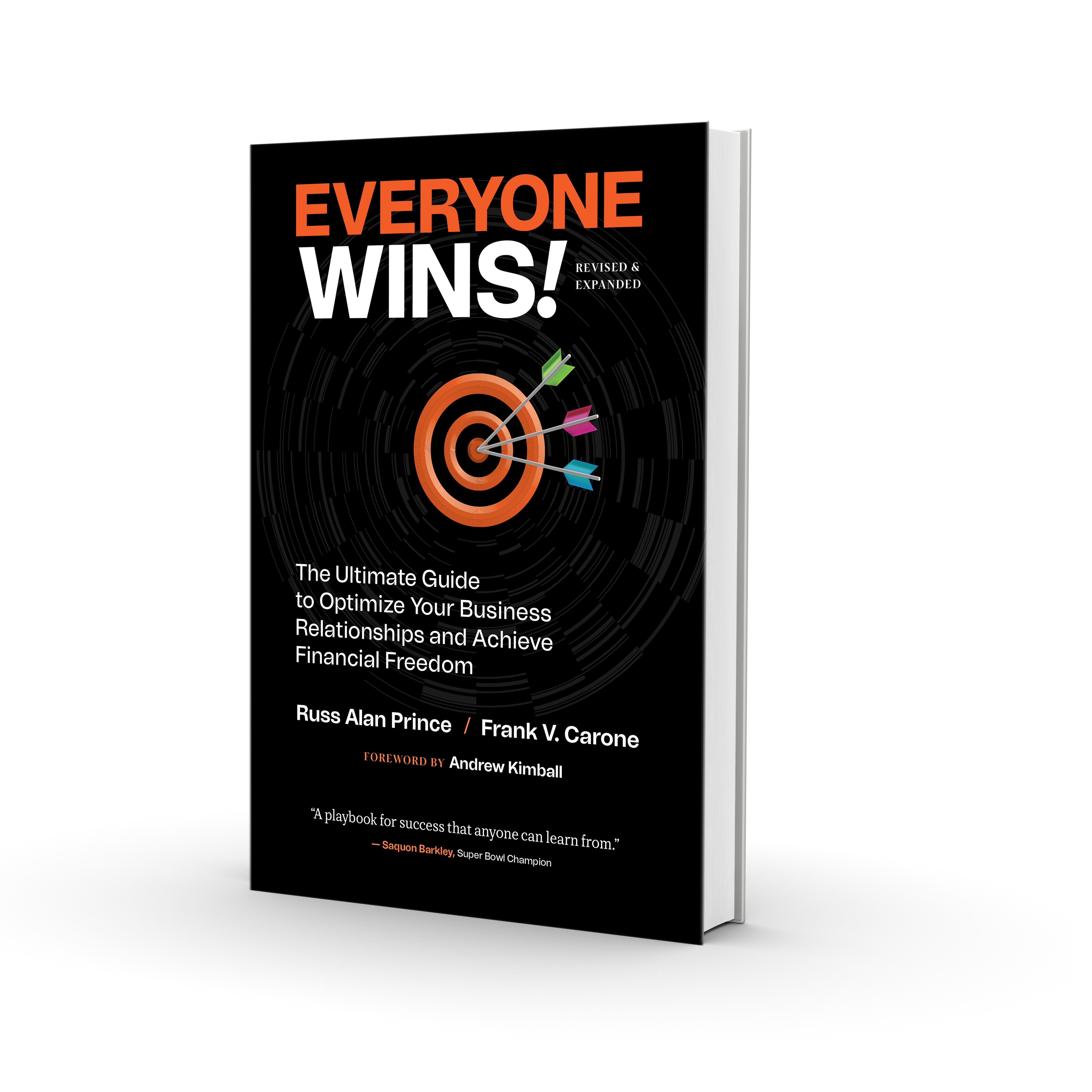
Strip away the airport-bookstore polish and there is a technique worth copying. First, draw the entire table, including the people who can quietly veto the project. Second, write down what a good result looks like to each person, in their language. Third, find a contribution you can make before asking for one. Fourth, keep score over years rather than a single transaction. This is slower than firing off a deck. It is also how a casino proposal becomes a jobs story, or a business request becomes a public benefit.
List decision-makers, implementers, beneficiaries, skeptics, and quiet veto holders.
Express the same project in the outcomes each group is accountable for.
Offer useful information, access, or design changes before requesting support.
Protect trust after the immediate deal, because the next maze will have familiar faces.
The method is strongest under particular conditions: the project is legitimate, the stakeholders can share value, the rules leave room for judgment, and the advisers possess both credibility and subject expertise. It weakens when access becomes the whole product, when interests cannot be reconciled, or when the political network belongs to one administration rather than to a durable institution.
Then the map moved
By 2025, the growth was visible. City & State ranked Oaktree 29th among New York's lobbying firms, based on $2.975 million in compensation reported for 2024. Then New York changed administrations, senior Oaktree figures departed, and by April 2026 the registered-lobbying operation was dormant. Carone insisted the firm was “going stronger than ever.” He described lobbying as only 10 percent of revenue and venture consulting as the real core.
The first thing to fail, then, was not the idea that institutions need translators. It was the assumption that a celebrated lobbying bench and a consultancy could be perceived as separate products. Outsiders saw former officials, public clients, and political access. Management saw a much broader advisory company. When the lobbyists left, the public label remained stuck to the door.
The reset pushed other work forward. Oaktree Sports Ventures, launched with former NBA All-Star Jayson Williams in 2024, advises athletes on sponsorships, financial planning, reputation, and life after competition. More recent work emphasizes college athletes, NIL contracts, legal protection, financial literacy, and a voice in training and working conditions. The company has also positioned itself around New York's adoption of AI and other emerging technologies, where founders need regulatory paths, workforce plans, infrastructure, and institutional partners as much as they need code.
In June 2026, federal prosecutors charged Frank and Anthony Carone and two other people in an alleged bribery scheme involving a migrant-shelter contract. Much of the alleged conduct predates Oaktree's launch; prosecutors also allege that the brothers fabricated evidence in 2024. The accusations are unproven, and every defendant is presumed innocent unless convicted. For a firm that sells trust around public institutions, the case is nevertheless consequential.
What survives the address book?
A relationship business always produces the same uncomfortable accounting question. How much of the value belongs to the firm, and how much walks out each evening inside particular people? Oaktree's next chapter will answer it. Sports advising can travel beyond New York politics. Venture consulting can apply the stakeholder method to new industries and cities. The firm's work on housing, health, nonprofits, and culture suggests the skill is broader than bill tracking.
But the transferable part must be a system: how to map a field, test incentives, earn trust, and design alignment without depending on yesterday's officeholders. That is the lesson a reader can take. Do not copy the contacts. Copy the habit of asking who must live with the outcome after the ribbon is cut.
Oaktree chose its name to suggest patience and roots. Its short history has instead been a study in motion - a fast rise, a conspicuous lobbying practice, a scattered bench, and a pivot into athletes and ventures. The city still has its maze. The question is whether Oaktree built a map that can be redrawn.