A molecule can be elegant in the laboratory and hopeless at a dinner table. It may bind exactly where it should, produce a statistically persuasive result and offer a patient a possibility that did not exist last year. Then someone asks the company what it does. The answer begins with a pathway, wanders through a platform and expires somewhere around the phrase “modality agnostic.” This is the small, costly tragedy on which TellMed Strategies built a business.
The New Jersey firm works in life-science communications, a category that sounds ordinary until one notices the number of people who must agree before a sentence may leave the building. Scientists want precision. Lawyers want defensibility. Executives want momentum. Reporters want news. Investors want consequence. Patients want to know whether any of this will change a Tuesday afternoon in their lives.
TellMed sits in the middle. It develops messages and brands, handles media and advocacy relations, builds websites and animations, runs social channels, prepares medical-meeting programs, supports data and regulatory milestones, and steadies clients through issues and crises. The deliverables are familiar. The unusual part is the translation layer underneath them: preserve what is scientifically true while making clear why a person should care.
The agency that grew by accident
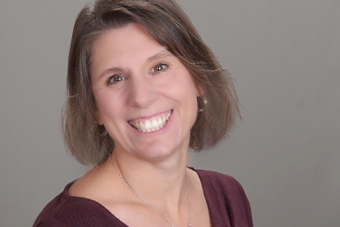
Tara DiMilia did not arrive through the standard creative-agency door. At Boston College she studied public relations, marketing, psychology and organic chemistry, originally imagining a career in genetic counseling. The combination now reads like an accidental syllabus for health communications: understand the claim, understand the person, then understand what happens between them.
By the time she founded TellMed, DiMilia had spent decades in healthcare PR and helped start or restructure three companies. TellMed itself grew organically from a consultancy. That origin matters. A consultancy begins with a person being asked for judgment, not with a menu of outputs. As the work expanded, the company assembled strategists, media specialists, writers, social experts and designers around the same question.
The market rewarded that arrangement. Inc. placed TellMed at No. 144 on its 2023 Regionals: Northeast list. The firm remains small - public profiles put it in the 11 to 50 employee range - and privately held. That size is part of the proposition. A client is buying access to experienced operators rather than feeding an assignment into a giant agency machine.
One capability, three strange assignments
Consider TellMed’s 2024 Hermes Creative Awards. The Platinum winner was a media-relations campaign for Bay Area Lyme Foundation. The Gold winner was a website for Modifi Bio, using the chameleon-like behavior of its molecules to explain an oncology approach. The honorable mention was a brochure for LambdaVision about producing material for a protein-based artificial retina in low-Earth orbit.
Turn research and awareness into a media campaign people can use.
Turn molecular behavior into a visual identity that explains the platform.
Turn orbital manufacturing into a credible story about an artificial retina.
These are not three versions of the same press release. They require disease literacy, visual metaphor, patient context and an instinct for where novelty becomes gimmick. The common method is to find the detail that makes the science memorable without letting the detail outrun the evidence.
The press release is visible. The product is the judgment that decides what can safely go inside it.
That judgment is especially useful at the pressure points of a biotech company: emerging from stealth, raising money, releasing data, entering a clinical trial, receiving a regulatory decision or walking into a medical congress with a short turnaround and several layers of approval. TellMed describes one American Heart Association assignment in which scientific, executive, legal and creative perspectives all needed to be heard before the client could show its work. The agency’s own conclusion was wonderfully unglamorous: what it provided was steadiness.
A product born from the same unanswered question
For years, TellMed met companies across more than 10 incubators and accelerators. The pattern repeated. Early-stage founders had compelling science but no communications foundation: no crisp message for an investor meeting, no system for staying visible between milestones, no plan for an announcement and no practiced way to connect a mechanism to its benefit.
That repetition changed the agency’s mind about where its work should begin. In 2026 it launched TellMed Trailblazers, an advisory offer for incubator and early-stage biotech, pharmaceutical and medtech companies. Rather than waiting for the company to become a conventional agency client, TellMed packaged the early work and printed the price.
Foundational Guidance Package
Three private one-hour sessions with senior strategists, followed by:
- messaging and positioning recommendations;
- presentation feedback, social templates and announcement guidance;
- written takeaways and quarterly 30-minute check-ins for at least one year.
The buyer is not purchasing headlines by the pound. The package is closer to preventive medicine. A founder rehearses the story before the fundraising conversation, builds a credible LinkedIn presence before there is big news, and prepares the milestone before a reporter calls. The work can be copied: define the audience; write one core message that survives different formats; pressure-test the claim; prepare announcements early; create a rhythm between milestones; keep a senior sounding board available.
It also has limits. Communications cannot rescue weak evidence, manufacture a milestone or guarantee coverage. A company seeking instant volume, an uncritical amplifier or a substitute for regulatory and legal review is buying the wrong thing. The approach works best when leaders are willing to expose fuzzy thinking, accept edits and make audience understanding part of the business rather than a cosmetic layer added at launch.
The human remains in the approval loop
TellMed now has its own proprietary AI platform. The company says it uses the system to organize insights, explore concepts, accelerate drafts and locate new angles. Its preferred metaphor is “strategic sidekick,” which is both a positioning choice and a boundary. Analysis, scientific interpretation, creativity and final execution remain with the team.
That boundary makes commercial sense. General-purpose AI can make technical language smoother while making a technical claim less exact. In ordinary marketing, a slightly misplaced adjective may be irritating. In medicine, it can distort risk, overstate an outcome or erase the difference between a laboratory observation and a patient benefit. The agency’s value rises precisely where automation needs supervision.
The same philosophy appears in TellMed’s culture code, arranged under the acronym H.E.A.R.T.: honesty, enthusiasm, attentiveness, respect and teamwork. Acronyms are easy. Attentiveness is harder. It means hearing the caveat from the scientist, the discomfort from the patient advocate and the real question hiding inside a reporter’s skeptical one. Remote work is part of the operating model, but the deeper structure is multidisciplinary: strategy, media, design and science have to notice one another.
Novel science does not suffer from a shortage of facts. It suffers from facts arriving without a map.
Where TellMed fits
TellMed competes with specialist health agencies, independent consultants, in-house teams and the giant communications networks. It does not have the global headcount of the largest firms, nor does it pretend to. Its place is between a solo adviser and a sprawling agency: senior counsel with enough specialists to carry a story from positioning through media, design, advocacy, social and the conference floor.
Its customers range from founders preparing their first professional presence to established pharmaceutical and biotech companies navigating data, reputation and patient expectations. Publicly named experience includes EMD Serono, Arvinas, Lantheus, Cybrexa Therapeutics, LambdaVision, Bay Area Lyme Foundation, Modifi Bio, Kaiser Permanente and Rallybio. Some need a category explained. Some need a difficult reporter engaged rather than avoided. Some need employees to understand a change before the outside world hears it.
The funny thing about breakthrough science is that the breakthrough is only the beginning. It must still pass through committees, screens, headlines, doubts and ordinary human attention. TellMed’s business is that passage. It does not make the molecule work. It makes the route from molecule to meaning less likely to collapse.