The royalty report did its job. It calculated about $800 owed to INaudio, the audiobook distributor. Running it cost roughly $15,000. According to Tarmac.IO’s account, the computation kept reaching into a live table containing records back to 2018. Each monthly calculation dragged the past along with it. Somewhere between the database and the bill, an ordinary business question had become an expensive habit.
- Tarmac embeds software, design, cloud and data specialists inside client teams.
- Its work ranges from coffee ordering to regulated software and audiobook infrastructure.
- The buying question: do you need an ongoing engineering partner with access to the whole problem?
Tarmac says it retired the reporting method and its supporting infrastructure, bringing the run cost to $15. The interesting failure was organizational: the cost of producing the answer and the value of the answer had lived apart. Put them together and the engineering priority became obvious. A useful exercise for any product manager: price the question before celebrating the dashboard.
Rent the team. Keep the conversation.
This is a revealing introduction to a company whose product is other people’s software. Tarmac builds web and mobile applications, runs cloud infrastructure, designs interfaces, manages products, and develops data and AI systems. Its commercial wrapper is Team as a Service: assemble the relevant disciplines, join the customer’s workflow, and adjust capacity as the work changes.
That places it among software consultancies and nearshore engineering providers, competing for budgets that might otherwise fund internal hiring or staff augmentation. Its distinction is the proposed working relationship: shared ownership and a team that participates in delivery. Buyers should test that promise in code reviews and planning meetings, where integration either happens or becomes a slogan.
The model has a real budget attached. Clutch lists $50-$99 hourly rates and a $100,000 minimum project size. Those directory figures are a starting range, with actual staffing and scope determining the quote. Tarmac advertises cancellation on 30 days’ notice. An organization seeking a modest, occasional website edit may find that scale disproportionate; an understaffed product team has a different calculation.
Tarmac reports an average of fourteen years of engineering experience. Its distributed delivery model depends on overlapping working hours, making the location and availability of the assigned team practical buying criteria.
The everyday mechanics are public. The Tarmac 10 includes single-purpose code branches, automated tests, continuous integration, peer reviews, daily written updates and stand-ups. A client can inspect whether those things happen. At employment-compliance company GovDocs, Tarmac describes a roughly equal blend of internal and external engineers and reports delivery around twice as fast. The claimed improvement depends on people working together closely enough to share responsibility.
“The communication and quality are brilliant, and that synchronization is vital to our success.”Zach Stabenow · Co-founder & CEO, GovDocs
A coffee order has a long backstage
Caribou Coffee provides a more familiar view of the work. A guest sees a menu, chooses a drink, and requests pickup. Behind that brief exchange sit store information, customization choices, order handling, and two mobile operating systems. A new coat of pixels cannot settle all those dependencies.
Tarmac dates its Caribou relationship to 2017. Its case study describes six months of app redesign and online-ordering development in 2020. As the product evolved, Caribou moved toward Flutter, allowing a shared codebase across iOS and Android. Tarmac says the change reduced platform inconsistencies and development complexity. At peak, the team included four mobile developers, three backend developers, a mobile lead and a designer.
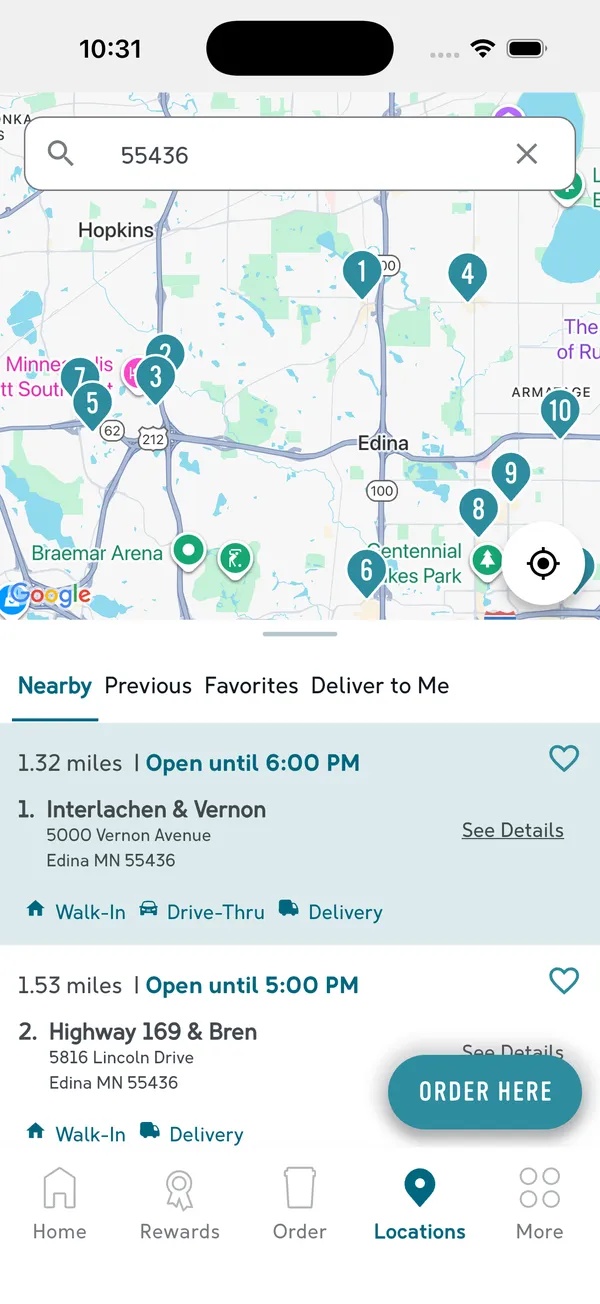
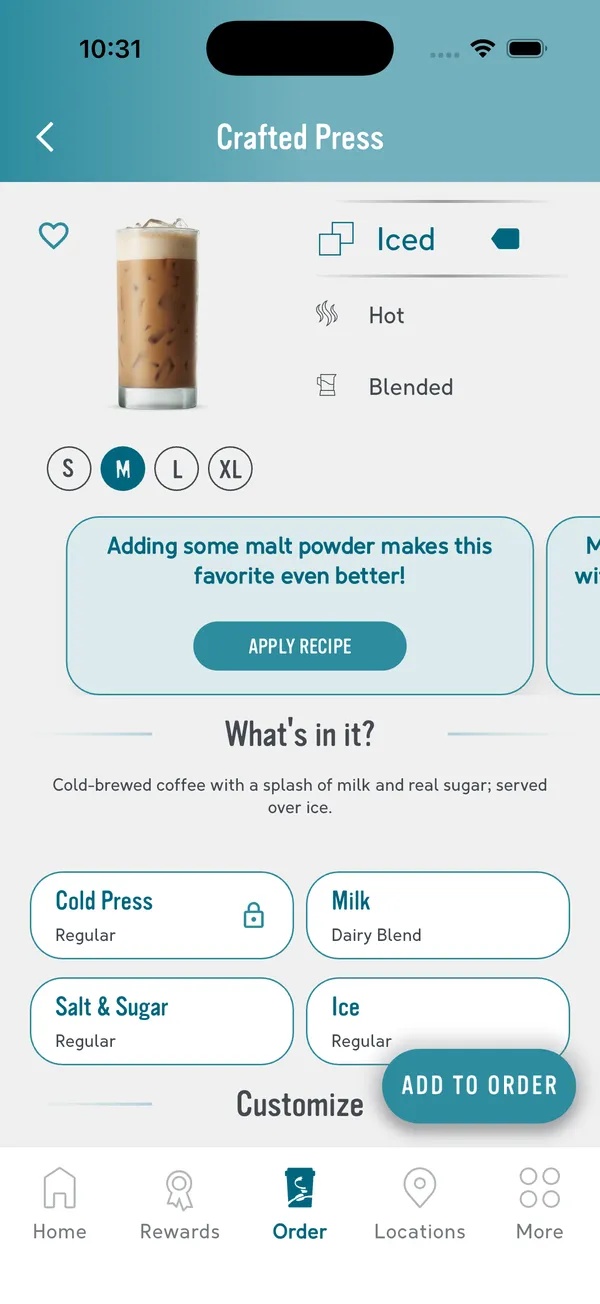
For a buyer, the telling detail is team composition. The assignment required several kinds of expertise at once. Before asking how many developers to hire, map the journey the customer must complete, then identify the systems and decisions along it. That is a practical way to scope an engineering engagement without mistaking the visible screen for the whole product.
The acquisition they weren’t shopping for
Tarmac’s appetite for automation produced an unexpected purchase. In a 2021 retrospective, David Worsell recalled a search that had leaned toward buying a UI design agency. A Helsinki meeting with Usetrace changed the direction. Its browser-based testing tool could fit directly into Tarmac’s delivery process. The team saw a way to improve quality and release speed across client projects.
The acquisition of Usetrace assets was announced in January 2021. In August 2025, Tarmac bought Warecorp, adding software, data and cloud capabilities and expanding its geographic coverage. Founder and CEO Anthony Schmidt remained at the center of the business. The current company describes itself as independent and founder-led. Those choices help explain its market position: ongoing product engineering, with a wider technical bench.
Give the machine a map
The same instinct appears in its AI work. At INaudio, inherited software spanned more than 100 repositories. Tarmac describes building system documentation and symptom-based runbooks, then using Claude Code to guide investigations. “Each ticket was like starting over from scratch,” engineering leader Rodrigo Machado recalled. Tarmac reports that tickets taking two days could be addressed in about twenty minutes.
The transferable lesson is the arrangement of knowledge. A complaint arrives as a symptom; organizing instructions around that symptom gives an investigator somewhere useful to start. Tarmac’s workflow requires evidence from source code and leaves production queries and changes with people. The speed claim belongs to this engagement. Another organization would need to measure its own baseline and results.
There is a price lesson here, too. In August 2026, Tarmac’s Mark Teskey described building a small Databricks analytics and transactional prototype in about a week. One day of runtime cost $4.65. His example involved a small dataset and one user; engineering effort was separate, and production would require governance, access controls and operational discipline. Copy the bounded experiment and its measurement. Keep the labor and the production requirements in the budget.
Viewed together, these projects suggest a useful hiring test. Give a prospective engineering partner a real workflow, its operating costs, and the people responsible for it. Ask what they would measure first. The answer will tell you more than a list of programming languages. Somewhere in the ordinary machinery of a business, a report may still be spending $15,000 to find $800.