Before Tamir Poleg could explain his brokerage to the world, there was an office to paint. The company could not afford to have someone do it, so he did it himself. He also handled recruitment calls, advertising and support. In his recollection, the early job description was broad enough to include practically anything that needed doing. A founder can have a vision and still need a roller.
Twelve years after Real began in 2014, Poleg leads Real REMAX Group. The combination with RE/MAX Holdings closed on August 24, 2026, placing a brokerage built around software alongside an established global franchise network. The change in scale is considerable. The question underneath it is familiar: what should a real estate company actually do for the people working under its name?
Poleg has spent much of his career approaching that question from different directions. He has worked on buildings, owned properties and built a business for agents. Each job offers a different view of a transaction. The construction worker sees what must be built. The investor sees what must be paid for. The agent has to help another human being decide.
A builder before a brokerage
His route into property began in Israel, with construction work. After military service, he sought practical employment and found work through a connection to a contractor’s family. The industry entered his life through a job site, well before there was a platform to demonstrate or a stock ticker to remember.
He studied economics and moved into technology sales, including work connected with wireless infrastructure. Those positions took him across international markets. Technology and real estate had both supplied years of working experience before he started a company that combined them. By the time he started Real, both were already part of his working vocabulary.
In 2006, he started a real estate business in Houston. During the financial crisis, when property had become an uncomfortable subject in many conversations, he expanded a multifamily portfolio and built property management and construction operations around it. Optimum RE Investments, the business he founded and led, gave him experience with the routines that remain after the purchase agreement is signed.
He sold the business in 2013. Looking back years later, he acknowledged that the decision rested partly on an expectation that the market would fall. It continued appreciating. That admission lends the story some welcome untidiness. Successful entrepreneurs are frequently invited to describe their foresight; Poleg’s own account leaves room for a forecast that failed to cooperate.
An agent is a business, too
Real began with a straightforward dissatisfaction. Agents had plenty of brokerages to choose from, but Poleg thought the choices offered too little meaningful difference. He wanted the company to keep finding ways to improve their working lives. The idea was deliberately practical: give people sufficient value, and there would be a reason for them to join.
The early team developed technology in Israel and began brokerage operations in Texas, where Poleg had professional connections. His co-founders included Yuval Niv and Gal Weiss. Real combined a brokerage with software intended to support the people using it. The agent remained central to the transaction, with the company supplying more of the infrastructure around the work.
That distinction matters in a field where technology can be sold as a substitute for almost anybody. Poleg’s premise gave it another assignment: help the professional do the job. Better economics, useful tools and a community of colleagues could form an offer together. A commission split alone would leave the business competing on a number another company could change.
Ownership became part of the argument. In 2017, he took a proposal for agent stock options to his board. Employees and investors had equity; agents were helping build the company too. His account describes support from directors, followed by a less convenient discovery: private-company options were difficult for many agents to understand or value.
Real became publicly traded in Canada in 2020 and listed on Nasdaq in 2021. At the bell ceremony, the agents gathered outside in Times Square gave the occasion its personal meaning for him. Then came his characteristically practical qualification: “But then it's back to work.” Public-company status had supplied another set of responsibilities. The bell, regrettably, did not answer support requests.
The unglamorous machinery
By early 2023, Real had reached about 9,000 agents. Poleg said the company added roughly 1,000 in January alone. Fast recruitment makes a persuasive chart, but it also hands the organization a larger pile of things to process. He discussed rebuilding the technology platform in eight months, an indication that growth was making demands on the machinery underneath it.
His explanation of the operating model was consistently interested in costs. A brokerage that avoids a large office footprint and automates repetitive work has a different expense structure from one that expands through buildings and additional administrative layers. Poleg argued that conservative spending had helped Real prepare for a changing market. The tradeoff, he said, included missing some of the valuations enjoyed by more lavishly financed peers.
By the end of 2025, legacy Real had 31,739 agents. Full-year revenue approached $2 billion, while gross profit was $165.7 million. Those figures belong together. Brokerage revenue includes substantial amounts paid onward to agents, so the headline revenue number gives an incomplete picture of what the company retains. Scale and profitability require separate attention.
The technology had become more specific, too. In 2025, Leo CoPilot, its assistant within the reZEN software, exceeded 700,000 agent interactions. It handled approximately 46 percent of support volume autonomously in the second half of the year. Here was an identifiable task for artificial intelligence: help answer the questions that accumulate inside a working brokerage.
Dated snapshots, before the RE/MAX combination. Early 2023 is approximate; the later figures are period-end totals.
Automation does not make the rest of the organization stand still. Real’s salary and benefit costs also rose in 2025 as administrative, finance, legal and operations teams supported more activity. That is an essential qualification to a tidy efficiency story. Software can change how growth is supported while the expanding business still needs people, oversight and investment.
The buyer at the other end
Poleg’s language about culture is unusually brief for a corporate setting: Work Hard. Be Kind. The phrase appears on T-shirts and in the company’s public identity. It also puts an obligation beside ambition. A business can recruit energetic people and still make itself unpleasant to work with. The second half of the slogan gives colleagues something concrete to expect from the first.
His 2024 HousingWire Vanguard recognition emphasized humility and integrity as part of his appeal to agents. The recognition reflected the recurring subjects he chooses in public: cooperation, the agent’s financial position and the experience of the person trying to buy a home.
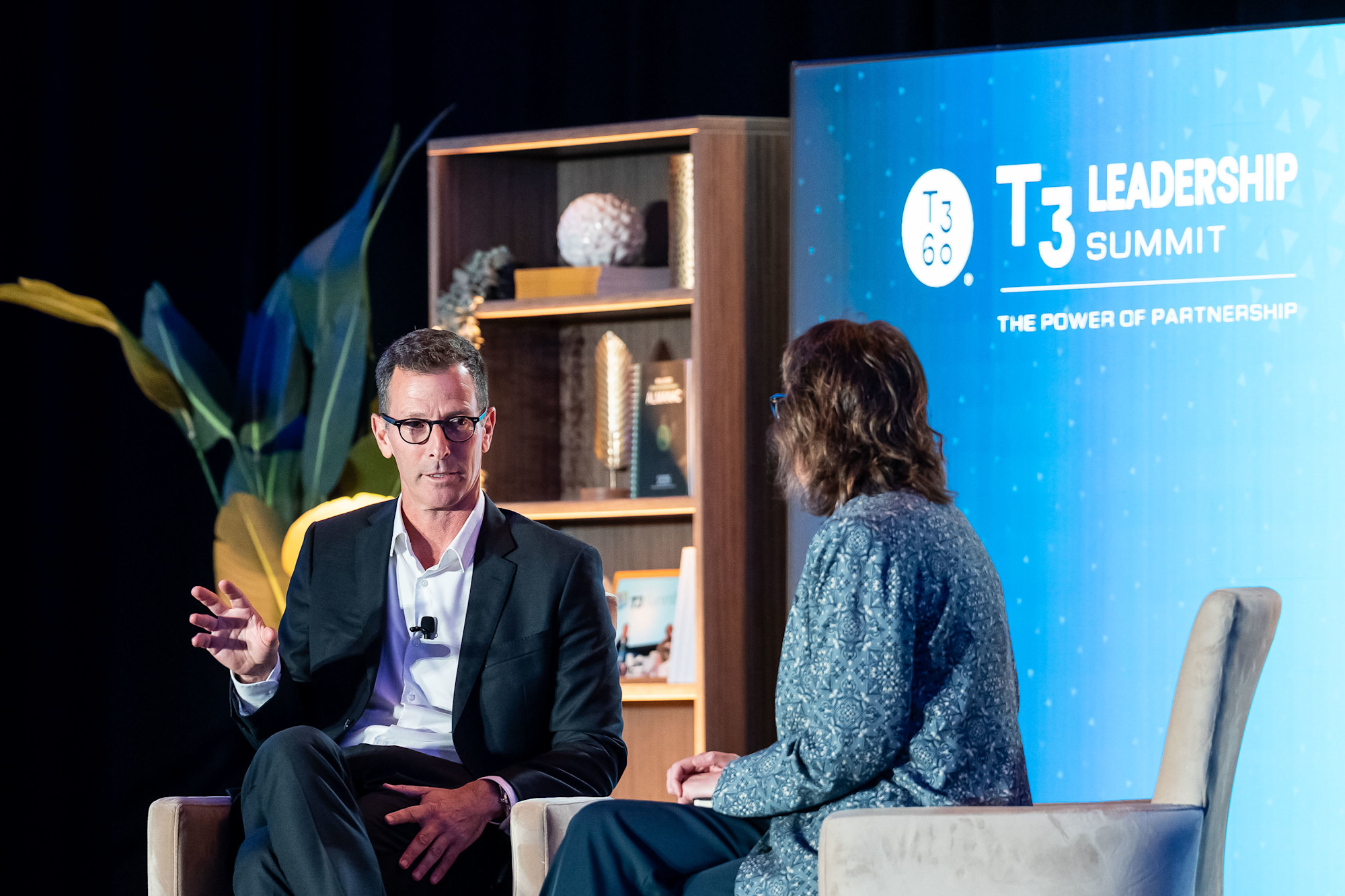
At the T3 Leadership Summit in April 2026, he argued that competition for agents and market share had distracted brokerages from consumers. He wanted buyers to have more certainty and control. He also called for more respectful cooperation among industry leaders. It was a practical criticism of a profession capable of conducting an elaborate argument while the customer waits for an explanation.
That ambition connects the operating details to the human transaction. A faster back office can free capacity; a clearer system can make the next step easier to understand. Neither result happens simply because a product has been launched. For Poleg, improving the brokerage’s internal workings is part of a larger promise whose eventual audience is the buyer or seller.
A familiar name, a different scale
The RE/MAX deal widened that audience considerably. Announced in April and completed in August 2026, it brought the two businesses together under Real REMAX Group. Poleg became chairman and chief executive. The combined network was described as approximately 180,000 agents worldwide, a different measure from legacy Real’s own agent count. The two numbers should never be casually swapped.
In explaining the combination, he pointed to what each organization supplied. Real brought its technology and recent growth; RE/MAX brought brand recognition, a franchise network and geographic reach. The plan retained separate brands and business models. A cloud brokerage and a franchise office could sit under the same parent without requiring their agents to work in an identical way.
There was a personal glimpse of that reasoning in a May industry briefing. Poleg recalled sitting in a Miami restaurant after the announcement and imagining asking the room who recognized RE/MAX. He expected broad recognition. For a founder who had spent years explaining a younger company, the appeal of a name that needed little introduction was easy to understand.
“We are committed to helping you grow.”
Tamir Poleg, addressing RE/MAX broker/owners, August 2026
In Nashville that August, before the combination closed, he addressed more than 1,000 conference attendees. His pitch to broker/owners emphasized giving them tools and allowing them to choose adoption. After closing, he reiterated the separate identities of the brands. The task ahead includes persuading experienced operators that the new parent can improve their businesses without flattening their differences.
That brings Poleg back to a question smaller than an acquisition announcement and harder to answer with one. Does the company make the next working day better? His early answer involved doing whatever the office required. His current answer involves software, services and a much larger group of people. The scale has changed. Each agent still gets to judge the usefulness of the offer.