Michael Lahyani had already sold control of his property business when the decision that would define it arrived. The market had fallen. The majority shareholder wanted a different financial plan. Lahyani chose to buy back the stake. In 2010, he and co-founder Renan Bourdeau took responsibility for a business whose future looked considerably less inviting than its listings.
The transaction makes a useful opening to his story because it scrambles the usual order of entrepreneurial ambition. Selling is supposed to be the reward. Here, buying back brought the work home again. He would have to keep paying for a company that was still losing money. Ownership came with a recurring invoice.
A detour, a magazine, a different sort of listing
The route to that decision began with a holiday detour. In 2004, the Swiss publisher stopped in Dubai on his way to the Maldives. He returned to Switzerland interested enough to talk to his advertisers about bringing his equestrian magazine, Equestrio, to the emirate. They encouraged him. Horses were his first publishing business in Dubai; houses followed.
His own search for somewhere to live supplied another idea. Newspaper classifieds offered a cramped way to navigate an expanding property market. In 2005, he started Al Bab World, a listings magazine with an online portal. The business met customers in a format they recognized while beginning to build the digital alternative.
The early print operation also exposed the difficulty of competing with an established newspaper. Advertising discounts and exclusivity agreements made life hard for a newcomer. Looking back in 2017, Lahyani said, “we were never going to win the print war”. Moving online offered another route, although the audience did not materialize simply because the website existed.
That distinction matters to the origin story. He had found an inconvenience he understood, but understanding it did not make the market ready. Brokers needed to see why online leads were worth paying for. Home seekers needed a reason to change habits. The apparently obvious business still needed years of persuasion.
The buyer becomes the seller
In 2007, Australia’s REA Group bought 51 percent of the business. The Property Finder name followed. The partnership brought money and the experience of an established online property operator. For a small company trying to change how an industry advertised, that was a practical education as well as a transaction.
Then Dubai’s property market turned. In the early account of the downturn, Lahyani described a demand for a break-even budget that would have required staff cuts he did not want to make. Buying back the stake preserved his ability to choose. It also made financing the losses his problem. Fortunately, Equestrio was still profitable and could help support the property venture.
By 2011, Property Finder had reached profitability. There had been six years between the original magazine and that milestone. The interval is easy to lose when later investments dominate the story. A profitable business could now approach investors with evidence that customers would pay enough to sustain it. The founder had purchased the chance to get that far.
takes its chances.
buy back control.
turns profitable.
A country is not a copy-and-paste job
The next question was how far the model could travel. Qatar became the first international expansion in 2012. Other markets followed. A portal may look borderless from a laptop, but property is stubbornly local. Different brokers, different rules and different ways of searching sit behind the same familiar search box.
Lahyani’s account of product development was unusually concrete. The company found that exporting its UAE experience directly into Saudi Arabia and Egypt did not work. Search habits required changes. Slower mobile networks affected what an Egyptian user could comfortably load. A beautiful interface had little value if it kept the person waiting.
Expansion also produced an expensive kind of complexity: different products needed to develop at different speeds. Property Finder eventually withdrew from Lebanon and Morocco to concentrate attention elsewhere, including Egypt. Lahyani could recognize the logic of focusing on a core business even after benefiting from another company’s decision to leave Dubai.
By 2020, the problem had become a Harvard Business School case. Lahyani faced choices about strengthening established markets, changing pricing, attracting more developers and pursuing newer territories. A new executive team was also putting organizational procedures in place. Growth had created competing demands on the people expected to deliver it. The map could expand faster than the company’s capacity to manage it.
The underlying arrangement in the case was straightforward: brokers paid monthly subscription fees for packages of listings, while consumers browsed for free. That put two audiences inside the same business. The person looking for a home needed a useful search. The broker needed a reason to keep paying. Decisions about pricing, information and product design had to make the arrangement worthwhile on both sides.
“Don’t build a business to sell it.”
Michael Lahyani · 2016
The first investors wore staff badges
Asked in 2017 who had first invested in him, Lahyani answered with his employees. Key staff had accepted lower cash salaries in exchange for equity. That answer gives the early business a different cast. Before the institutional investors arrived, colleagues had already made a financial choice about the future he was proposing.
He also argued for hiring specialists and giving them the freedom to act. “The key to talent spotting is trust,” he said in 2015. His objection to the glamorous founder story was fairly brisk: the early work involved finding a viable proposition, assembling a team and getting a product moving while others remained unconvinced. A hoodie was unlikely to solve any of those problems.
There was room for ambition beyond his own company. Selected into Endeavor’s network in December 2013, he later mentored other entrepreneurs and invested in Endeavor Catalyst. The network connected him with peers and advisers; he contributed time back into it. In 2016, he also joined the investors in hospitality recruitment platform hosco, linking his Swiss background with another online marketplace.
His description of Dubai in 2019 was more domestic than a funding announcement might suggest. He talked about his wife, whom he had met in Geneva, nearby family, visiting parents and friends. Switzerland remained part of his life. Dubai had become home. For someone selling the usefulness of finding a place to live, the distinction had a personal counterpart.
The investor who came back
General Atlantic led a $120 million investment round in 2018, with Endeavor Catalyst and Vostok New Ventures participating. Lahyani’s stated priorities included product, technology and better information. The business had reached a stage where international investors could back an existing operation and its expansion, rather than simply a promise about how people might search for property.
The relationship with BECO Capital supplied a more revealing financial episode. In 2024, Property Finder raised $90 million in debt financing to buy back the early investor’s shares. Lahyani explained the flexibility that profitability provided. An investor could receive liquidity while the founder continued the business. A sale of the whole company was not required.
In discussing that partnership, BECO’s Dany Farha described Lahyani as competitive while emphasizing his fairness in negotiations. The relationship survived the exit. Lahyani remained an advisor to the firm. Then, in January 2026, BECO invested $20 million from its new Growth Fund I as part of a fresh Property Finder transaction. A closed deal had left an open door.
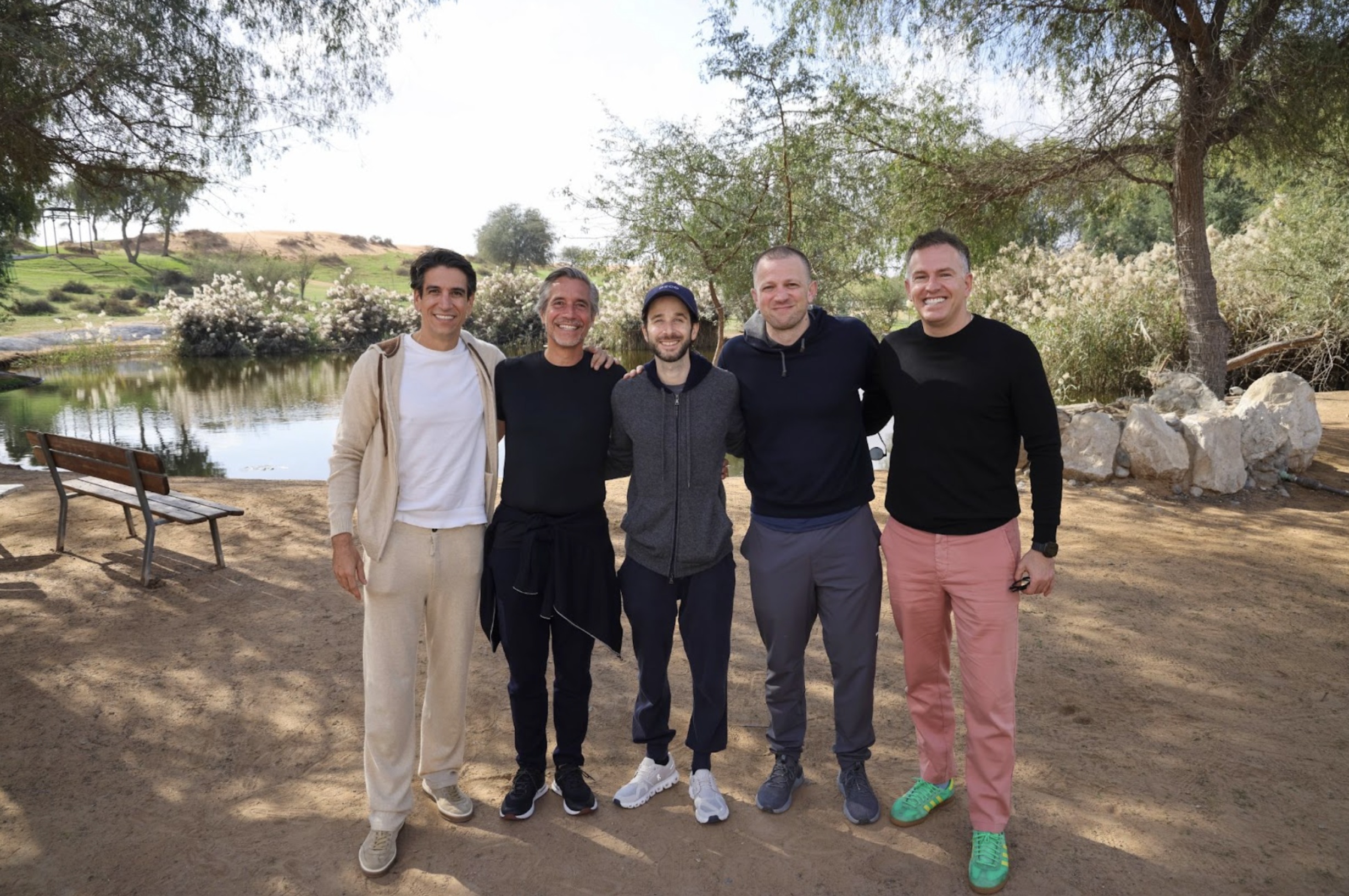
The larger investor table had changed too. In September 2025, a combined $525 million investment led by Permira, with participation from Blackstone Growth, was announced. General Atlantic sold part of its stake while retaining a significant minority holding. New investors could join, and an existing one could realize some value, while remaining involved in what came next.
The January 2026 transaction brought $170 million more: $75 million from Mubadala, $75 million from another UAE sovereign wealth fund and BECO’s $20 million. The company’s financing now connected international private capital with regional institutional investors. The numbers describe transactions in a business. The more interesting continuity is Lahyani’s repeated effort to keep building through changes in ownership.
Three rounds. Different chapters.
A home is more than a search result
A property portal’s usefulness eventually has to be measured at the other end of the transaction. Can someone decide where to live with less wasted effort? Lahyani’s earlier descriptions of the task were full of ordinary details: a floor plan, charges, a view, the trip to school or work, an agent who knows the building. Those details are where an abstract commitment to transparency becomes useful.
He has also defended the human role in negotiation. Giving a buyer more information does not remove the need for someone who understands the local market and can bring buyer and seller together. The ambition asks agents to become more accountable and better equipped. It still gives them work to do.
Property Finder’s newer tools, including Home Valuation, Credit Optimizer and SuperAgent, extend that effort into estimates, agency spending and agent performance. Its January 2026 announcement described an ambition to build a broader real estate operating system. That language enlarges the assignment considerably. It brings more of the search and decision process within the company’s reach, and more of its quality within the company’s responsibility.
Lahyani’s career leaves a practical question behind the large transactions: how much useful work remains after everyone has congratulated the founder? He has kept finding reasons to continue. The next home seeker will bring a smaller set of questions than an investment committee. Is the place available? Can I understand the price? Will anyone answer? After two decades, those questions can still make a property company earn its keep.