A house can be ready for sale long before its owner is ready to be watched. Put it online and the clock starts: days on market, price reductions, the tiny public clues that invite a buyer to ask what went wrong. Compass has built much of its recent strategy around that uncomfortable interval between considering a sale and announcing one. Its proposition is simple: give the agent more tools, and give the seller more control over the entrance.
- Compass combines a real estate brokerage with software built around agents.
- Its staged listing strategy makes the timing of exposure a product.
- The Anywhere acquisition turned a national challenger into a global family of brands.
A software company with someone holding the keys
Robert Reffkin founded Compass in 2012, inspired by his mother Ruth’s experience as a real estate agent. His cofounder Ori Allon supplied a different kind of experience: companies acquired by Google and Twitter, and a doctorate in computer science. Between them sat an appealing problem. Buying a home involved enormous sums of money, yet the work surrounding the transaction could still feel like a scavenger hunt through messages, documents, and disconnected systems.
Compass chose to organize those systems around the professional already trusted with the deal. Agents get customer relationship management, marketing, and transaction tools. Buyers and sellers get the agent’s local judgment, backed by that infrastructure. Expertise lives in two places: the neighborhood knowledge of the person showing the house, and the engineering that helps that person manage the work.

“Tools empower.”
Robert Reffkin / Talks at GS, 2021
Reffkin’s compact phrase explains the model better than a futuristic rendering of a house. Compass keeps the adviser in the transaction and tries to make the surrounding machinery less cumbersome. Its mission, “to help everyone find their place in the world,” is expansive. The operational wager is more precise: an agent with better systems can build a better business.
The missing screen belonged to the customer
In February 2025, Compass launched Compass One, a dashboard agents invite clients to use. A buyer can review a collection of homes; a seller can follow the market. Once a property is under contract, key dates, tasks, and documents have a shared home. After closing, the relationship and records remain accessible. The product addresses a familiar irritation: paying for professional guidance while wondering what happens next.
The company said agents used Compass One with approximately 370,000 clients during 2025. That is a more useful adoption signal than another software announcement. But a dashboard does not inspect a roof or persuade a nervous seller to accept an offer. Its value depends on an agent keeping the information useful and the client actually opening it.
First the paint. Then the public.
Concierge tackles an earlier bottleneck. A homeowner may have equity but lack the cash to prepare a property for sale. The program helps finance work such as painting, flooring, and staging. The distinction matters: the current program involves loans from Notable Finance, subject to approval. Fees or interest can apply depending on the state, and repayment can be triggered by events including a sale, termination of the listing agreement, or 12 months passing. Deferred payment is still payment.
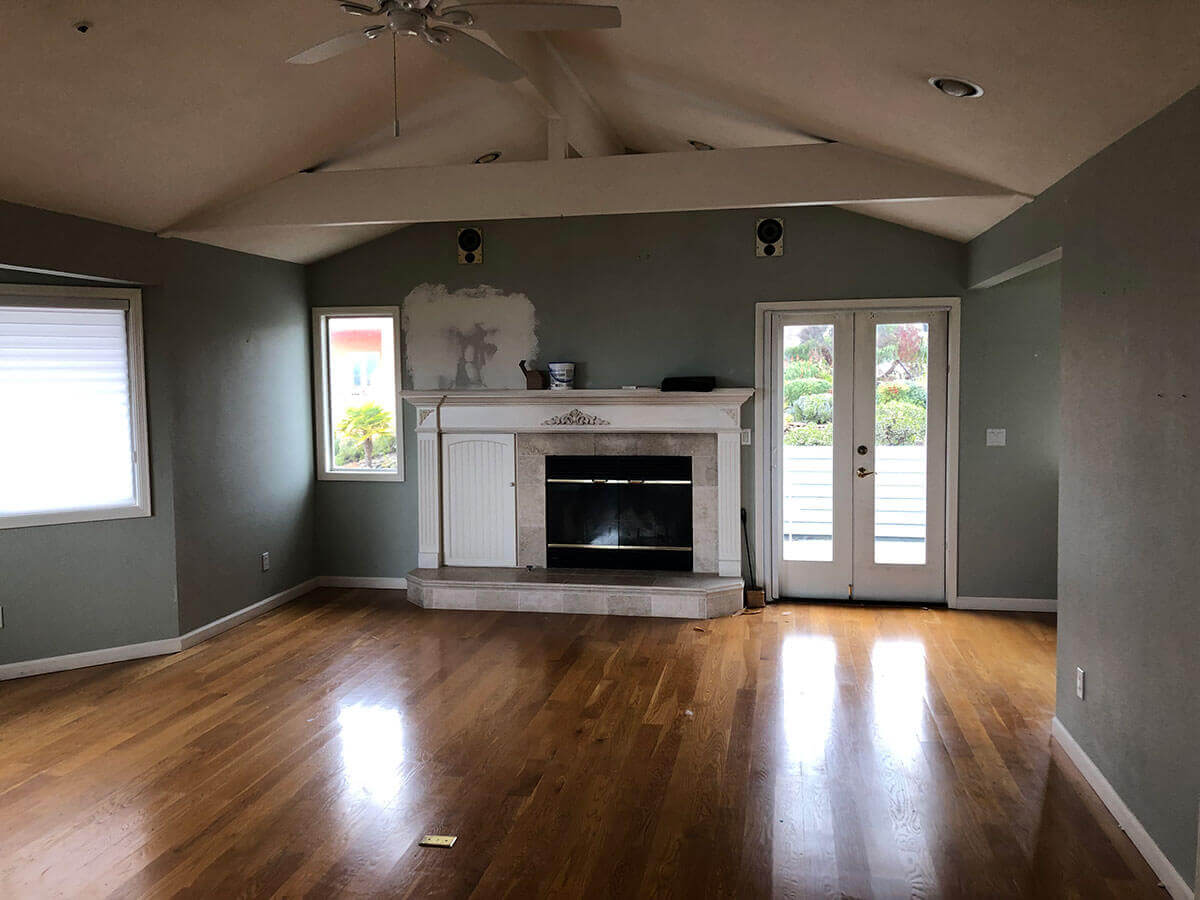

Preparation fits neatly with Compass’s three-phase marketing approach: Private Exclusive, Coming Soon, then a broader public launch. Early feedback can inform pricing before the full debut. For sellers who value discretion, that sequence has an obvious attraction. For buyers, a fragmented market makes access and information more complicated. A smaller initial audience can also mean missing someone willing to pay more.
- 01Private ExclusiveStart with a limited audience
- 02Coming SoonBroaden the introduction
- 03Public launchReach the wider market
Growth sent a rather large bill
Building this system required capital. A $370 million Series G in 2019 valued Compass at $6.4 billion; its investors included SoftBank Vision Fund, Dragoneer, and Canada Pension Plan Investment Board. The company went public in 2021. Yet software did not exempt a brokerage from housing cycles. Revenue fell 19% in 2023, to about $4.9 billion. Full-year free cash flow remained negative.
The early promise ran into an old constraint: a large operating structure becomes expensive when fewer homes change hands. Compass cut costs and restructured. By 2025, it reported $6.96 billion in revenue and $203.3 million in positive free cash flow, while still posting a $58.5 million net loss. Cash generation had improved; accounting profitability remained unfinished business.
Company-reported, non-GAAP measure. Positive cash flow can coexist with a net loss.
The map got bigger. So did the stakes.
In January 2026, Compass completed its all-stock acquisition of Anywhere. Coldwell Banker, Century 21, Corcoran, and Sotheby’s International Realty joined a portfolio already including Christie’s International Real Estate. By October, the company described a network of more than 300,000 real estate professionals across approximately 120 countries and territories. That group-wide footprint is much larger than the Compass-branded brokerage alone.
The economics now include brokerage commissions, franchise income, and services around a closing, including title, escrow, and mortgage. Against Keller Williams or eXp, Compass competes for agents and clients. Against property portals, it competes over the route by which listings reach an audience. Those positions can change: in February 2026, Compass and Rocket announced a three-year alliance to bring Coming Soon listings to Redfin, with Private Exclusives to follow.
The deal suggests distribution can be negotiated rather than merely surrendered. It also puts Compass’s central tension on display: controlled exposure needs enough exposure to produce a buyer. The disagreement with Zillow over listing rules makes that tension concrete. In September, Compass reported a favorable preliminary-injunction ruling in a related dispute involving Midwest Real Estate Data; the fight over distribution continued.
The transferable lesson is to build around the work people already trust someone to do. Remove the repeated handoffs, make progress visible, and connect preparation to distribution. But the conditions matter. Weak local representation, thin buyer demand, financing costs, or an unrealistic asking price can overwhelm an elegant platform. A house still needs the right buyer. All this machinery is an elaborate way of getting two people to agree.