value-creation
(15)
MiddleGround Capital Put the Factory Floor in the Investment Committee
Its founders learned industry from the assembly line and the deal room. Now the firm is testing whether operational fluency can turn overlooked B2B manufacturers into stronger, more valuable businesses.
The Private Equity Firm That Put the Business Model Before the Industry
Uplift Investors raised $670 million on a deceptively simple wager: how a services company makes money can reveal more than the industry label attached to it. Its first deals in legal services show what that thesis looks like once the capital starts moving.

The Company Private Equity Calls When the Clock Is Ticking
BluWave built an invite-only network of vetted specialists and matches buyout firms with the exact consultant, interim CFO, or diligence team they need - usually inside a day, usually for free.
The Firm That Buys Boring Businesses and Sends an Operator to Run Them
Liberty Partners backs the people who buy small companies and stay to run them. In healthcare, B2B services and financial services, its bet is that owners who fix boilers and read board decks build more durable businesses than spreadsheets alone.
The Quiet Firm Turning Bootstrapped Software Into a $7 Billion Bet
Serent Capital has spent 18 years backing founder-led software companies that never chased venture capital. Now it manages more than $7 billion and just closed the largest fund in its history.
The Firm That Bets on Founders Who Never Took a Dime
For 22 years, Mainsail Partners has written checks to software founders who bankrolled their own companies - then handed them an operating team instead of a lecture.

The Firm That Buys Companies Nobody Wants - and a Football Club Everybody Watches
Clearlake turned a distressed-debt strategy into a $90 billion machine by fixing unglamorous companies - then bought a Premier League club to prove the point.

Wind Point Hires the CEO First. Then It Goes Shopping for a Company.
For 42 years the Chicago firm has run the buyout playbook in reverse - recruiting a billion-dollar operator before it writes a check. In July it closed a $3.2 billion fund to keep doing it.
The Firm That Buys the Companies Nobody Puts on a T-Shirt
In Rye, New York, a former Blackstone dealmaker built a private equity firm around a contrarian bet: the least glamorous companies in America - the ones that make labels, insulation, and water pumps - are where the returns hide.

The Quiet Compounders of Park Avenue
For 40-plus years, Harvest Partners has bought unglamorous middle-market companies and held them long enough to matter. Here is how a relationship-first shop on Park Avenue turned patience into a $20-billion franchise.
The Firm That Buys Broken Software and Runs It on an AI Playbook
EVA Equity Partners treats software turnarounds like a manufacturing line - a five-phase method, a two-week diligence cycle, and an AI platform trained on two decades of operating enterprise software. Here is how the Austin firm is trying to make growth repeatable.
Lock 8 Partners Is Building the Software Buyout Firm for Workhorses, Not Unicorns
The New York firm buys overlooked B2B software businesses, installs operating muscle and stays focused on the unglamorous work of making a good product into a durable company.
The Private Equity Firm That Refuses to Fire the Founder
For 40 years, RLH Equity Partners has bet on a contrarian idea in private equity: that the founder is the asset, not the problem. Here is how a $1.2 billion Los Angeles firm turned 'high touch meets high tech' into a portfolio worth $4.2 billion in exits.
The Baltimore Firm That Waits for the Boring Part
For 35 years, a growth-equity shop outside Baltimore has skipped the seed-stage lottery and bought into companies once they already work - then rolled up its sleeves.
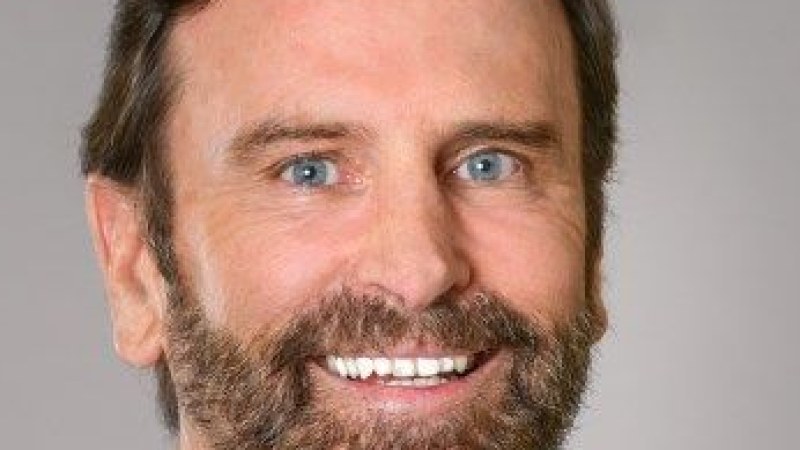
David Andrews
R. David Andrews is the Founder and Co-CEO of Gryphon Investors, a San Francisco-based middle-market private equity firm he launched in 1995 with a distinctive 'Deal-Ops' model that integrated deep operational expertise into every investment long before it became industry fashion. A triple Stanford alumnus (B.A. Economics, J.D., M.B.A.), Andrews spent his early career at Salomon Brothers, Shearson Lehman Brothers, and Oak Hill Partners before charting his own course managing $10+ billion in assets across healthcare, business services, industrials, consumer products, and software - serving as chairman or director of over 50 companies along the way.