search-engine
(8)
Yandex Built a Search Box. Then It Put the City Inside It.
The company that taught a search engine Russian grammar now wants to route the commute, deliver dinner, recommend the film and answer the question - all on the same machine-learning spine.

Ask Media Group
Ask Jeeves taught the early web to accept a question in plain English. Three decades later, its corporate descendant became a sophisticated traffic-and-advertising machine - and a case study in what happens when a media business depends on someone else’s search ecosystem.

Orama
Orama is an open-source search company building an 'answer engine' for developers - a lightweight, high-performance stack that bundles full-text, vector, and hybrid search with automatic embedding generation and built-in LLMs. Started as the open-source project Lyra and incorporated as OramaSearch Inc. in 2023 by Issac Roth and Michele Riva, its core library ships in under 2KB and runs in the browser, on servers, or at the edge. Orama powers site search and AI answers for developer platforms including nodejs.org, tanstack.com, and solidjs.org, and its OramaCore runtime packages a search engine, vector database, and LLM interface into one deployable unit.

Justin Wohlstadter
Justin Wohlstadter is the founder and CEO of Waldo, a New Orleans-based AI research platform that helps marketing agencies and brands get smart fast for pitches, brand strategy, and creative work. Before Waldo, he spent nearly a decade running Wonder (AskWonder.com), an on-demand human research service powered by thousands of analysts worldwide, and earlier co-founded BOLDstart Ventures, where he backed companies later acquired by Google, LinkedIn, Salesforce, and Akamai. A Harvard and Oxford graduate who wrote his master's dissertation on how the internet would reshape access to education, he has spent his entire career chasing one obsession: making it faster for a curious person to know more than they did a minute ago.

Wei Zheng
Wei Zheng is the CEO and founder of Adot (a.xyz), a decentralized AI search network built for the Web3 era. A former founding member of Google's mobile search ads team, Wei brings 17-20 years of deep expertise in search engine technology and artificial intelligence to his mission of building a blockchain-powered alternative to Big Tech search. Since founding Adot in 2022, he has raised $6 million from top-tier Web3 investors including Hash Global, gumi Cryptos Capital, and Aptos, and grown the company to ~140 employees. Adot indexes both traditional web content and on-chain data — smart contracts, NFT metadata, decentralized storage — combining AI-powered relevance with a 'Search to Earn' model that gives users ownership of their search contributions.

Will Bryk
Will Bryk is the co-founder and CEO of Exa, a neural search engine built for the AI era. A Harvard CS and physics graduate who interned at SpaceX and engineered AI products at Cresta, Bryk left to answer a question that gnawed at him: what if Google was already obsolete? Exa reimagines search using transformer-based link prediction - what Bryk calls 'neural PageRank on steroids' - to help AI agents find exactly the right information rather than keyword-stuffed SEO noise. The company raised $85M in a Benchmark-led Series B at a $700M valuation in September 2025, with Nvidia and Lightspeed also backing the bet that AI systems will soon generate more search queries than humans.
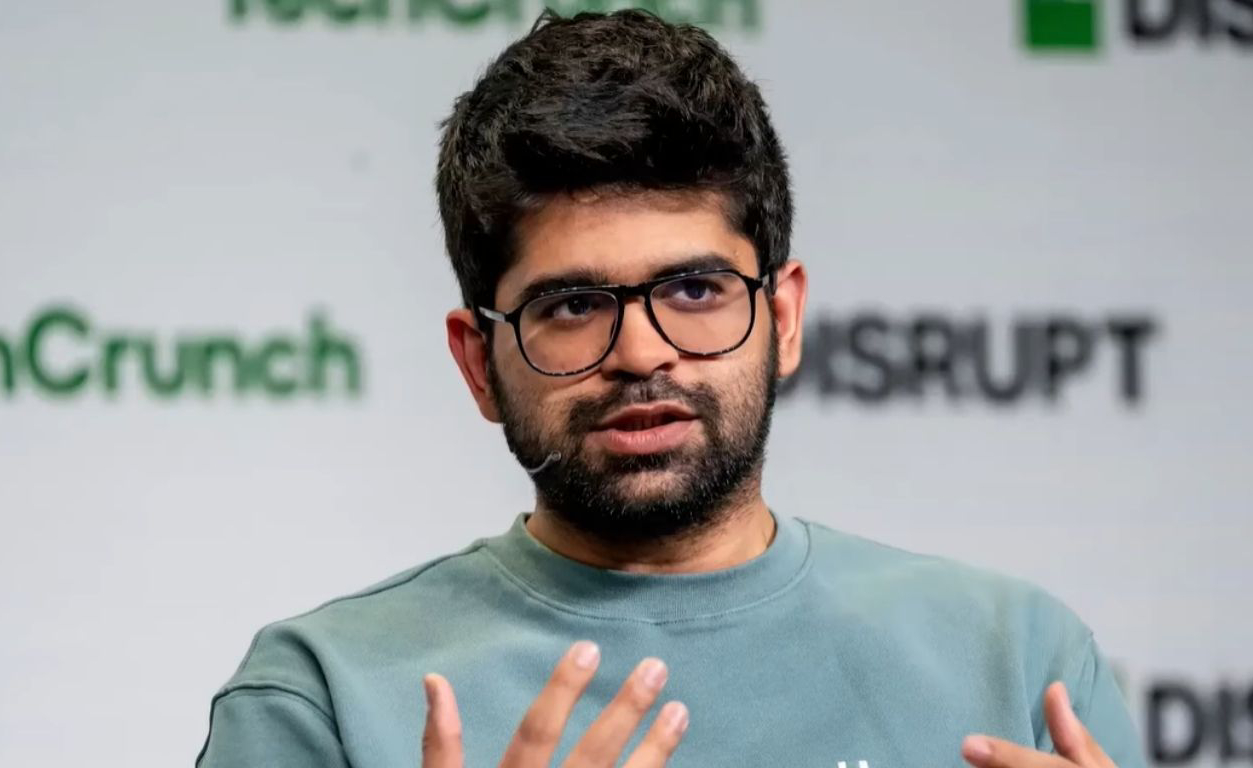
Aravind Srinivas
Aravind Srinivas is the co-founder and CEO of Perplexity AI, the citation-backed AI answer engine that reached a $21B+ valuation in under three years. Born in Chennai in 1994, he earned a dual degree from IIT Madras before completing a PhD at UC Berkeley, then worked as a researcher at OpenAI, DeepMind, and Google Brain before founding Perplexity in 2022. India's youngest billionaire at 31, he has positioned Perplexity as a direct challenger to Google Search by insisting that every AI-generated answer carry verifiable citations - a principle he lifted straight from academic paper standards.

Gabriel Weinberg
Gabriel Weinberg is the founder and CEO of DuckDuckGo, the privacy-focused search engine he built from his basement in Valley Forge, Pennsylvania starting in 2008 - while simultaneously being a stay-at-home dad. A former MIT physicist who sold his first social network for $10 million just before Facebook made it obsolete, Weinberg turned DuckDuckGo into a billion-dollar company processing over 100 million searches daily, without tracking a single user. He is also the co-author of 'Super Thinking' and 'Traction', two widely-read books on mental models and startup growth.