optical-films
(3)
Light Polymers
Light Polymers is a Santa Clara nanochemistry company built around lyotropic liquid crystals - water-based materials that can be coated directly onto surfaces to manage light. Its flagship innovation is a direct-coat polarizer that replaces the laminated films used in OLED, MicroLED, and AR/VR displays, aiming for thinner, brighter, lower-cost optics with a simpler supply chain. Founded in 2013, the company runs chemical synthesis and R&D in California and application engineering and manufacturing in Hsinchu, Taiwan.
BrightView Technologies
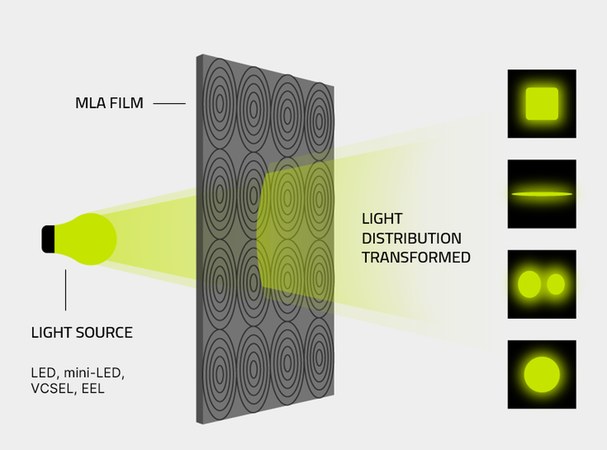
BrightView Technologies is a Durham, North Carolina optical-film company that designs and manufactures micro lens array (MLA) films using a discipline it calls computational optics. By engineering microscopic structures into rolls of film, BrightView gives engineers precise control over how light spreads, hides, brightens, and bends - powering automotive displays, consumer electronics, AR/VR headsets, LiDAR sensors, and LED lighting. The company pairs in-house optical design software with high-volume roll-to-roll production, supplying global manufacturers from a single Research Triangle Park facility.

Jennifer Aspell
Jennifer Aspell is the CEO of BrightView Technologies, a Durham, North Carolina optics company that engineers micro lens array films to shape and manage light for displays, AR/VR, automotive, LiDAR, sensing and LED lighting. An electrical engineer trained at Rensselaer, UC Berkeley and Purdue, she started out at Bell Laboratories building technology for long-haul optical networks before moving through Lucent, JDS Uniphase and Tyco Electronics. She took the helm of BrightView in 2010 after the recession gutted its original rear-projection-TV market, and rebuilt it into a global supplier serving more than 200 customers, capped by a $7M Series B in 2025 led by Forvia Hella and Technology Venture Partners.