off-grid-power
(5)
Ray Caamano's Long Bet: Make the Grid Optional
A high-school dropout taught himself electromagnetics, helped rethink the electric drivetrain, and spent decades learning one stubborn lesson: reliable power is a systems problem.

Oyika
Oyika is a Singapore-based Battery-as-a-Service company that runs a network of automated battery-swapping stations for electric motorbikes across Southeast Asia. Riders subscribe to a plan and swap a depleted battery for a fully charged one in under a minute, removing the two biggest barriers to EV adoption: long charging times and the high upfront cost of a battery. Its bike-agnostic, IoT-connected batteries also double as portable power for off-grid communities. Backed by Banpu NEXT and Yinson, Oyika operates in Indonesia, Cambodia, Malaysia and Thailand.

Verne
Verne is a San Francisco climate-tech company building high-density cryo-compressed hydrogen (CcH2) storage and power systems. Founded in 2020 by Stanford and UC-Berkeley alumni, Verne developed a method to store hydrogen at up to 73 g/L - roughly 33% denser than liquid hydrogen and 87% denser than 700-bar compressed gas - without the cost of full liquefaction. After proving the technology on the world's first CcH2-powered Class 8 truck in 2024, Verne has expanded into turnkey zero-emission on-site power, targeting data centers, ports, construction sites and EV charging with modular hydrogen-to-power systems.
Critical Loop
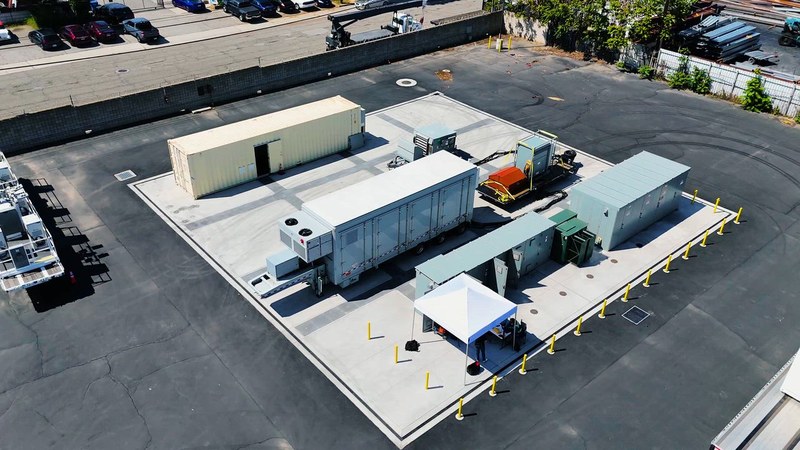
Critical Loop is an industrial power company founded in 2023 by former SpaceX, Tesla and Palantir engineers. It deploys modular, relocatable battery-storage microgrids - paired with its software-defined controller, Cygnus - to give factories, data centers, airports and other grid-constrained sites reliable power in weeks instead of waiting years for utility upgrades. The company raised a $26M Series A in April 2026, bringing total committed funding to $49M, and operates a fleet of control nodes across California.

Hover Energy
Hover Energy is a Dallas-based clean-energy company that builds patented Wind-Powered Microgrids - rooftop arrays of compact 36 kW turbines that turn a building's own edge into a sail, combined with solar, storage, and an AI-driven control stack. The system is designed to offset most or all of a building's power use on site, delivering resilient, behind-the-meter electricity to commercial, industrial, and data-center customers. Paired with IBM's watsonx and Maximo software and scaled through joint ventures like EverOn Energy, Hover pitches an Energy-as-a-Service path to what it calls 'real zero.'