fuel-cells
(7)
The Marketer Who Sells Certainty in an Uncertain Grid
She has rebranded a fintech unicorn, a 240-year-old bank, and now the fuel cells keeping AI data centers awake. The common thread: making the invisible feel inevitable.
Chris Holmes
Chris Holmes is the President and CEO of AvCarb Material Solutions, a Lowell, Massachusetts maker of engineered carbon materials - the felts, fabrics, and papers that quietly sit at the heart of hydrogen fuel cells, electrolyzers, and flow batteries. An MIT-trained systems engineer with a hybrid technical-and-business background, he is a turnaround specialist who has led high-technology businesses from start-up scale to north of $200M in revenue, largely inside private-equity portfolios. At AvCarb he is steering a company with 1960s roots toward the center of the clean-energy transition.
Daniel Sobek
Daniel Sobek is the co-founder and CEO of 1s1 Energy, a Portola Valley startup turning a chunk of boron chemistry into cheaper, cleaner green hydrogen. An MIT-trained engineer with three degrees from the institute and a habit of starting companies, he spent years in microfluidics and cancer-imaging hardware before betting on electrolyzers. His company's boron-based membranes claim to cut the energy needed to make hydrogen by about 30 percent, and he says they already hit a U.S. Department of Energy efficiency target set for 2031.

Murari Ramkumar
Murari Ramkumar is the founder and CEO of Vimano, a deeptech materials startup building PFAS-free, ion-conductive membranes for flow batteries, green-hydrogen electrolyzers and fuel cells. A materials scientist trained at NITK Surathkal and the University of Pennsylvania, he co-founded the company in 2019 with Dr. Nagesh Kini and is chasing an audacious goal: to put a Vimano membrane inside one of every two large-scale energy storage devices, electrolyzers and fuel cells on the planet. In 2025 Vimano raised roughly $2.9 million in seed funding led by Ankur Capital.

Gregg Semler
Gregg Semler is the founder and CEO of InPipe Energy, a Portland-based company that generates clean, around-the-clock electricity from the water already flowing through municipal pipelines. A serial clean-energy entrepreneur since 2000, he previously led PolyFuel, ClearEdge Power, and Lucid Energy, and spent years as a venture investor in the sustainable economy. His pitch is contrarian: instead of covering the planet with solar panels and batteries, harvest the predictable, weather-proof energy hiding in the millions of miles of pressurized pipe that move our drinking water.

Tal Sholklapper
Tal Sholklapper is the CEO and co-founder of Voltaiq, the company that coined the term 'battery intelligence' and built the de facto standard software for making sense of battery data. A UC Berkeley-trained materials scientist who once finished an engineering PhD in two and a half years, he started Voltaiq in 2012 after years designing batteries and fuel cells convinced him the hardest part wasn't building cells - it was figuring out, fast, whether they were any good. Today his platform analyzes data from manufacturing and validation labs at Toyota, Mercedes-Benz, Meta, and Amazon.
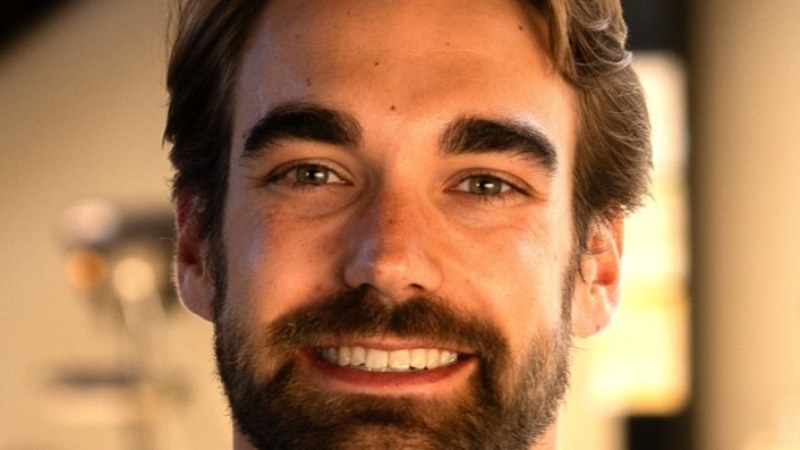
Ted McKlveen
Ted McKlveen is the Co-Founder and CEO of Verne, a San Francisco-based clean energy company pioneering cryo-compressed hydrogen (CcH2) technology to decarbonize heavy-duty transportation and off-grid power. He graduated summa cum laude in Chemistry from Harvard and earned an MBA from Stanford GSB (2021), where he co-founded Verne. Under his leadership, Verne unveiled the world's first CcH2 Class 8 heavy-duty truck, secured backing from Amazon's Climate Pledge Fund and United Airlines Ventures, raised $15.5M total, and expanded into a new Pennsylvania manufacturing facility creating 61 jobs.