formal-verification
(9)
Veridise
Veridise is an Austin-based blockchain security company spun out of the UToPiA program-analysis research group at the University of Texas at Austin. It hardens Web3 by pairing expert human auditors with proprietary tools built on formal methods, fuzzing and program analysis. Veridise audits smart contracts, zero-knowledge circuits, blockchain implementations and dApps, and has completed 150+ audits for infrastructure protocols including Scroll, Linea, Succinct, Manta Network, RISC Zero and Semaphore.
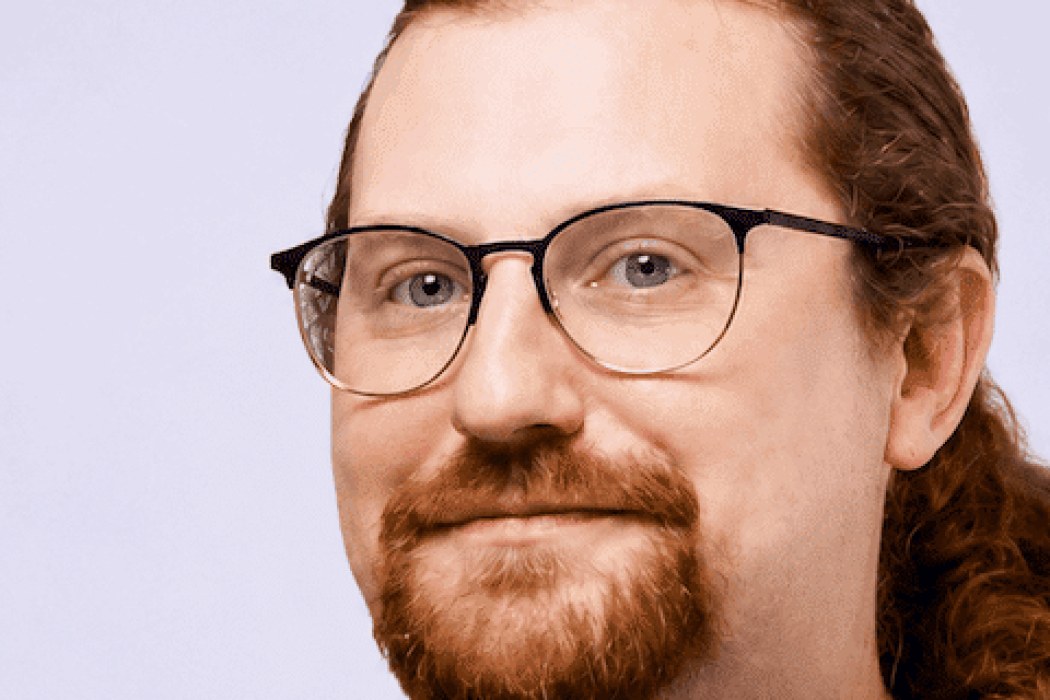
Jon Stephens
Jon Stephens is the CEO and co-founder of Veridise, an Austin-based blockchain security firm that brings academic formal verification to smart contract and zero-knowledge audits. A computer science PhD researcher at UT Austin, he built tools like SmartPulse and Zequal that grew out of his work on formally reasoning about programs, and turned that research into a company that has audited protocols including RISC Zero, Succinct, Semaphore, vLayer and Ankr. His mission is to make everyday users secure without asking them to think about security at all.

Axiomatic AI
Axiomatic AI is a Cambridge, Massachusetts deep-tech company building AI that engineers can actually trust. It pairs frontier language models with formal mathematical and physics-based verification so that the reasoning behind a design decision can be checked, proven, and traced. Its first commercial focus is photonics and semiconductor engineering - fields where simulations are sophisticated but fragmented and a fabrication error is expensive. Founded in 2024 by a group of MIT and ICFO physicists and led by former White House quantum-policy lead Jake Taylor, the company raised an $18M seed in March 2026 to build what it calls the intelligence infrastructure for verified science and engineering.

Axiom
Axiom (Axiom Math) is a Palo Alto-based AI lab building a self-improving, superintelligent reasoner - starting with an AI mathematician. Its AxiomProver system invents new theorems, proves them formally in Lean, and verifies them before they reach a human, aiming to give AI the one thing language models lack: provable correctness. Founded in 2025 by mathematician Carina Hong, the company has raised $264M and claims machine-generated proofs accepted by peer-reviewed journals.

Carina Hong
Carina Hong is the founder and CEO of Axiom Math, an AI startup building an autonomous "AI mathematician" that can generate and formally verify its own proofs. A Guangzhou-born first-generation college student, she finished dual MIT degrees in math and physics in three years, won the Morgan Prize, became a Rhodes Scholar at Oxford, then left a Stanford PhD-and-JD track to start Axiom in March 2025. Her thesis is blunt: "Math is AGI." Within roughly nine months the company raised about $264M total, reached a reported $1.6B valuation, and pulled researchers from Meta FAIR, Meta GenAI, and Google Brain/DeepMind.

Tudor Achim
Tudor Achim is the cofounder and CEO of Harmonic, the Palo Alto AI lab he started in 2023 with Robinhood founder Vlad Tenev to build what they call Mathematical Superintelligence. Harmonic's system Aristotle reached gold-medal performance on the 2025 International Math Olympiad while formally verifying every proof in Lean 4, a feat that put a roughly 40-person startup alongside OpenAI and Google DeepMind. A former competitive pianist turned machine-learning researcher, Achim previously cofounded the self-driving company Helm.ai and worked on ranking at Quora. He argues that mathematics is the route to AI that does not hallucinate.
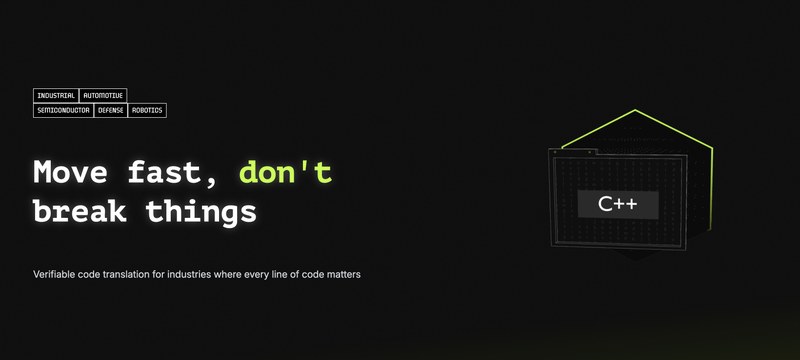
Code Metal
Code Metal is a Boston-based AI startup building a verifiable code translation platform for mission-critical industries - aerospace, defense, automotive, semiconductors and robotics. Founded in 2023 by AI researchers Peter Morales and Alex Showalter-Bucher, the company combines large language models with formal verification so engineers can write software once and ship it - safely - to any chip.
Tammie Siew
Tammie Siew is a General Partner and Co-Founder at Pebblebed, a San Francisco-based deep tech venture capital firm focused on foundational infrastructure—AI simulation engines, robot operating systems, developer platforms, and formal verification systems. A Cornell-educated economist and literature scholar who spent years investing at Sequoia Capital Singapore before co-founding a healthcare startup, she brings a rare operator-investor lens to backing the infrastructure layer of next-generation technology. Pebblebed's Fund II closed at $125M in 2024, with roughly 35 investments backing companies like Augment Code, OpenMind, Zeromatter, Lemurian Labs, and Logical Intelligence.
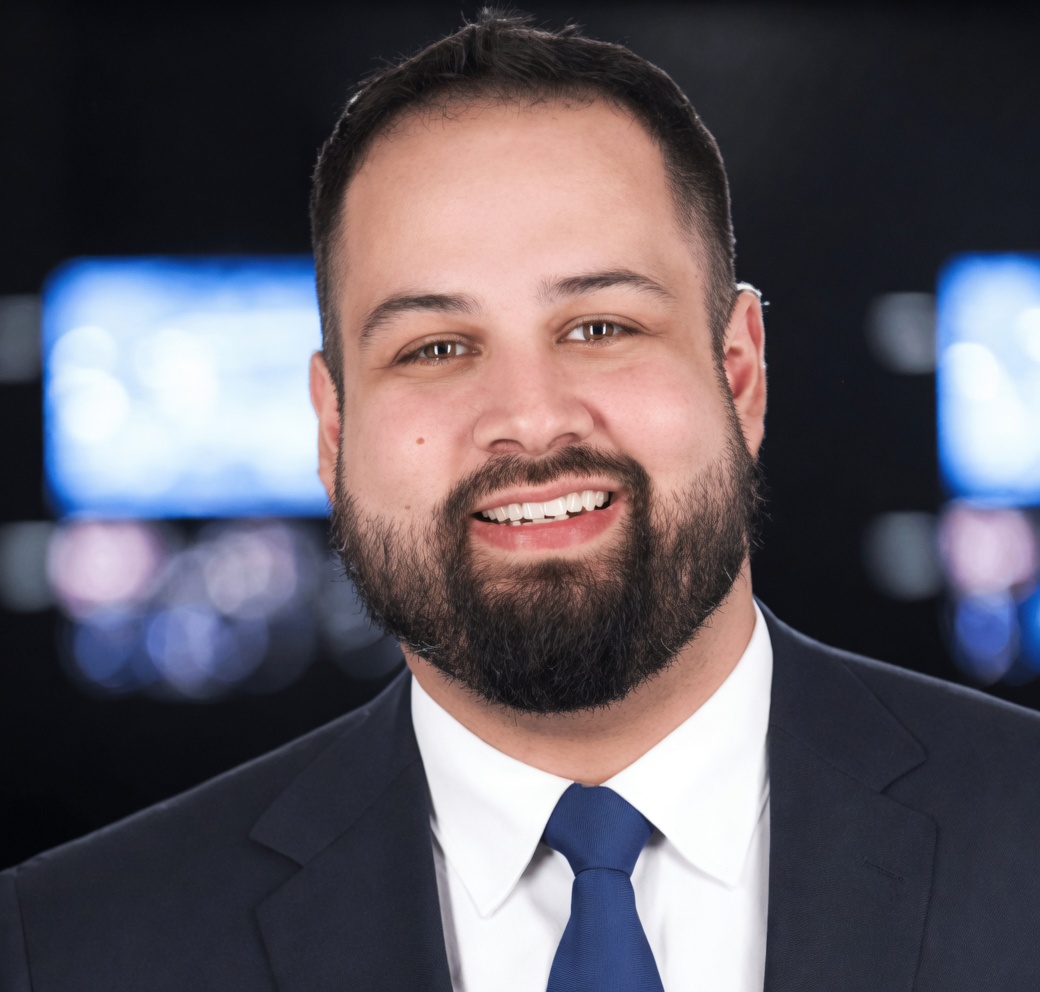
Peter Morales
Peter Morales is the CEO and co-founder of Code Metal, a Boston-based AI company that hit unicorn status in February 2026 after raising a $125M Series B led by Salesforce Ventures. With a background spanning BAE Systems (F-35 ML optimization), MIT Lincoln Laboratory (counter-drone AI), and Microsoft (HoloLens computer vision), Morales built Code Metal to solve a gap he discovered firsthand: AI can generate code fast, but mission-critical industries — defense, automotive, semiconductors — need proof that code is correct before it ships. Code Metal's verifiable AI platform translates high-level code into hardware-optimized, mathematically verified production code for edge devices, drones, FPGAs, and autonomous systems. Customers include the U.S. Air Force, L3Harris, Raytheon, Toshiba, and Bosch.