data-center-ai
(4)
Marc Bolitho Bet the Company on the Expensive Part of AI
After 28 years in automotive electronics, Marc Bolitho left the predictable road for a semiconductor startup - then redirected that startup when ChatGPT changed the map. His operating idea is simple enough to remember: stay level, work as one team, and follow the economics all the way down to the math.
Tensordyne
Tensordyne is a Sunnyvale- and Munich-based AI hardware company building inference systems that use a hardware-native logarithmic number system to cut the cost and power of running large AI models. Formerly the computer-vision startup Recogni, it rebranded in September 2025 and in June 2026 unveiled Napier (TDN), a 3nm, air-cooled inference platform it claims delivers roughly 13x the throughput and 17x the efficiency of Nvidia's GB300 NVL72 rack. The company positions itself as a direct challenger to Nvidia in the market for profitable, high-throughput generative-AI inference.

Opticore
Opticore is a photonic computing startup building optical processing units (OPUs) - chips that run AI workloads with light and waveguides instead of electrons. Spun out of research at MIT, USC and UC Berkeley, the company claims its photonic chips are up to 100x more energy efficient and offer roughly 25x the computing density of leading GPUs, using time-multiplexed computing to encode as many as a trillion parameters on a single chip. Opticore has raised about $14.5M to date to attack the energy and 'memory wall' bottlenecks of AI data centers.
Zaijun Chen
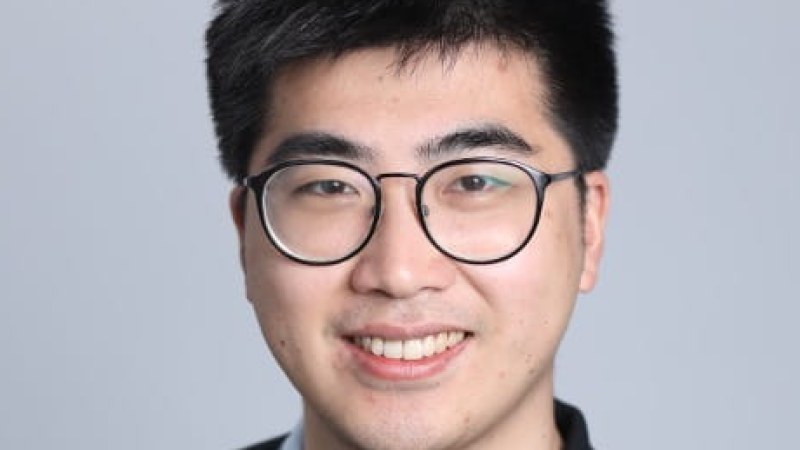
Zaijun Chen is a physicist-turned-founder building light-powered computers for artificial intelligence. As co-founder and CEO of Opticore, he is developing photonic optical processing units (OPUs) that the company says are up to 100x more energy efficient and 25x denser than leading GPUs. Trained at the Max Planck Institute of Quantum Optics and MIT, and now director of the Laboratory of Intelligent and Quantum Photonics at USC, Chen turned a decade of precision-optics research into a venture-backed bet that the future of AI compute runs on photons instead of electrons.