cancer-detection
(6)
Apostle Inc
Apostle Inc is a Pleasanton, California biotechnology company that develops nucleic acid isolation and preservation technologies for liquid biopsy. Its flagship magnetic-nanoparticle kit, Apostle MiniMax, extracts circulating cell-free DNA and RNA from blood for applications in early cancer detection, non-invasive prenatal testing, infectious disease research, and even astronaut biospecimen collection in commercial spaceflight. Founded in 2018 out of the Stanford StartX accelerator, the company sells reagents, automation instruments, and CLIA/CAP lab services to researchers and diagnostics developers worldwide.

URO-1, Inc.
URO-1, Inc. is a Greensboro, North Carolina medical device company modernizing the prostate biopsy, a procedure its founder describes as largely unchanged in decades. Founded in 2017 by prostate cancer survivor and serial MedTech entrepreneur Ted Belleza, URO-1 makes the FDA-cleared SUREcore biopsy needle and coreCARE tissue transfer system, a paired platform built to collect larger, more intact tissue cores and preserve their integrity on the way to pathology. The company reports its needle hit 92% targeting accuracy in MRI-ultrasound fusion biopsies versus 36% for conventional needles, and began commercial launch in January 2025 following an $8 million Series A.

Holobeam Technologies
Holobeam Technologies is a Bethpage, New York biotech developing Holographic Energy Teleportation (HET), a patented method of focusing energy to precise microscopic locations inside the body. Paired with antibody-guided AdvaNan nanoparticles, the approach - branded the Holothermia protocol - aims to both detect individual cancer cells earlier than conventional imaging and heat them to death while sparing surrounding tissue. Founded by prolific inventor Gene Dolgoff, the LCD-projector pioneer who says he conceived the Star Trek Holodeck, the company is building HET-based MRI and portable scanners for diagnosis and treatment.
ClearNote Health
ClearNote Health is a San Diego molecular diagnostics company building non-invasive, blood-based tests that detect high-mortality cancers early, when treatment works best. Spun out of Stephen Quake's Stanford lab in 2016 (originally as Bluestar Genomics), it pairs a proprietary 5-hydroxymethylcytosine (5hmC) epigenomic platform with cell-free DNA analysis and machine learning. Its flagship Avantect Pancreatic Cancer Test targets high-risk patients - including adults 50+ newly diagnosed with type 2 diabetes - and the company is extending the approach to ovarian and multi-cancer detection.

Numen
Numen (formerly Cleancard) is a San Francisco biotech building rapid at-home cancer screens that read like a pregnancy test. By combining synthetic biology, machine learning, and computer vision, its platform detects multiple cancer biomarkers from a single urine sample in about 30 minutes, with no lab machinery required. Founded by Rhodes Scholars Thomas Carroll and Luca Springer, the company's first screens target prostate, bladder, and ovarian cancer, with a mission to drive cancer mortality toward zero.
NovaScan
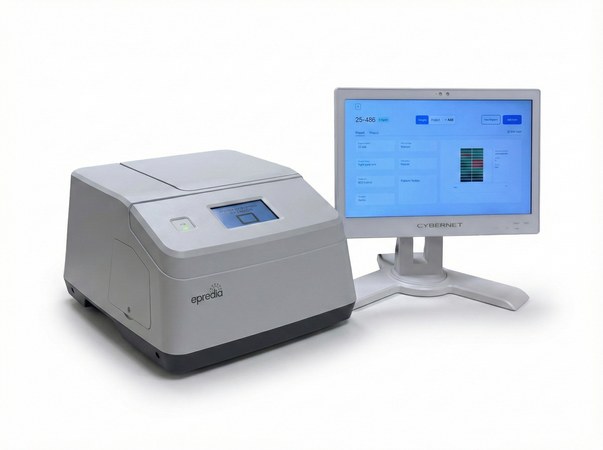
NovaScan is a Chicago-based clinical-stage oncology company building low-cost, point-of-care devices that detect cancer in real time. Its platform pairs spectral bioimpedance with machine learning around a single biophysical signal - the Cole relaxation frequency, which differs by orders of magnitude between cancerous and healthy tissue. Two lead products, nsCanary for assessing biopsy cores and MarginScan for checking surgical excision margins, aim to deliver answers in seconds instead of the days that conventional pathology can take.