behavioral-analytics
(34)
Reveal Security watches what happens after “Welcome back”
A valid login can conceal a stolen session, an impatient insider or an AI agent with too much freedom. Reveal Security follows the behavior that comes next.

Nebulock hunts the threats that look perfectly ordinary
An approved tool. A valid login. A very quiet intrusion. Nebulock builds its security platform around the awkward possibility that the most dangerous activity in your network looks like business as usual.

SAPSOL and the trouble with going live
An ERP launch makes a fine announcement. SAPSOL’s more interesting business starts where the announcement ends: bank connections, stubborn workflows, and the question of what people actually do inside SAP.

Heap and the Question Nobody Thought to Ask
A tracking plan asks you to decide what matters before anything happens. Heap built a business around a more forgiving idea: save the behavior, then ask the question.

Gurucul and the Trouble with Normal
The dangerous login may have the right password. Gurucul has built a business around what happens next - and why a security team should care.

Sideband and the Trouble That Wouldn’t Sit Still
The network fault disappears before anyone can explain it. Sideband built a business around catching it in the act, then turned the same attention toward the assets an attacker would want.

The 62 Million View Mirage
Kissmetrics built a huge audience, then used its own analytics to discover that applause and revenue had almost nothing in common. Its second act asks a sharper question: can software tell you which people actually matter?

Celebrus wants to catch the customer before the click is history
The British software company turns live browsing behavior into marketing decisions and fraud signals. Its bet: the most useful customer data is the data you can act on before somebody leaves.
IMS Wants Your Next Drive to Cost Less
The telematics company puts driving scores, rewards and crash evidence into insurers’ hands. Its harder assignment is giving motorists a reason to welcome the passenger in their phone.
The AI That Watches the Moment - Not the Person
Intent HQ sells large companies a sharper sense of when customers are ready to act. Its wager is that relevance can improve without turning privacy into collateral damage.
The Regis Company Spent 20 Years Building Simulations. Now AI Is Cutting the Cost by 90%.
Corporate training has long measured who finished the course. Regis built SimGate to measure what people do when the decision gets uncomfortable - and to make a once-bespoke format affordable enough to scale.
Exabeam Bet That the Weirdest Login Matters More Than the Loudest Alarm
Security teams already had alerts. Exabeam built a business around the missing plot - who did what, in what order, and whether it was normal - then merged with LogRhythm to sell that idea in the cloud and on premises.

Acoustic Inherited IBM’s Marketing Cloud. Now It Wants Marketers to Escape the Legacy Stack.
Born from an IBM carve-out, Acoustic is rebuilding a collection of veteran marketing tools around one sharp idea: the system that spots customer intent should also be able to act on it. The hard part is proving that a legacy inheritance can become the cure for legacy martech.

ExtraHop Spent 11 Years Watching Networks. Then Its Customers Found the Security Business Hiding in the Packets.
The Seattle company began by diagnosing slow applications, not chasing attackers. Its customers spotted the bigger opportunity - a practical lesson in how an old capability can become a new company.
How Windward Taught Ships to Tell on Themselves - and Built a £216 Million Maritime Intelligence Business
Two former naval officers started by chasing illegal fishing and discovered the buyers were scarce. They kept the data engine, changed the customer, and turned ships that go dark, spoof locations or swap identities into a legible business signal.

Solsten Wants Marketers to Stop Guessing - and Start Measuring Why People Click
Solsten built its reputation helping game studios decode player motivation. Now it is selling that psychology layer to marketers and AI builders - with unusually concrete case studies, a much broader market, and a harder question about when prediction becomes persuasion.

Quantum Metric Found the Million-Dollar Bugs Hiding Between Your Dashboards
A checkout error looks tiny until someone prices the lost carts. Quantum Metric built a business turning digital friction into a number executives can act on - and is now asking an AI analyst to do the detective work.
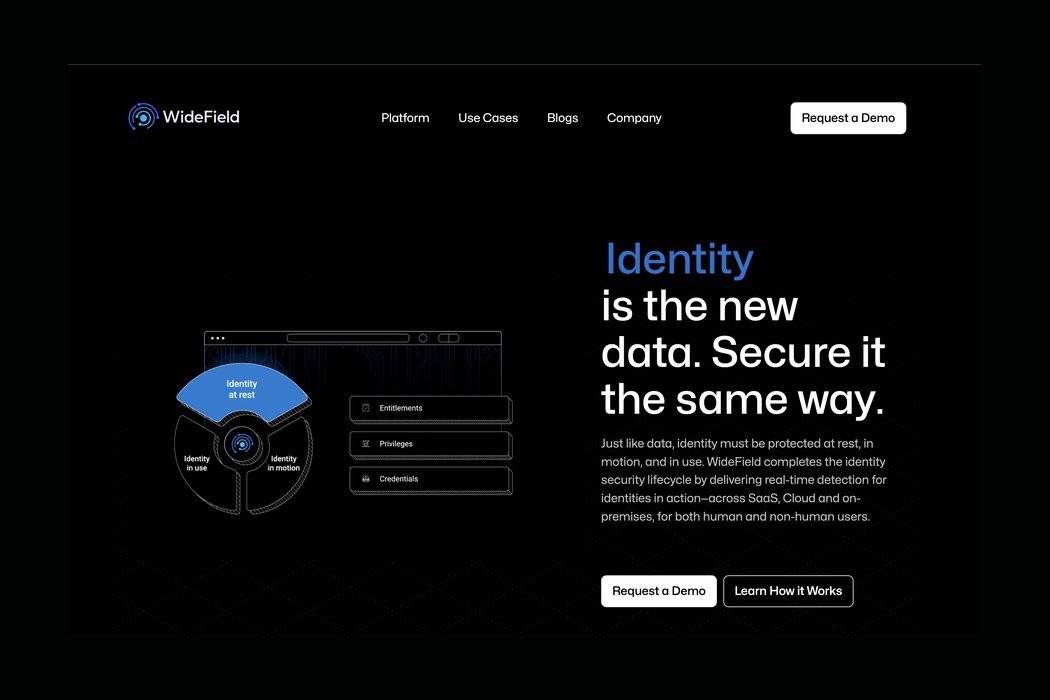
WideField Watched What Happened After Login - Then Cisco Bought the View
Most security tools check the badge at the door. WideField followed the badge through every room - a post-login bet that carried the three-year-old startup into Cisco and Splunk.
The Credit Score Hiding in How You Use Your Phone
Credolab does not read a borrower's credit history. It studies the anonymous choreography of a digital application - then gives lenders a second opinion in less than a second.

Merkle Science
Merkle Science is a blockchain analytics and predictive risk intelligence company that helps crypto exchanges, financial institutions, government agencies and Web3 businesses detect, investigate and prevent illicit cryptocurrency activity. Founded in Singapore in 2018 by Mriganka Pattnaik and Nirmal Ak, it uses behavior-based machine learning rather than static blacklists to power its two core products - Compass for real-time transaction monitoring and compliance (AML/KYC/CFT), and Tracker for cross-chain forensic investigations across 10,000+ assets and 200+ bridges.
NICE Actimize
NICE Actimize is the financial-crime, risk and compliance division of NICE Ltd. and one of the largest providers of anti-money laundering, fraud prevention and trading-surveillance software to banks, regulators and financial institutions worldwide. Its AI-driven X-Sight platform, ActOne case management and SURVEIL-X surveillance suite help more than a thousand institutions detect suspicious activity, screen against sanctions lists, manage regulatory reporting and investigate financial crime - increasingly using agentic AI to cut investigation time.
ORION Security
ORION Security is an AI-native data loss prevention (DLP) company that protects enterprises from data leaks without relying on manually written policies. Founded in 2024 by Nitay Milner and Jonathan Kreiner, ORION uses large language models and specialized AI agents to map how data normally flows across SaaS, email, cloud, endpoints, and AI tools, then analyzes content sensitivity, user identity, behavioral intent, and data lineage to catch exfiltration and insider threats in real time. The platform targets the three core sources of data loss - human error, malicious insiders, and external attackers - while cutting the false positives and maintenance burden that plague legacy DLP.

Solidus Labs
Solidus Labs is a New York-based crypto-native risk monitoring and market surveillance company founded in 2018 by former Goldman Sachs engineers. Its flagship HALO platform combines trade surveillance, transaction monitoring and threat intelligence to help crypto exchanges, brokers, custodians, stablecoin issuers and regulators detect market manipulation, fraud and money laundering across onchain and offchain markets. HALO monitors over one trillion events daily, deploys 50+ crypto-native abuse typologies, and in 2025 was selected by the EU's ESMA as a trade surveillance provider under MiCA.

Pandatron
Pandatron is an AI change-activation platform that helps large enterprises turn strategy into execution. Its conversational AI runs private, role-tailored coaching conversations with thousands of employees at once, then feeds leaders real-time behavioral intelligence on readiness, resistance and risk. Founded in Helsinki and now with a San Francisco presence, Pandatron works with Fortune 500 companies including SAP, Panasonic, Mitsubishi, Merck and Skanska to make coaching-driven change dramatically cheaper and more measurable.

WireX Systems
WireX Systems is a cybersecurity company building network detection and response (NDR) and forensics technology under its EvidenceOps platform, powered by Ne2ition. Its patented Contextual Capture engine translates raw network packets into human-readable intelligence, retaining months of full payload data so security teams can investigate, prove, and respond to threats in minutes instead of days. Founded in 2010 by veterans of Israel's intelligence community, the company serves SOC teams across finance, healthcare, manufacturing and retail.

Youtility
Youtility is a London-based fintech that lets banks and money apps embed household-bill management directly inside their own experience. Through APIs, its technology lets consumers compare, switch, renew and manage energy, broadband, digital TV and mobile contracts without ever leaving their banking app - turning a dreaded admin chore into a few taps that save the average switching household around £234 a year. Founded in 2016 by early open-banking believers, Youtility now powers subscription management for partners including Santander, Virgin Money, Wagestream and Pockit.

Aampe
Aampe is a San Francisco-based company building agentic AI infrastructure for personalized customer experiences. Instead of relying on generative AI, it assigns a dedicated reinforcement-learning agent to every individual user that continuously experiments and learns what content to send, when, and whether to send anything at all. The platform has deployed over 100 million agents across hundreds of consumer apps on four continents, helping product, data science, and lifecycle marketing teams move from rule-based campaigns to continuous, per-user adaptation.

Moonshot
Moonshot is a London-founded technology and intelligence company that maps and disrupts online harms - from violent extremism and disinformation to gender-based violence, human trafficking, and harassment of public figures. Founded in 2015 by Vidhya Ramalingam and Ross Frenett, the firm pairs data science, OSINT, and behavioral research with field interventions like its pioneering Redirect Method, which steers people searching for extremist content toward safer alternatives. It works for governments, technology platforms (Google, Facebook, Spotify), and, more recently, sports organizations protecting athletes from online abuse.
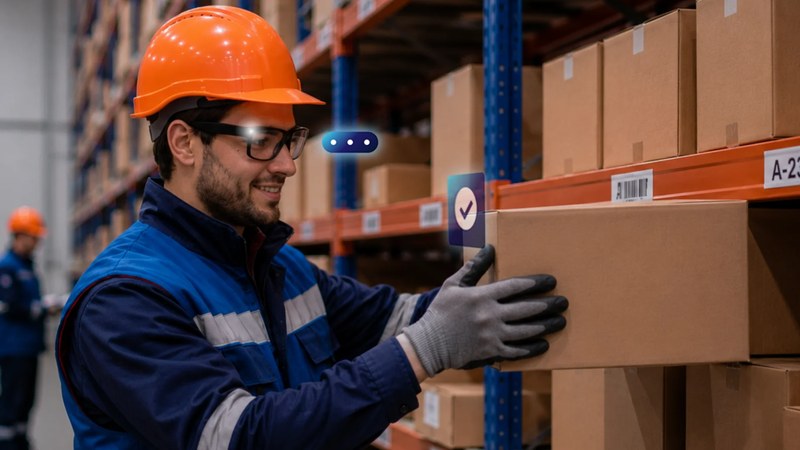
STRIVR
STRIVR is a Santa Clara workforce-performance company that began by putting Stanford quarterbacks in virtual reality and now puts AI on the factory floor. After pioneering enterprise VR training for Fortune 1000 giants like Walmart, Verizon and Bank of America, STRIVR has shifted from preparing people for work to guiding them inside the flow of work - building hands-free, smart-glasses AI that detects and corrects operational mistakes in real time and turns expert know-how into instant visual instructions.
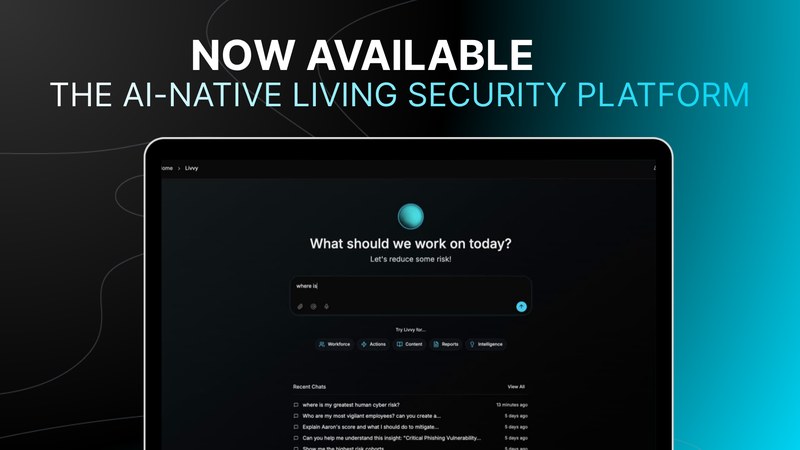
Living Security
Living Security is an Austin-based cybersecurity company that pioneered Human Risk Management (HRM), moving organizations beyond check-the-box compliance training toward measurable behavior change. Its AI-native Unify platform correlates behavioral, identity, and threat signals to find the small share of employees who drive most of an organization's risk, then guides targeted interventions. Founded in 2017 by Ashley and Drew Rose, the company serves more than 100 enterprises including Fortune 500 names, and was named a Leader in the 2024 Forrester Wave for Human Risk Management Solutions.